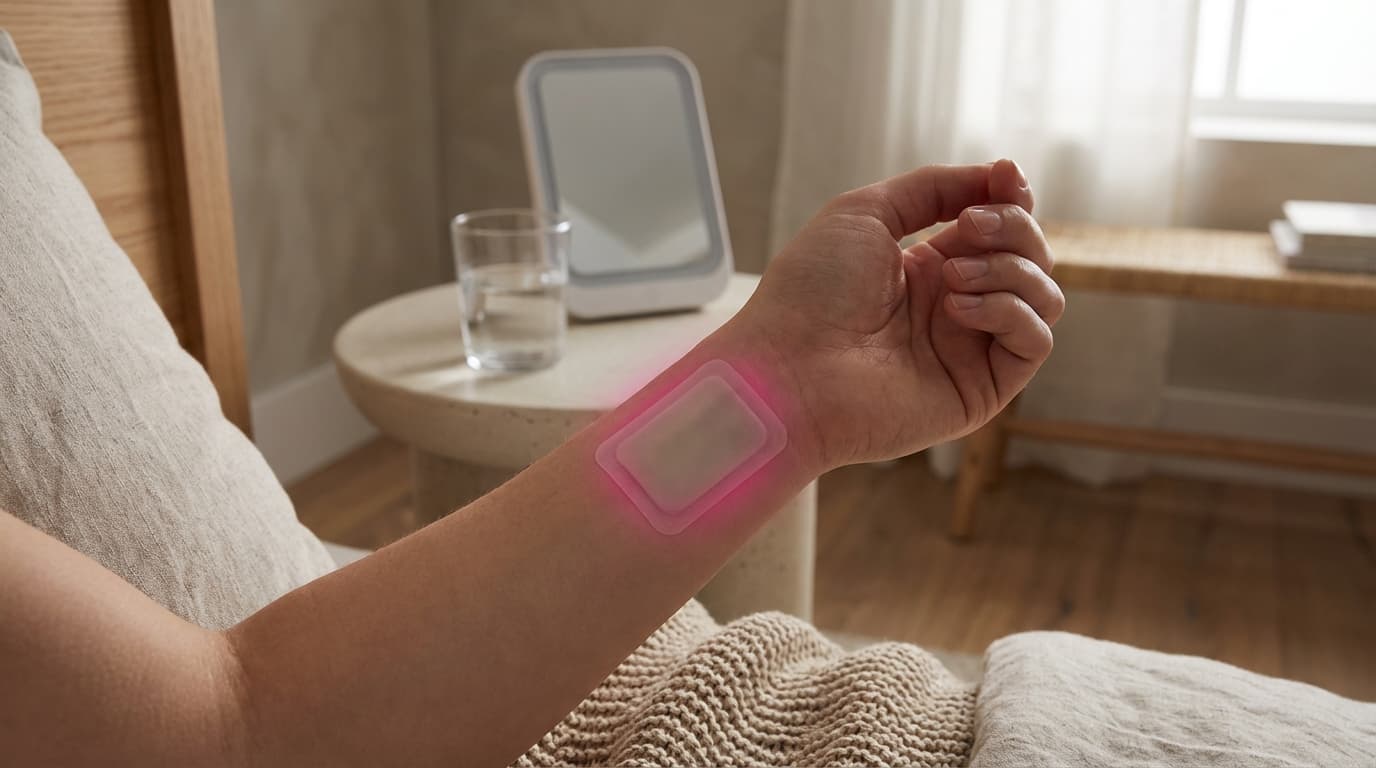
Transdermal Beauty Patches
Transdermal beauty patches use hydrogel or microneedle technology to deliver active skincare ingredients—retinol, niacinamide, brightening agents, peptides, or other actives—directly through the skin over extended periods (typically 6-12 hours, often overnight). Hydrogel patches create an occlusive environment that enhances ingredient penetration while providing controlled release, while microneedle patches use tiny, painless needles that dissolve or create micro-channels to deliver actives deeper into the skin. Both approaches lock in occlusion, ensure precise dosing, and maintain consistent contact with the skin, enabling more effective delivery of active ingredients compared to traditional creams or serums that may be rubbed off or inconsistently applied.
This innovation addresses the challenge of effective ingredient delivery in skincare, where many active ingredients have difficulty penetrating the skin barrier or maintaining contact long enough to be effective. By using patch technology, these products can provide sustained, controlled delivery that maximizes ingredient efficacy. Companies like various skincare brands, medical device companies, and beauty tech startups are developing these products, with transdermal patches becoming increasingly popular for targeted treatments like under-eye care, spot treatments, and overnight active delivery.
The technology is particularly significant for maximizing the effectiveness of active ingredients, where controlled, sustained delivery could provide better results than traditional application methods. As patch technology improves and formulations optimize, transdermal beauty patches could become standard tools for targeted skincare treatments. However, ensuring patch adhesion, managing skin sensitivity, optimizing ingredient release profiles, and making patches comfortable for extended wear remain challenges. The technology represents an important evolution in skincare delivery, but requires continued refinement to achieve optimal performance and user experience.
Related Organizations
Japan · Company
Japanese pharmaceutical company that pioneered the development of hyaluronic acid microneedles for cosmetic use (Quanis brand).
South Korea · Company
A leading ODM/OEM manufacturer specializing in dissolving microneedle technology, supplying patches to major global skincare brands.
United States · Company
A skincare brand famous for popularizing microneedle patches for acne.
United States · Company
Creators of the 'Mighty Patch', they popularized hydrocolloid technology for acne treatment in the mass market.
United States · Company
A skincare brand focusing on hydrocolloid and microneedling patch technology.

Conducts research on reversible logic synthesis and low-power VLSI design.
United States · Company
Specializes in medical-grade silicone patches designed to compress skin and create a microclimate that hydrates and smooths wrinkles.
United States · Startup
Gen-Z focused brand that destigmatized acne patches by turning them into decorative accessories (yellow stars).
United Kingdom · Company
Luxury skincare brand founded by a plastic surgeon, famous for bio-cellulose and hydrogel masks delivering clinical actives.
Supporting Evidence
Research this in Signals
Signals turns a topic into a sourced research record you can inspect and rerun. Your first scan is free, and this one starts with Transdermal Beauty Patches already loaded, so edit it or scan as is.