Robotic Dermal Procedure Platforms
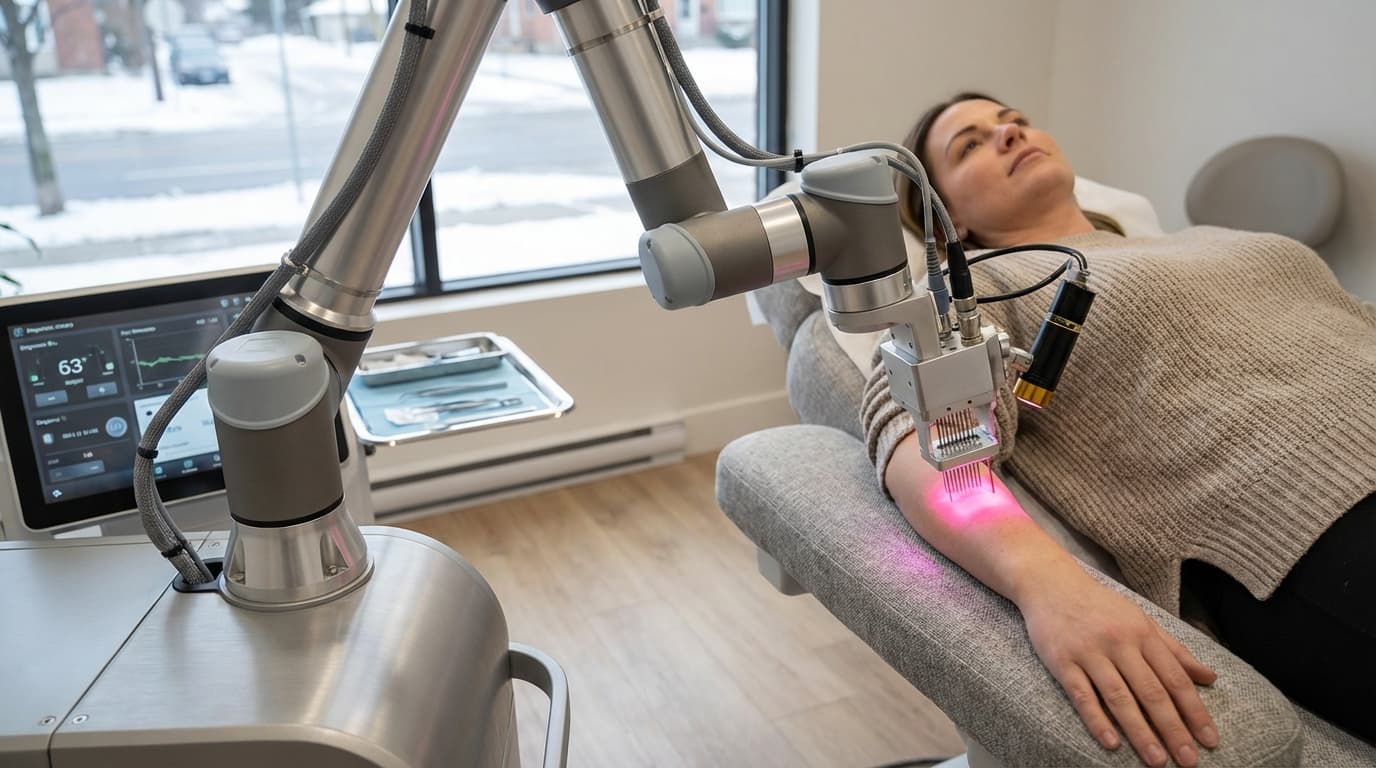
Robotic dermal procedure platforms marry multi-axis robotic arms, depth-sensing cameras, and haptic end effectors to execute microneedling, laser resurfacing, or injectable passes with sub-millimeter precision. Machine-vision models build a volumetric map of the face, simulate vector forces, and adjust energy delivery in real time as the client moves or skin turgor changes.
Leading med-spa groups and hospital outpatient centers use these systems to deliver repeatable outcomes across fleets of providers, cutting training time while documenting every pass for compliance. Companies such as Cartessa, Ultimovacs, and Seoul-based LAYON Solutions are piloting robots that co-register Doppler data, epidermal thickness, and pigmentation, letting practitioners tailor fluence and needle depth to each zone instead of relying on manual heuristics.
Robots still operate under the supervision of licensed clinicians, so vendors promote co-pilot modes where the machine handles ergonomics and dosing while humans remain responsible for artistry and consent. Expect regulators to demand redundant kill switches, radiation shielding, and audit logs, but as evidence grows that robotics reduce complications and repetitive-strain injuries, insurers and PE-backed clinic chains will treat automated procedure suites as table stakes.
Related Organizations
Canada · Company
Developer of the ARTAS iX Robotic Hair Restoration System, which uses robotic arms and stereoscopic vision to harvest and implant follicles with sub-millimeter precision.
United States · Startup
Creators of EON, a robotic touchless laser body contouring device that uses a robotic arm to map topography and deliver thermal energy autonomously.
AVRA Medical Robotics
United States · Company
A medical robotics company developing intelligent medical robotic systems for autonomous aesthetic skin resurfacing treatments.
South Korea · University
A leading research university in South Korea known for advanced robotics and biomedical engineering research.

Developers of the CellFX System, which uses Nano-Pulse Stimulation (NPS) technology to clear cellular lesions with high precision.
A major manufacturer of industrial robots, including the LBR Med, a lightweight robot certified for integration into medical devices.
Supporting Evidence
Research this in Signals
Signals turns a topic into a sourced research record you can inspect and rerun. Your first scan is free, and this one starts with Robotic Dermal Procedure Platforms already loaded, so edit it or scan as is.