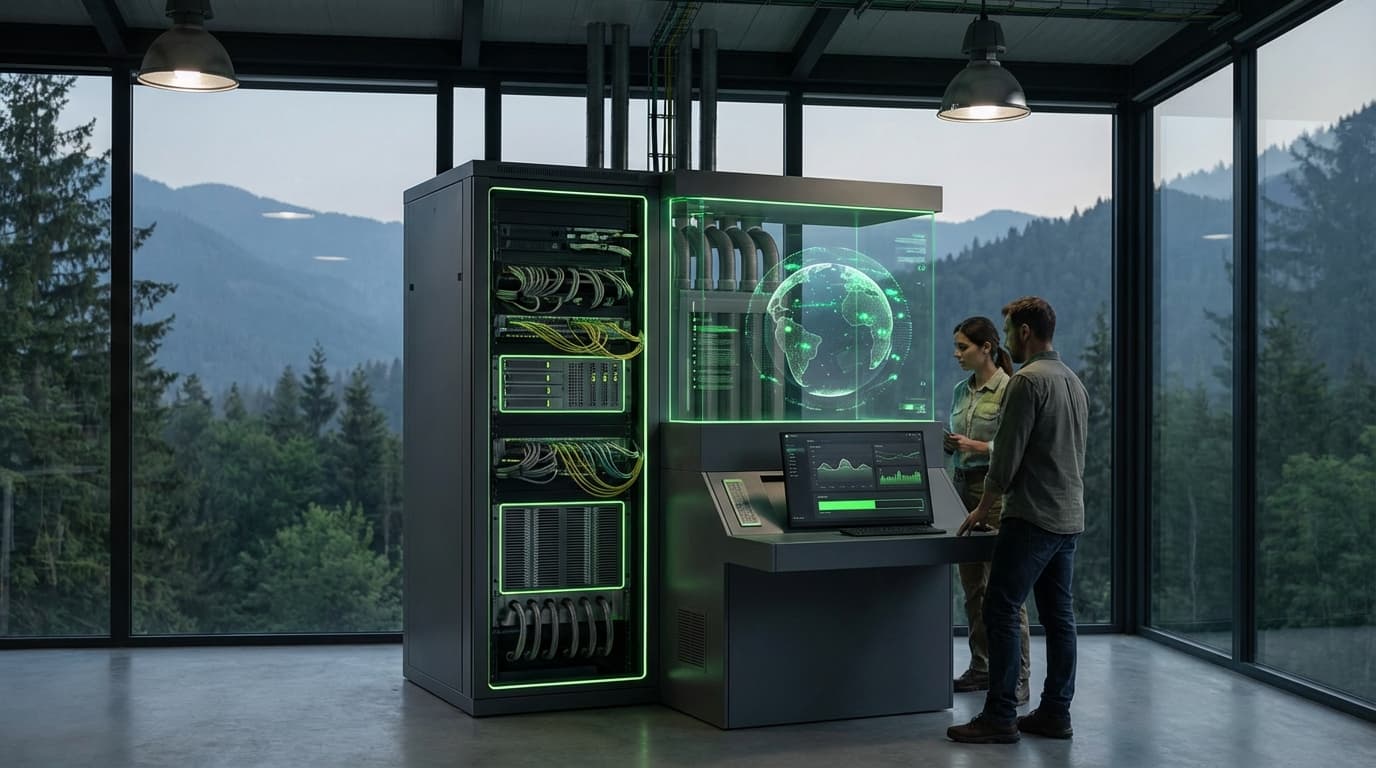
Multi-Scale Climate Simulation Engines
Multi-scale climate engines fuse traditional Earth system models with machine-learning emulators, cloud-native data stores, and GPU acceleration to resolve processes from global circulation down to city blocks. They assimilate satellite imagery, radar, reanalysis datasets, and in situ sensors in near real time, generating digital twins that planners can interrogate interactively. AI downscalers bridge the gap between coarse-grid physics and sub-kilometer impacts, allowing users to simulate compound events—heat plus smoke, flood plus power outage—under multiple emissions scenarios.
Infrastructure owners, insurers, and governments deploy these twins to stress-test assets, evaluate adaptation investments, and streamline permitting. Utilities model wildfire risk and grid performance under future weather, ports analyze storm surge upgrades, and agricultural cooperatives run crop-yield scenarios under shifting rainfall patterns. Because models live in the cloud, cross-functional teams can collaborate and version-control scenario assumptions, reducing reliance on static PDFs.
Technology is TRL 6 but democratizing access to supercomputing-level insight. Barriers include harmonizing proprietary data, validating AI surrogates against physical laws, and ensuring transparency so regulators trust outputs. Initiatives like Destination Earth (EU), Google’s Earth Engine for climate resilience, and US National Climate Resilience Framework signal growing public investment. As cost per simulation drops, multi-scale digital twins will become core planning infrastructure for both mitigation and adaptation.
Related Organizations
United Kingdom · Consortium
An independent intergovernmental organisation supported by 35 states, actively researching quantum computing applications for numerical weather prediction.

Developing foundation models for robotics (Project GR00T) and vision-language models like VILA.

Developers of the Gemini family of models, which are trained from the start to be multimodal across text, images, video, and audio.

Provides climate risk analytics using cloud computing and AI to model extreme weather risks for asset planning.

Climate X
United Kingdom · Startup
Provides financial insights into climate risks, calculating the impact of extreme weather on asset valuations.

Focuses on supply chain resilience by applying AI to climate models to predict impacts on agriculture and logistics.

Provides watsonx.governance for managing AI risk and compliance.
Switzerland · Startup
Developing a 'Large Physics Model' for weather prediction, aiming to provide high-resolution energy-focused forecasts.

Operates proprietary radar satellites and uses generative AI ('Gale') for weather intelligence.
United States · Startup
Focuses on sub-seasonal to seasonal (S2S) forecasting using machine learning and ocean data.
Supporting Evidence
Research this in Signals
Signals turns a topic into a sourced research record you can inspect and rerun. Your first scan is free, and this one starts with Multi-Scale Climate Simulation Engines already loaded, so edit it or scan as is.