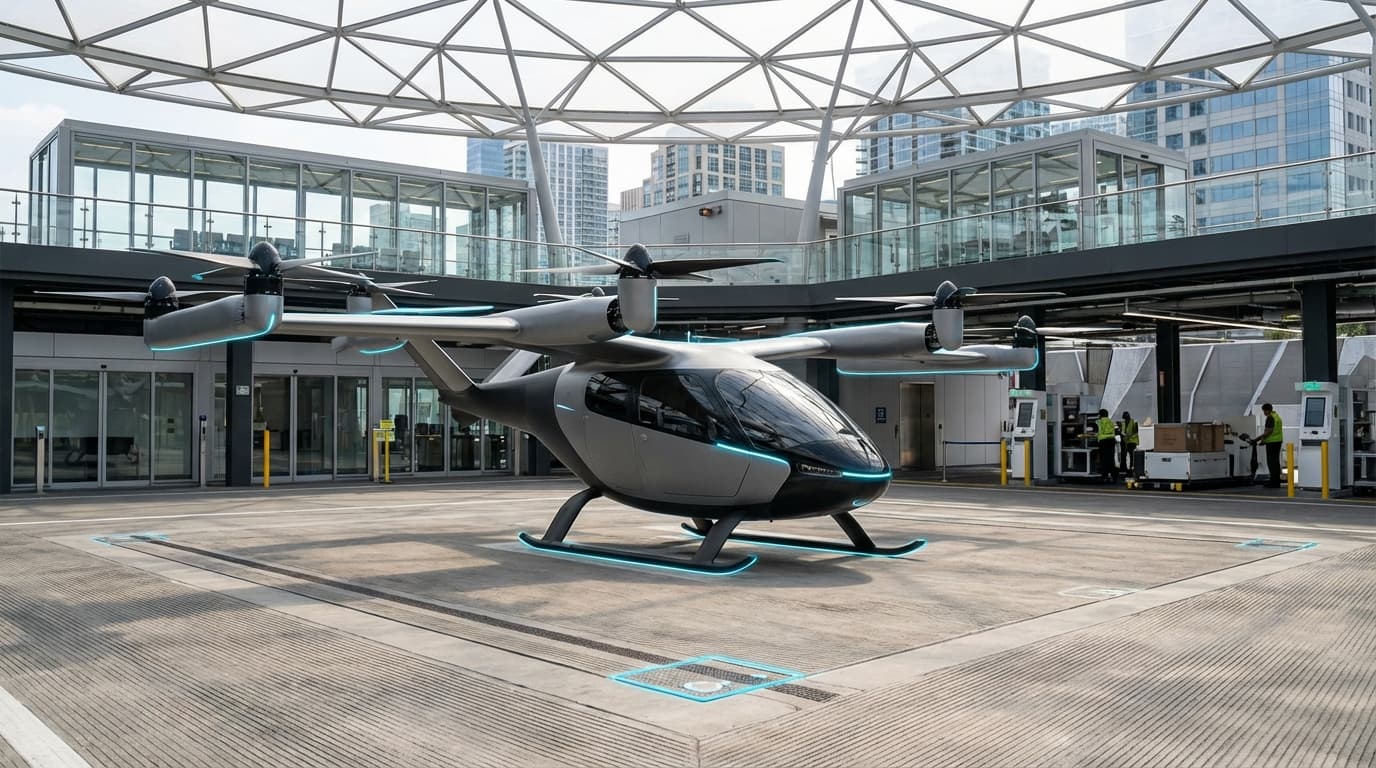
eVTOL Aircraft
Electric Vertical Take-off and Landing (eVTOL) aircraft represent a convergence of electric propulsion, autonomous flight systems, and advanced aerodynamics designed to enable urban air mobility. These vehicles combine the vertical lift capabilities of helicopters with the efficiency and environmental benefits of electric power systems. At their technical core, eVTOLs utilise distributed electric propulsion—multiple small electric motors driving rotors or propellers—which provides redundancy, reduces noise, and enables precise control during takeoff, flight, and landing. The aircraft typically employ high-density battery systems, though some designs incorporate hybrid-electric configurations to extend range. Advanced flight control systems, often incorporating varying degrees of automation, manage the complex coordination of multiple rotors while ensuring stability and safety. The vertical takeoff capability eliminates the need for traditional runways, allowing these aircraft to operate from compact vertiports that can be integrated into existing urban infrastructure such as rooftops, parking structures, or dedicated landing pads.
The tourism and travel industry faces persistent challenges with ground-based congestion, particularly in dense urban centres and popular tourist destinations where traditional transportation infrastructure struggles to meet demand. eVTOL aircraft address these limitations by creating a third dimension for passenger movement, effectively bypassing surface-level bottlenecks. This capability is especially valuable for connecting airports to city centres, linking tourist attractions separated by congested routes, or providing scenic aerial tours that combine transportation with experience. The technology enables new service models for the travel industry, from premium airport transfers to inter-island hopping in archipelagic tourist regions. By reducing journey times from hours to minutes for certain routes, eVTOLs can fundamentally reshape how visitors experience destinations, making previously time-consuming itineraries feasible within shorter stays. The relatively quiet operation compared to conventional helicopters also makes them more suitable for deployment in noise-sensitive areas, expanding the potential network of landing sites near hotels, resorts, and cultural landmarks.
Several manufacturers have conducted demonstration flights and announced plans for commercial operations, with initial deployments targeting high-value routes in major metropolitan areas and tourist destinations. Early applications focus on premium airport shuttle services and sightseeing experiences, where passengers are willing to pay higher fares during the technology's nascent phase. Regulatory frameworks are evolving in parallel, with aviation authorities worldwide developing certification standards specific to eVTOL operations. The technology aligns with broader industry trends toward sustainable aviation and multimodal transportation networks, as cities explore integrated mobility solutions that combine ground, water, and air transport options. As battery technology improves and production scales increase, industry observers anticipate that operational costs will decline, potentially making urban air mobility accessible to a broader segment of travellers. The success of eVTOL aircraft will likely depend on achieving regulatory approval, building public acceptance, developing supporting infrastructure, and demonstrating reliable operations that justify the premium over conventional transportation modes.
Related Organizations

Manufacturer of the 'Midnight' eVTOL aircraft, focused on urban air mobility networks.

Developing an all-electric vertical takeoff and landing aircraft for commercial passenger service.

Leading designer, developer, and operator of vertiport infrastructure for the advanced air mobility industry.

German aircraft manufacturer specializing in multicopter designs like the VoloCity for inner-city flights.

An autonomous aerial vehicle technology platform company, the first to receive a type certificate for an eVTOL in China.

Eve Air Mobility
Brazil · Company
A spinoff from Embraer developing an eVTOL and urban air traffic management software.

Lilium
Germany · Company
Developing the Lilium Jet, an eVTOL using ducted electric vectoring fans for regional mobility.

Developing the ALIA-250 aircraft and an extensive charging network for electric aviation.

A global infrastructure operator developing a network of vertiports in the US and Europe through its Ferrovial Vertiports division.

British aerospace manufacturer developing the VX4 eVTOL aircraft.
Supporting Evidence
Research this in Signals
Signals turns a topic into a sourced research record you can inspect and rerun. Your first scan is free, and this one starts with eVTOL Aircraft already loaded, so edit it or scan as is.