








Pre-Experiencing Through Virtual Tourism
Virtual & Telepresence Tourism
Immersive remote visits to destinations via VR, 360° video, and telepresence robots
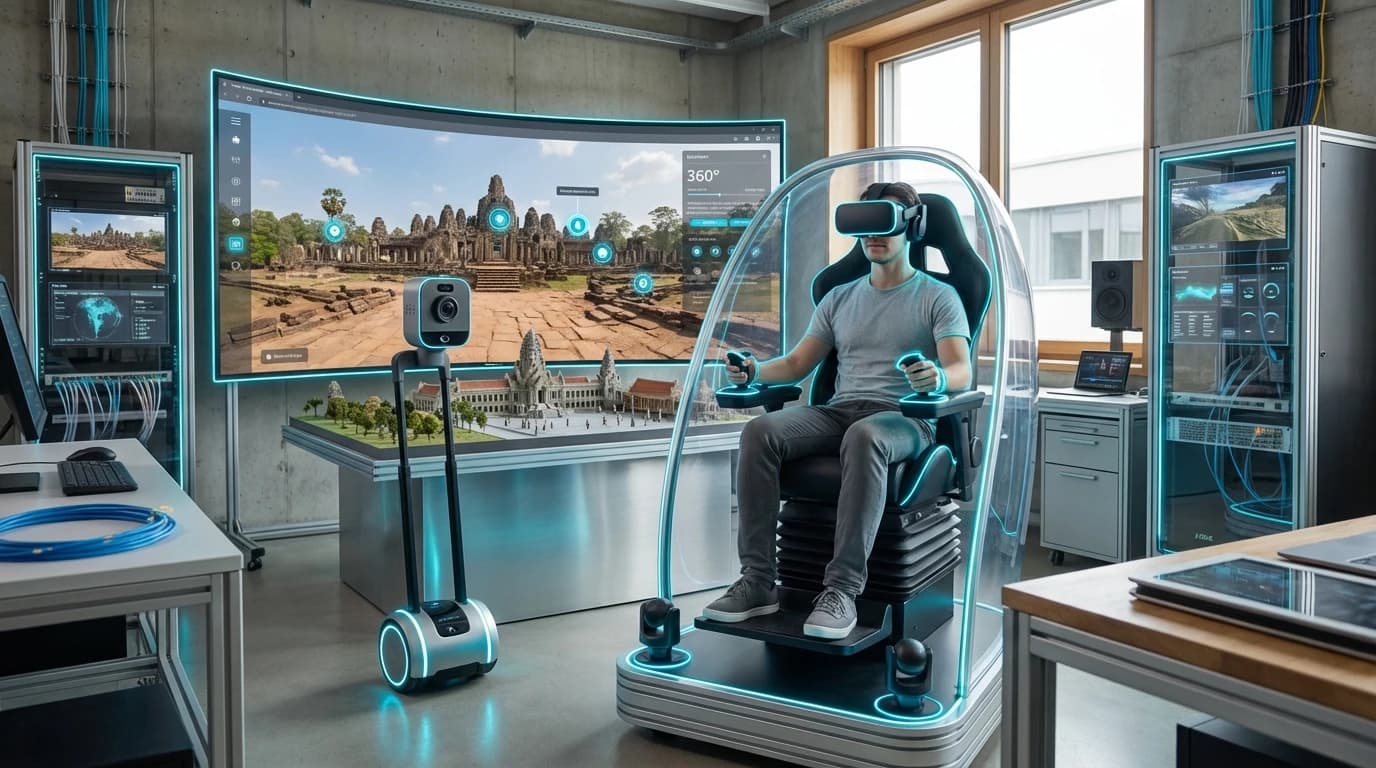
Virtual and telepresence tourism represents a convergence of immersive technologies that enable individuals to experience distant locations without physical travel. The technical foundation combines several key components: virtual reality headsets that create stereoscopic 3D environments, 360-degree video capture systems that record panoramic footage from real locations, volumetric capture techniques that create three-dimensional representations of spaces and objects, and telepresence robots equipped with cameras and sensors that users can control remotely to navigate physical sites. These systems rely on high-bandwidth internet connections to stream real-time or pre-recorded content, spatial audio processing to create realistic soundscapes, and increasingly sophisticated haptic feedback devices that can simulate tactile sensations. Advanced implementations incorporate photogrammetry and LiDAR scanning to create detailed digital twins of heritage sites, natural wonders, and urban environments, while machine learning algorithms enhance image quality and reduce latency in real-time telepresence applications.
The tourism industry faces mounting pressures from overtourism at popular destinations, environmental concerns related to aviation emissions, accessibility barriers for individuals with mobility limitations, and the need to preserve fragile cultural and natural sites from physical degradation. Virtual and telepresence tourism addresses these challenges by decoupling the travel experience from physical presence, allowing destinations to manage visitor capacity more effectively while still generating revenue and cultural engagement. Museums and heritage sites can offer after-hours virtual tours to global audiences, national parks can provide access to sensitive ecosystems without ecological impact, and cities experiencing overcrowding can redirect some visitor interest to digital channels. This technology also democratises travel experiences for elderly individuals, people with disabilities, students with limited budgets, and those in remote regions who might never have the opportunity to visit certain destinations in person. The economic model shifts from purely admission-based revenue to subscription services, premium virtual experiences, and hybrid offerings that combine virtual previews with physical visits.
Early adopters in the tourism sector have begun deploying these technologies across various contexts. Several major museums now offer VR tours of their collections, while tourism boards in destinations like Iceland and Japan have created immersive 360-degree experiences of their landscapes and cultural sites. Telepresence robots have been piloted at archaeological sites, allowing researchers and enthusiasts to explore excavations remotely, and some hotels have experimented with virtual property tours for prospective guests. The COVID-19 pandemic accelerated adoption significantly, as travel restrictions forced the industry to explore digital alternatives, leading to virtual concerts at iconic venues, remote wildlife safaris in African reserves, and digital recreations of cancelled festivals and events. Looking forward, the technology is expected to evolve beyond simple viewing experiences toward more interactive and social virtual tourism, where groups can explore destinations together in shared virtual spaces, guided by AI-powered virtual tour guides or human experts operating through telepresence systems. As 5G networks expand and VR hardware becomes more affordable and comfortable, virtual tourism is likely to transition from a substitute for physical travel to a complementary experience that enhances trip planning, extends engagement before and after visits, and provides ongoing access to destinations that would otherwise remain out of reach for most of the global population.
TRL
6/9Demonstrated
Impact
4/5
Investment
4/5
Category
applications
Related Organizations

Ascape
United States · Startup
A virtual reality travel platform offering high-quality 360° video experiences of destinations.
Developer
Platform providing virtual tours of museums, heritage sites, and landmarks using Street View technology.
Developer
Specializes in virtual tourism of cultural heritage sites, offering 'teletours' led by experts.
Developer
A project created by a team of photographers focusing on high-resolution 360° aerial panoramas and video.
Developer
Spatial data company that integrated mobile LiDAR support into their capture app, democratizing real estate digital twins.
Developer
Provides immersive virtual travel technology for destinations and travel brands.
Developer
The first 'Virtual Reserve' endorsed by Jane Goodall, using VR to reconnect people with nature.
Developer
Creates interactive virtual tours for higher education and travel destinations.
Developer
A nonprofit dedicated to digitally recording, archiving, and sharing the world's most significant cultural heritage sites.
Developer
What was expected
Published forecasts about this technology, graded against what happened in Hindsight.
Supporting Evidence
Evidence data is not available for this technology yet.
Research this in Signals
Scan Virtual & Telepresence Tourism for yourself.
Signals turns a topic into a sourced research record you can inspect and rerun. Your first scan is free, and this one starts with Virtual & Telepresence Tourism already loaded, so edit it or scan as is.