







AI-Empowered People
This page is a narrower case of it.
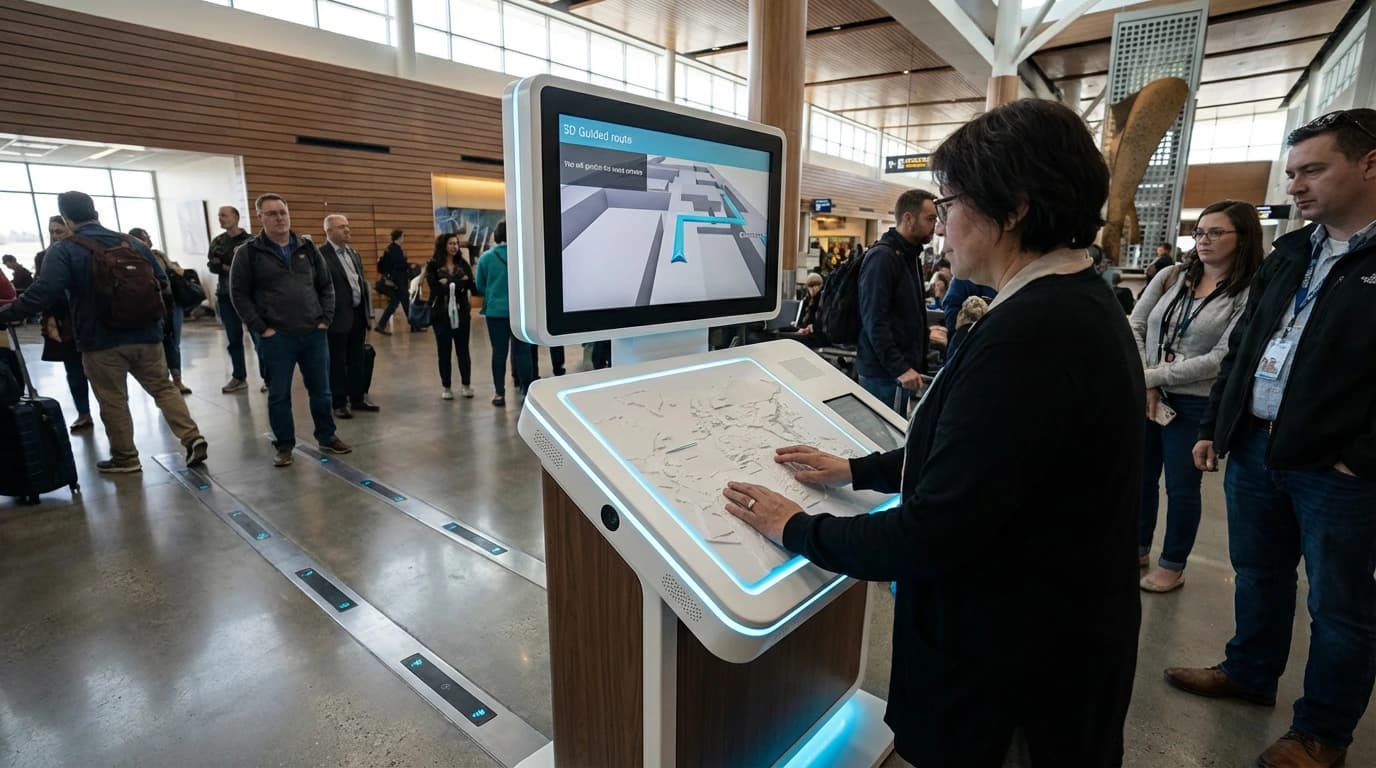
Accessible Tourism Assistants represent a convergence of artificial intelligence, geospatial mapping, and assistive technologies designed to address the significant barriers that travelers with disabilities face when navigating unfamiliar destinations. These systems integrate multiple data streams—including crowdsourced accessibility information, venue infrastructure details, real-time sensor data, and user-specific accessibility profiles—to create comprehensive, personalized travel support. The underlying technology combines computer vision for analyzing physical spaces, natural language processing for communicating accessibility features, and machine learning algorithms that continuously refine recommendations based on user feedback and evolving accessibility standards. By maintaining detailed databases of accessibility attributes—such as entrance widths, elevator availability, tactile paving, audio signaling systems, and quiet spaces—these assistants can map the accessibility landscape of entire cities and travel routes with unprecedented granularity.
The travel and tourism industry has long struggled with the challenge of serving the estimated one billion people worldwide who live with some form of disability, a market segment that represents substantial economic potential yet remains underserved due to information gaps and inadequate infrastructure planning. Traditional travel resources rarely provide the detailed, reliable accessibility information that travelers with mobility, visual, auditory, or cognitive disabilities require to plan trips confidently. Accessible Tourism Assistants address this critical gap by offering end-to-end journey support, from initial destination research through real-time navigation assistance during the trip itself. These systems can alert users to temporary accessibility disruptions—such as elevator outages or construction blocking accessible routes—and dynamically reroute travelers to maintain independence and safety. For tourism operators and hospitality providers, these tools enable better preparation for guests with specific needs, transforming accessibility from an afterthought into a competitive advantage that expands market reach and enhances reputation.
Early implementations of accessible tourism technology have emerged in major metropolitan areas and tourism-focused cities, where municipal governments and advocacy organizations have collaborated to create detailed accessibility maps and pilot navigation programs. Some transportation networks have begun integrating accessibility routing into their journey planning applications, while hospitality booking platforms increasingly incorporate detailed accessibility filters and verified accessibility information. The technology shows particular promise when combined with smartphone-based augmented reality systems that can provide visual or audio guidance through complex environments like airports, transit stations, and cultural attractions. As awareness grows regarding both the moral imperative and business case for inclusive tourism, industry analysts note increasing investment in accessibility-focused travel technology. The trajectory points toward a future where accessibility information becomes as fundamental to travel planning as pricing and availability, supported by standardized accessibility data formats, improved venue compliance with accessibility standards, and growing recognition that designing for accessibility ultimately creates better experiences for all travelers.
Develops long-range high-density visual markers to help visually impaired people navigate urban spaces like subway stations and bus stops.
An online travel booking platform that maps accessibility data points to guarantee inclusive experiences for travelers with disabilities.

AccessAble
United Kingdom · Company
Provides detailed accessibility guides for thousands of venues across the UK and Ireland, working with local councils and businesses.
An intelligent guide app for the blind and visually impaired that provides real-time audio messages about the user's surroundings.
A mobile app that helps disabled people find accessible places through crowdsourced data and detailed tagging.
Connects people who are blind or low vision to remote human agents who use the user's camera to provide visual interpretation and navigation.
A mobile app that connects blind and low-vision people with sighted volunteers and AI for visual assistance.
An advanced accessibility solution that turns public spaces into accessible environments for the blind via an app and sensors.
A non-profit association for organizations that aim to be frontrunners in the study, promotion, and practice of accessible tourism.
Mobi
United States · Startup
Develops multi-modal routing AI that can be configured for specific mobility constraints.
Published forecasts about this technology, graded against what happened in Hindsight.
AI-Empowered People
This page is a narrower case of it.
Signals turns a topic into a sourced research record you can inspect and rerun. Your first scan is free, and this one starts with Accessible Tourism Assistants already loaded, so edit it or scan as is.