









Adaptive and Assistive Wearables
This page is a narrower case of it.
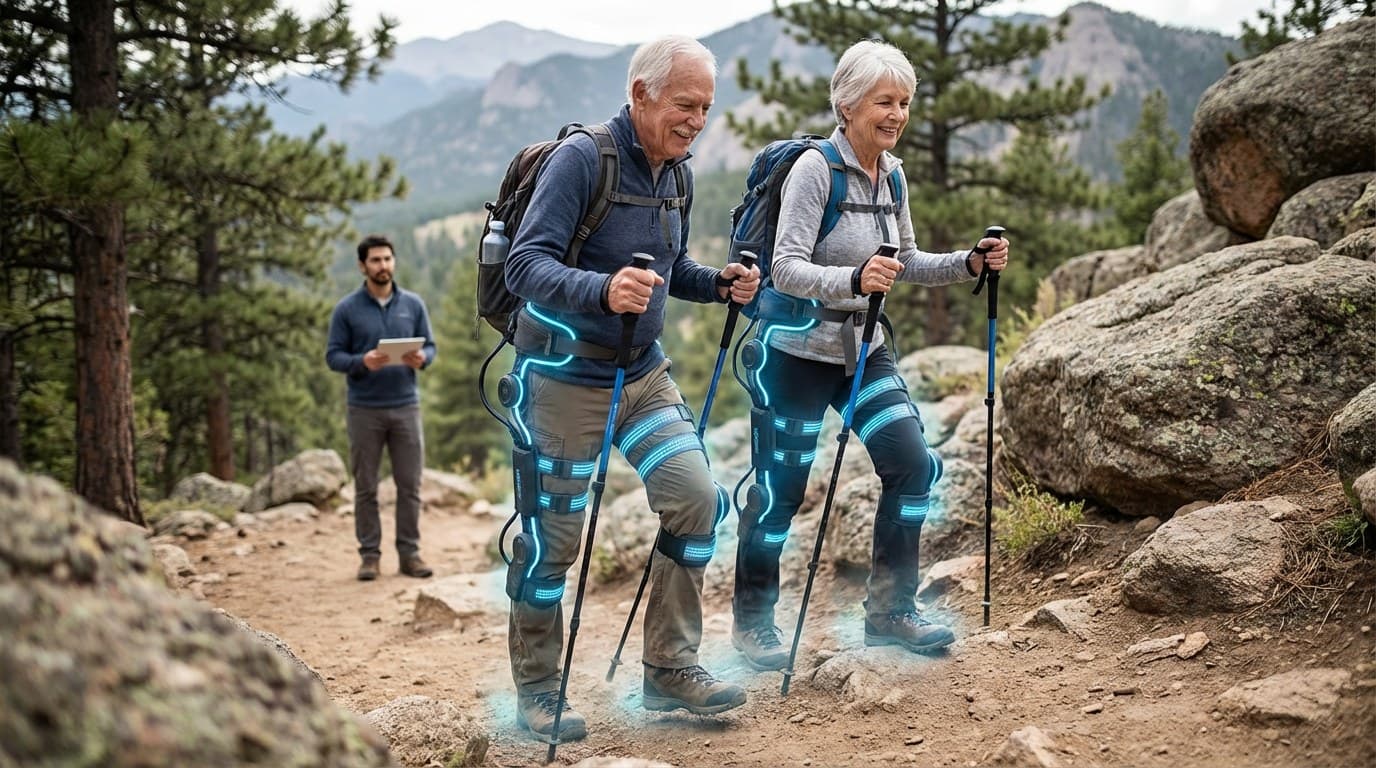
Soft exoskeletons represent a significant departure from traditional rigid robotic frameworks, utilizing flexible, textile-based materials integrated with lightweight actuators and sensors to provide targeted muscular assistance. Unlike their bulky predecessors developed primarily for industrial or military applications, these wearable systems employ pneumatic artificial muscles, cable-driven mechanisms, or compact electric motors embedded within fabric structures that conform naturally to the body's contours. The technology works by detecting the wearer's intended movements through embedded sensors that monitor muscle activity and joint angles, then delivering precisely timed assistive forces to key muscle groups—particularly the quadriceps, hip flexors, and lower back—during the most demanding phases of movement such as ascending slopes or rising from seated positions. This biomechanical augmentation reduces the metabolic cost of walking and climbing by 15-30%, effectively making challenging terrain feel significantly less strenuous without requiring the user to consciously control the device.
The tourism and travel industry faces a growing challenge as global demographics shift toward older populations who maintain strong desires for active, experiential travel but encounter physical barriers that limit their participation. Traditional accessibility solutions like wheelchair ramps and motorized scooters, while valuable, often restrict travelers to paved paths and developed areas, excluding them from many of the world's most compelling natural and cultural destinations. Soft exoskeletons address this limitation by preserving the authentic experience of self-powered exploration while reducing the physical demands that make such activities prohibitive. This technology enables tour operators and adventure travel companies to expand their addressable market, offering hiking expeditions, archaeological site visits, and nature-based experiences to demographics previously considered unable to participate. The systems also reduce the liability and logistical challenges associated with assisting mobility-limited travelers in remote locations, as users maintain greater independence and require less direct physical support from guides or companions.
Early commercial deployments have emerged primarily in Japan and South Korea, where aging populations and strong robotics industries have accelerated adoption. Several tourism operators in mountainous regions have begun offering soft exoskeleton rentals at trailheads, while some cruise lines have piloted programs providing the devices for shore excursions involving uneven terrain. The technology remains in a transitional phase between specialized medical devices and consumer products, with costs gradually declining as manufacturing scales and battery technology improves. Research initiatives are exploring integration with smart tourism infrastructure, where exoskeletons could receive terrain data and adjust assistance levels based on upcoming trail conditions. As the global senior travel market continues expanding—projected to represent over 30% of international tourists by 2030—soft exoskeletons align with broader industry trends toward inclusive design and extended healthspan. The technology promises not merely to accommodate physical limitations but to fundamentally redefine the relationship between aging and adventure, enabling a generation to maintain active engagement with the world's diverse landscapes well beyond what previous generations considered possible.
Develops pneumatic exoskeletons using high-strength fabrics.
High-performance outdoor apparel company known for pioneering WaterTight zippers and micro-seam technology.
A research lab at Harvard University focused on soft robotics and wearable assistive devices.
Creates 'Powered Clothing' that fuses apparel with robotics.
Research institute for biologically inspired engineering.
Conducts advanced research in bioelectronics and the interface between biological systems and electronic circuits.
Developer of the 'Honda Mobile Power Pack', a standardized swappable battery for motorcycles and small mobility devices.
Develops the Ironhand, a soft robotic muscle strengthening system for hands.
Published forecasts about this technology, graded against what happened in Hindsight.
Adaptive and Assistive Wearables
This page is a narrower case of it.
Adaptive Wearable Technologies
This page is a narrower case of it.
Signals turns a topic into a sourced research record you can inspect and rerun. Your first scan is free, and this one starts with Soft Exoskeletons for Adventure already loaded, so edit it or scan as is.