Mission Design AI Assistants
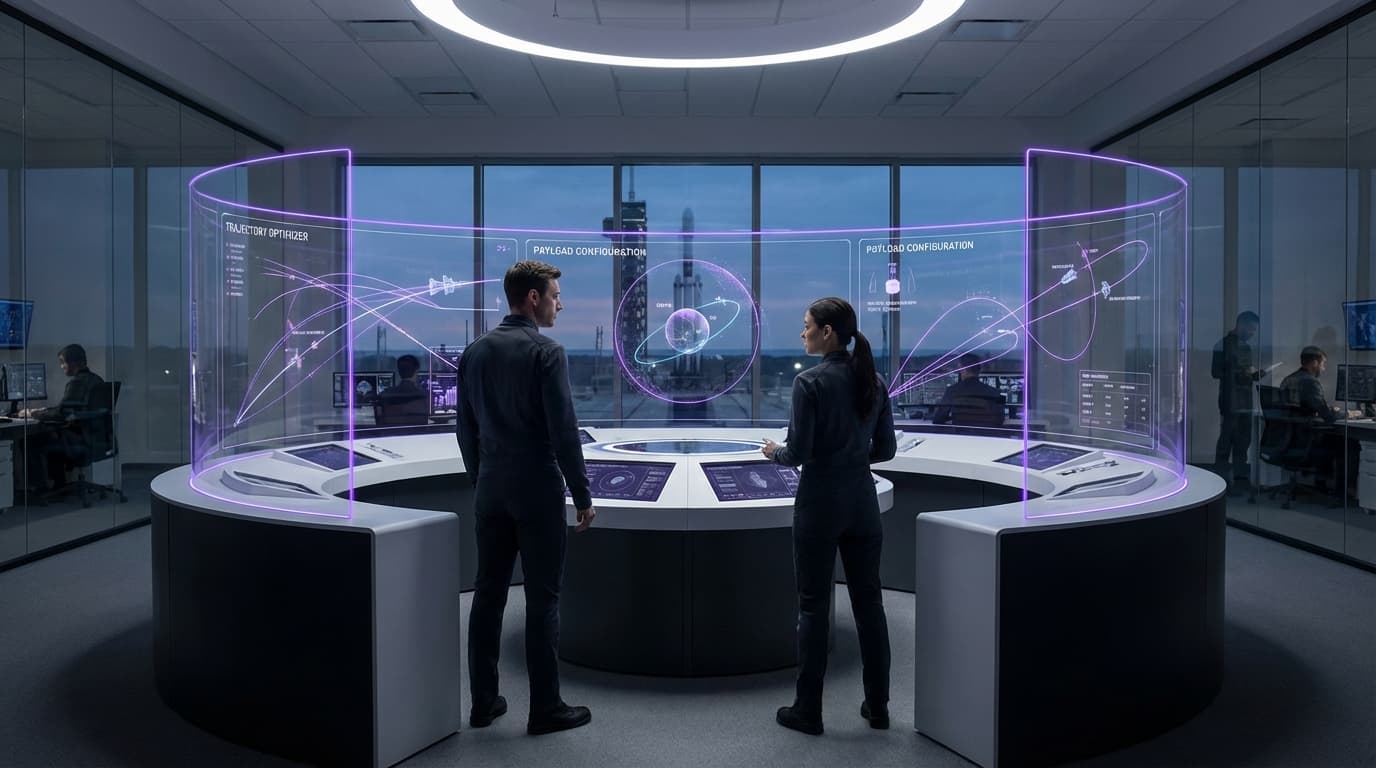
Mission design AI assistants are AI-powered tools that help human mission designers explore vast design spaces for space missions, including trajectory optimization, launch window analysis, staging strategies, and payload configuration trade-offs. These systems use machine learning and optimization algorithms to rapidly evaluate thousands or millions of design options, identifying optimal or near-optimal solutions that might not be intuitive to human designers, and accelerating the early-phase concept development process for complex missions.
This innovation addresses the time-intensive and expertise-dependent nature of mission design, where exploring design options manually is slow and may miss optimal solutions. By using AI to explore design spaces, these tools can identify better mission architectures, reduce design time, and help discover non-intuitive solutions for complex multi-body missions (like missions that use gravity assists from multiple planets). The technology is being developed by NASA, space agencies, and commercial companies to improve mission design efficiency.
The technology is particularly valuable for complex missions where the design space is vast and optimal solutions are not obvious, such as missions using multiple gravity assists, missions to multiple destinations, or missions with complex constraints. As space missions become more ambitious and complex, AI-assisted design becomes increasingly valuable. However, the technology faces challenges including ensuring AI-generated designs are actually feasible, integrating AI tools into existing design workflows, and maintaining human oversight and expertise. The technology represents an important evolution in mission design capabilities, but requires careful integration to ensure it enhances rather than replaces human expertise. Success could accelerate mission development and enable more sophisticated mission concepts.
Related Organizations
Developed and operates the EMIT (Earth Surface Mineral Dust Source Investigation) hyperspectral instrument on the ISS.
Leads the EAGLE-1 mission and the SAGA program to build a European quantum communication infrastructure in space.

Develops high-thrust Hall effect electric propulsion systems for small satellites.

Develops FreeFlyer, a software application for space mission analysis, design, and operations.

Develops AI-assisted engineering software that helps engineers manage requirements and design parameters for complex hardware like satellites.
Specializes in astrodynamics and trajectory design, notably for the CAPSTONE mission to the Moon.

Develops the Hifly satellite control system and other ground segment automation software for major institutional and commercial missions.

Software platform for mission management and launch matching.

Builds space simulation and analytics platforms for training and mission planning.
Supporting Evidence
Research this in Signals
Signals turns a topic into a sourced research record you can inspect and rerun. Your first scan is free, and this one starts with Mission Design AI Assistants already loaded, so edit it or scan as is.