Contrail Avoidance Optimization
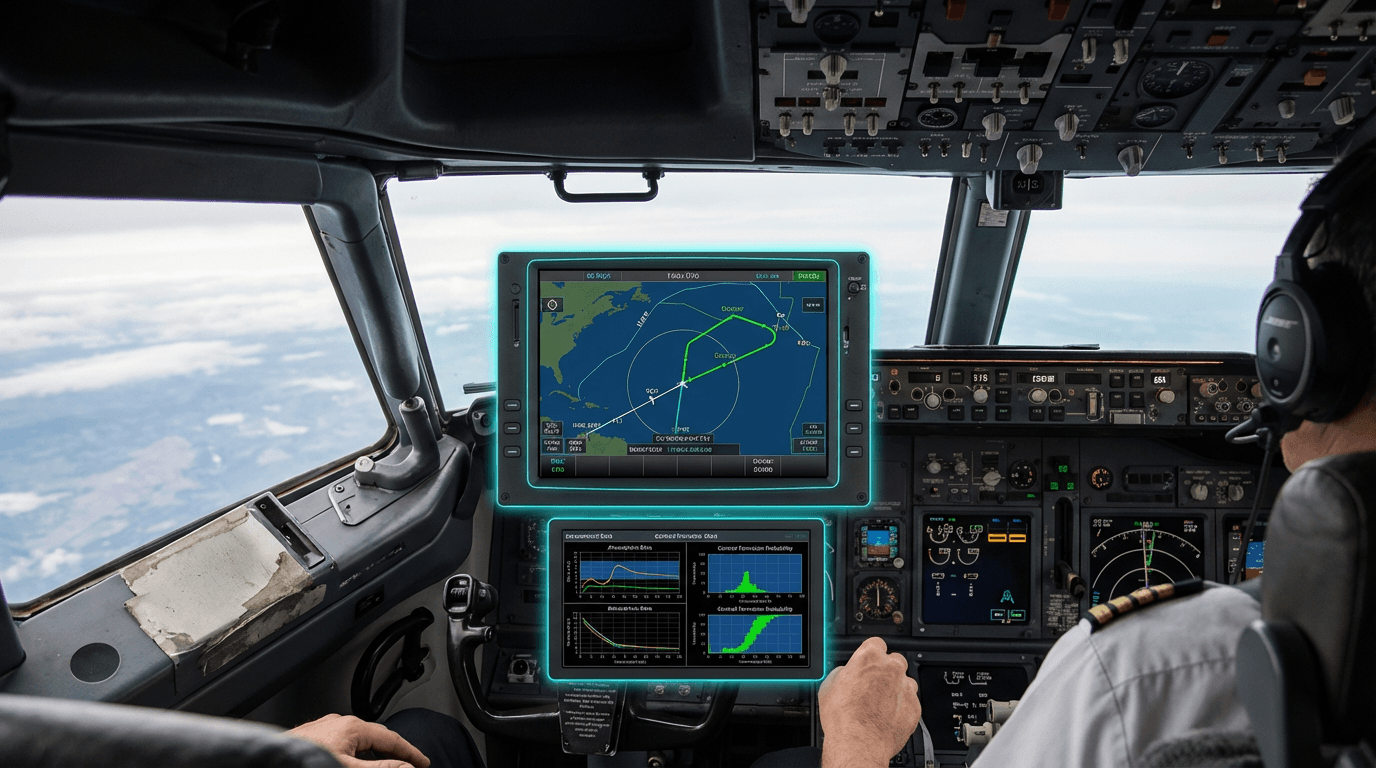
Contrail avoidance optimization represents a sophisticated approach to mitigating one of aviation's most significant yet often overlooked climate impacts. While carbon dioxide emissions from aircraft have long been the focus of environmental concern, research increasingly demonstrates that persistent condensation trails—contrails—may contribute as much or more to aviation's overall warming effect. These ice crystal formations occur when hot, humid engine exhaust meets cold, ice-supersaturated atmospheric conditions, creating linear clouds that can persist for hours and trap outgoing infrared radiation. The technology works by integrating high-resolution numerical weather prediction models with flight planning systems to identify atmospheric regions where contrails are likely to form and persist. Advanced algorithms then calculate alternative flight paths or altitude adjustments that avoid these ice-supersaturated zones while minimizing additional fuel consumption, flight time, and operational complexity. The optimization process must balance multiple competing factors: the climate benefit of contrail avoidance, the fuel penalty of route deviations, air traffic control constraints, and real-time weather forecast accuracy.
The aviation industry faces mounting pressure to address its climate footprint beyond carbon emissions alone, and contrail avoidance offers a relatively near-term intervention with potentially substantial benefits. Traditional flight planning optimizes primarily for fuel efficiency and time, inadvertently routing aircraft through conditions conducive to contrail formation. This technology addresses the challenge of incorporating non-CO₂ climate effects into operational decision-making, an area where regulatory frameworks and economic incentives remain underdeveloped. Early studies suggest that avoiding just a small fraction of flights—those most likely to produce the most persistent and climatically significant contrails—could reduce aviation's warming impact considerably, often with fuel penalties of only one to two percent. The solution also tackles the problem of forecast uncertainty, as predicting ice-supersaturated regions requires atmospheric data at resolutions and accuracies that push the boundaries of current meteorological capabilities. By enabling airlines to make climate-informed routing decisions within existing operational frameworks, this technology creates a pathway for immediate environmental benefit without requiring fundamental changes to aircraft design or propulsion systems.
Several airlines and research institutions have begun testing contrail avoidance systems through pilot programs and flight trials, demonstrating technical feasibility while revealing practical implementation challenges. These deployments typically involve equipping aircraft with enhanced weather data feeds and integrating contrail prediction models into flight management systems or ground-based dispatch operations. The technology shows particular promise for long-haul flights at cruise altitudes where persistent contrails are most likely to form and exert warming effects. However, widespread adoption faces hurdles including the need for improved weather forecasting infrastructure, development of standardized contrail prediction methodologies, and creation of regulatory or market mechanisms that reward climate-optimized flight planning. As the aviation sector pursues its decarbonization goals, contrail avoidance optimization represents a complementary strategy that addresses the full spectrum of aviation's climate impact, positioning itself as an essential component of sustainable flight operations in the coming decades.
Related Organizations

Breakthrough Energy
United States · Consortium
Bill Gates-founded organization funding climate innovation.

The originators of the original NeRF paper and developers of MultiNeRF and immersive view technologies for Maps.

Conducts fundamental research on aviation emissions, including the atmospheric physics of contrails and trade-offs between CO2 and non-CO2 forcing.

Conducts extensive research on Hybrid Laminar Flow Control (HLFC) and suction systems.

Provides the DECISIONX platform for contrail prevention, enabling airlines to optimize flight plans to avoid ice-supersaturated regions.

Collaborates with MIT and Google to test contrail avoidance algorithms on live commercial flights.
Estuaire
France · Startup
Provides a data platform for aviation sustainability that includes contrail analysis and mitigation planning for airlines.

The Centre for Cold Matter develops portable quantum accelerometers for navigation without satellite support.

UAE national airline running the 'Greenliner' sustainability program.

A major European satellite manufacturer leading the ASCEND feasibility study.
Supporting Evidence
Research this in Signals
Signals turns a topic into a sourced research record you can inspect and rerun. Your first scan is free, and this one starts with Contrail Avoidance Optimization already loaded, so edit it or scan as is.