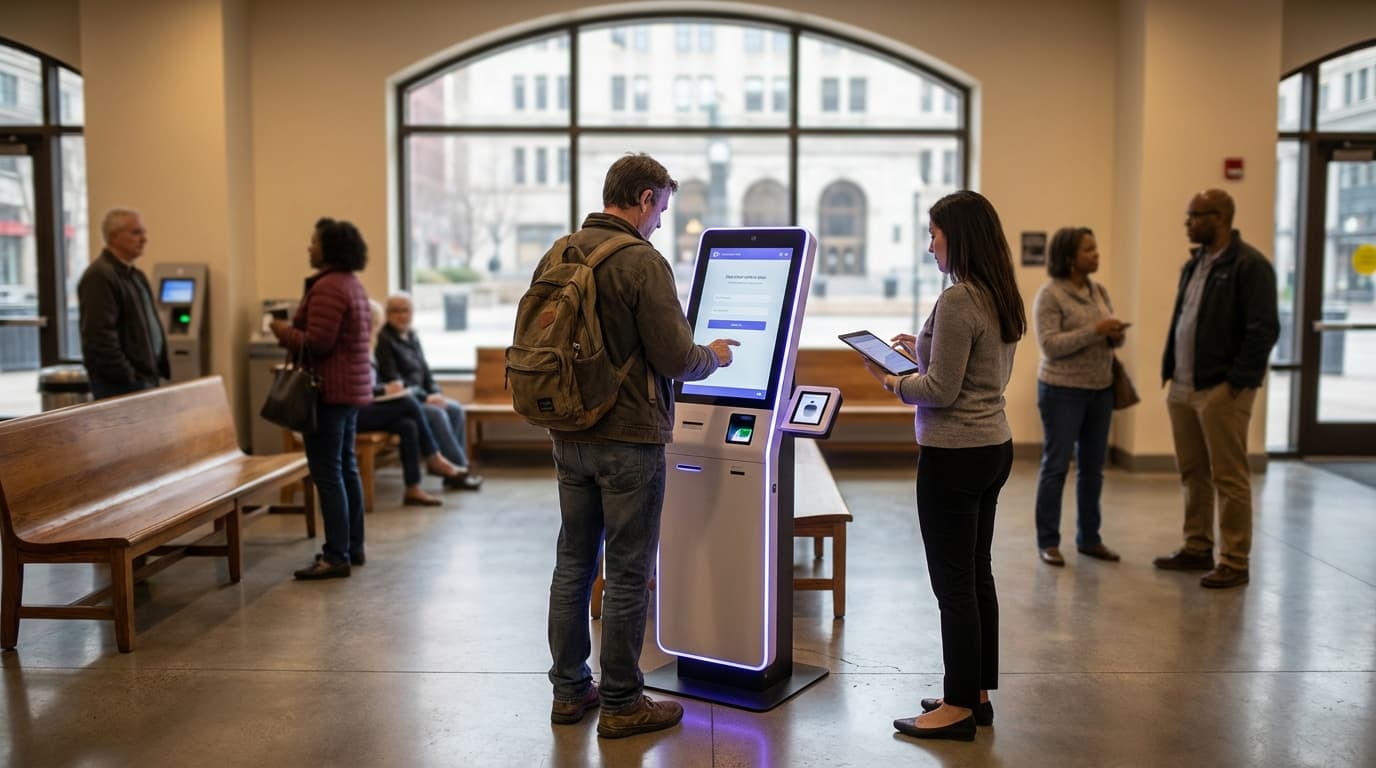
Open Benefits & Digital Service Delivery
The delivery of public benefits has long been plagued by bureaucratic complexity, creating barriers that prevent eligible citizens from accessing essential services. Traditional systems often require extensive paperwork, in-person visits to government offices, and navigation of confusing eligibility criteria—challenges that disproportionately affect vulnerable populations including the elderly, disabled, and those with limited digital literacy. Open benefits and digital service delivery platforms address these systemic inefficiencies by reimagining how governments interact with citizens seeking assistance. These systems employ automated eligibility screening tools that cross-reference multiple data sources to determine qualification for various programs, reducing the burden on applicants to prove their circumstances repeatedly. Document automation streamlines the application process by pre-populating forms with verified information and guiding users through only the questions relevant to their situation. Transparent case management interfaces allow applicants to track their application status in real-time, eliminating the anxiety and uncertainty that traditionally accompanies waiting for government decisions.
For government agencies, these platforms solve critical operational challenges including high administrative costs, processing backlogs, and error rates in manual benefit determination. By digitizing workflows and implementing rules-based eligibility engines, agencies can process applications more quickly and consistently while reducing the staff hours required for routine case management. The systems also enable proactive outreach, identifying individuals who may qualify for benefits but have not applied, thereby increasing program uptake among those most in need. Integration with existing government databases allows for continuous eligibility verification, automatically adjusting benefits when circumstances change rather than requiring periodic recertification. This approach not only improves operational efficiency but also enhances program integrity by reducing fraud and overpayment while ensuring that eligible individuals receive timely assistance.
Several jurisdictions have begun implementing these modernized service delivery models, with early deployments demonstrating significant improvements in application completion rates and reduced processing times. Research suggests that user-centered design principles—including mobile-responsive interfaces, plain language communication, and multi-language support—are critical to ensuring these systems serve diverse populations effectively. The technology represents a broader shift toward human-centered government services, where digital tools are designed to accommodate citizens' needs rather than forcing them to navigate bureaucratic structures. As governments worldwide face pressure to improve public trust and demonstrate accountability, open benefits platforms offer a pathway toward more transparent, accessible, and dignified social services. The continued evolution of these systems, particularly through integration with emerging technologies like secure digital identity verification and AI-assisted application support, points toward a future where accessing government assistance is as straightforward as any modern consumer service, fundamentally transforming the relationship between citizens and the state.
Related Organizations

The UK government unit that pioneered the 'Government as a Platform' model and the GOV.UK single domain for service delivery.

A consultancy formed from the team that fixed HealthCare.gov, now building modern benefits systems for federal and state agencies (e.g., VA, CMS).

A unit within the Executive Office of the President that deploys technology experts to modernize critical government services, including benefits delivery.

Creators of the Providers app (formerly Fresh EBT), which allows SNAP recipients to manage their benefits and check balances digitally.

The New South Wales government agency acting as a one-stop shop for government services, widely cited as a global model for digital service delivery.

A digital services company that helps the federal government build and operate digital services, including Veteran benefits and Medicare.

A design studio dedicated to changing how public institutions work, famous for redesigning the Michigan benefits application to be human-centered.

A tech nonprofit that provides an easy-to-use platform on web and SMS for Americans to sign up for SNAP (food stamps).

Open-source platform to turn tax and benefit legislation into code, used by the French government and others.
Supporting Evidence
Research this in Signals
Signals turns a topic into a sourced research record you can inspect and rerun. Your first scan is free, and this one starts with Open Benefits & Digital Service Delivery already loaded, so edit it or scan as is.