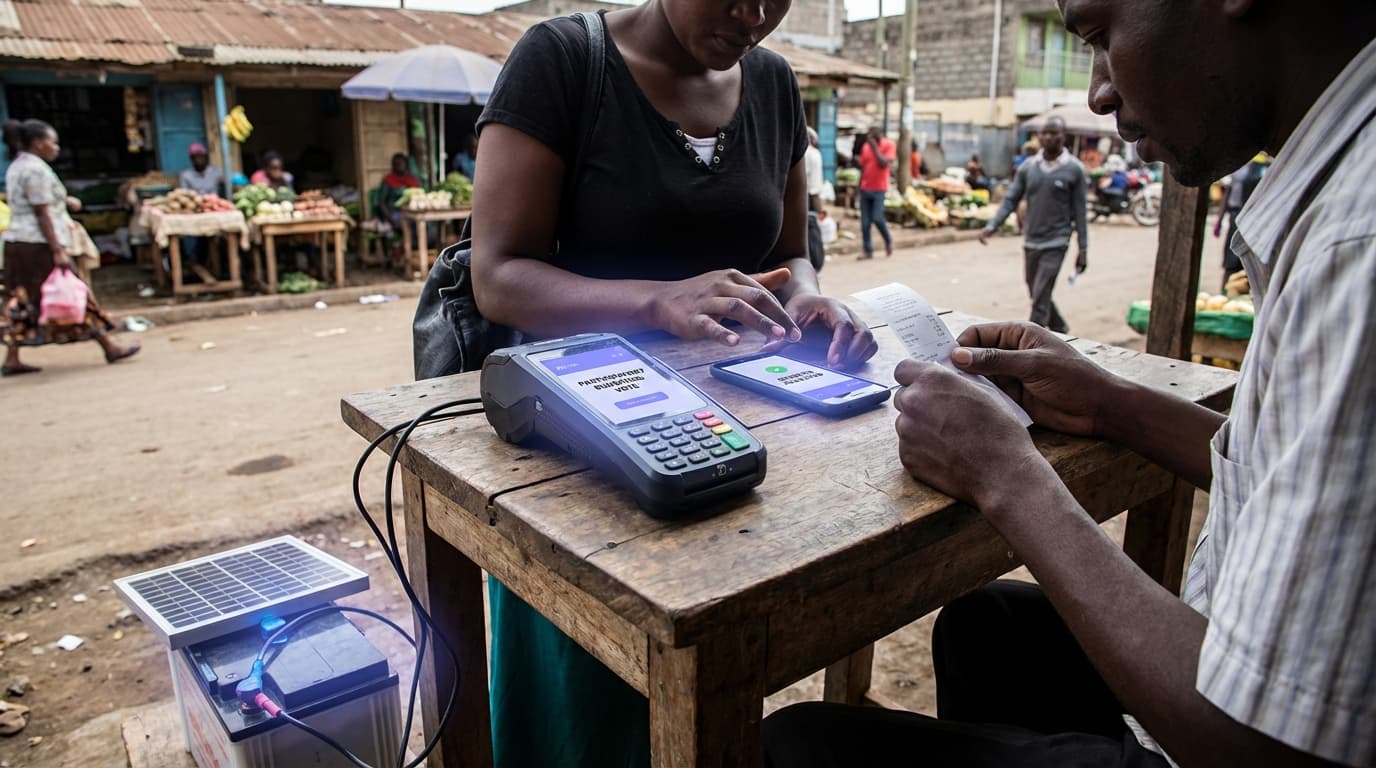
Mobile Money Civic Integration
Mobile money civic integration represents a convergence of digital financial services and democratic participation mechanisms, building upon the success of platforms like M-Pesa that have revolutionised financial inclusion across the Global South. This approach leverages the widespread adoption of mobile money systems—which allow users to store, send, and receive funds via basic mobile phones without requiring traditional bank accounts—to create new channels for civic engagement and resource distribution. The technical foundation relies on existing mobile money infrastructure, including agent networks, SMS-based transaction systems, and increasingly, smartphone applications that can handle more complex interactions. By linking these payment rails to civic processes, governments and civil society organisations can create direct pathways between citizens and public resources, enabling real-time transactions tied to participatory decision-making, conditional cash transfers linked to community engagement, and micro-grant disbursements for locally-proposed initiatives.
The primary challenge this solution addresses is the persistent gap between formal democratic institutions and marginalised populations, particularly in contexts where traditional banking infrastructure is limited but mobile phone penetration is high. Conventional participatory budgeting processes often suffer from low engagement rates, geographic barriers, and administrative overhead that can exclude rural or economically disadvantaged communities. Mobile money civic integration overcomes these limitations by meeting citizens where they already are—on their mobile devices—and providing immediate, tangible incentives for participation. This approach transforms abstract civic processes into concrete economic transactions, making the benefits of engagement visible and accessible. For governments and development organisations, it dramatically reduces the transaction costs associated with distributing public resources, eliminates intermediaries who might capture funds, and creates transparent, auditable trails of both participation and payment. The system enables new models of conditional engagement, where citizens might receive small stipends for attending community meetings, voting on budget priorities, or contributing to local planning processes, while simultaneously ensuring that approved community proposals can receive funding directly and rapidly.
Early implementations across sub-Saharan Africa, South Asia, and Latin America indicate promising results, with pilot programs demonstrating increased participation rates among previously excluded groups, particularly women and youth who may have greater access to mobile phones than to formal civic spaces. Research suggests that these systems can significantly reduce the time between democratic decision-making and resource allocation, collapsing what might traditionally take months into days or weeks. The technology has proven particularly effective in contexts where governments are exploring universal basic income pilots, emergency relief distribution, and decentralised development funding. As mobile money ecosystems mature and interoperability between platforms improves, the potential for scaling these civic integration models grows substantially. This approach aligns with broader trends toward digital governance and financial inclusion, suggesting a future where civic participation and economic empowerment become increasingly intertwined, creating feedback loops that strengthen both democratic legitimacy and material well-being in communities that have historically been marginalised from both formal financial systems and political power structures.
Related Organizations

Safaricom
Kenya · Company
Telecommunications provider operating M-Pesa, the world's most successful SMS/USSD-based mobile money system.

A nonprofit that sends money directly to people living in poverty, currently running the world's largest long-term UBI experiment in Kenya.

A foundation creating community currencies (Sarafu) that run on feature phones and blockchain.

Segovia
United States · Company
Provides software to facilitate bulk payments to mobile wallets in emerging markets (Acquired by Crown Agents Bank).

A multinational mobile telecommunications company operating in many African and Asian countries.

The UN's global development network.

A virtual entertainment platform specializing in interactive virtual concerts for major artists like Justin Bieber and The Weeknd.

Telecommunications giant developing the connectivity layer (5G, IoT) required to track π-containers in a Physical Internet system.

An international financial institution that provides loans and grants to the governments of low- and middle-income countries.

An international nonprofit that allows people to lend money via the Internet to low-income entrepreneurs and students.
Supporting Evidence
Research this in Signals
Signals turns a topic into a sourced research record you can inspect and rerun. Your first scan is free, and this one starts with Mobile Money Civic Integration already loaded, so edit it or scan as is.