Accessibility & Inclusion Assurance
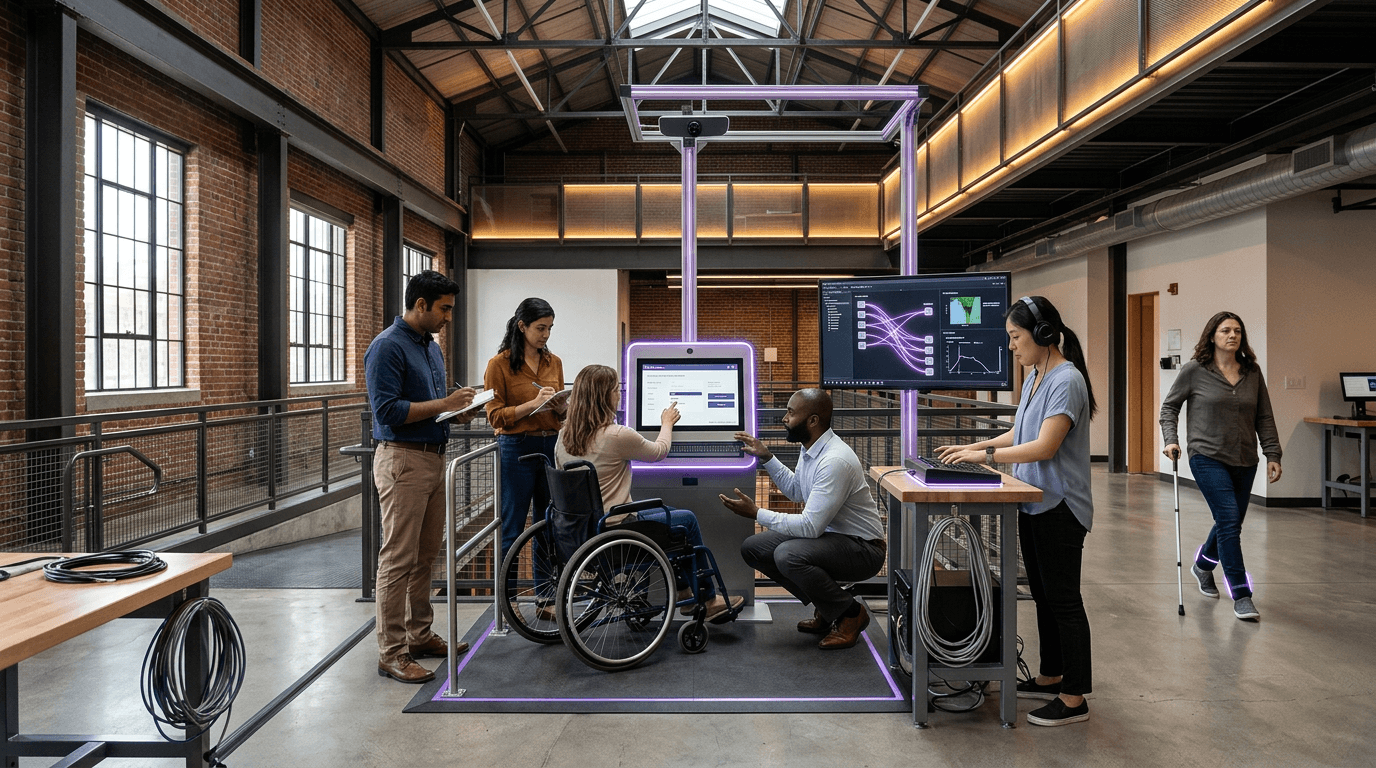
Accessibility and inclusion assurance represents a systematic approach to ensuring that civic systems, digital public services, and democratic processes are genuinely usable by all citizens, regardless of physical ability, language proficiency, technological access, or other potential barriers. At its core, this framework combines technical compliance testing with proactive inclusive design methodologies to identify and eliminate exclusionary patterns before they become embedded in civic infrastructure. The technical mechanisms include automated accessibility scanners that verify compliance with standards such as WCAG (Web Content Accessibility Guidelines), manual testing protocols involving users with diverse abilities, and performance monitoring systems that track metrics like screen reader compatibility, keyboard navigation functionality, and colour contrast ratios. Beyond digital interfaces, this approach extends to physical voting locations, public consultation processes, and civic engagement platforms, ensuring that accommodations such as multilingual support, plain language documentation, assistive technology integration, and low-bandwidth operational modes are not afterthoughts but fundamental design requirements. The framework also incorporates measurable equity targets that link system performance directly to demographic participation rates, creating accountability mechanisms that reveal when certain populations are being systematically excluded.
The fundamental challenge this solution addresses is the persistent gap between nominal democratic access and practical democratic participation. Traditional civic systems have historically been designed around a narrow conception of the "typical" user—often assumed to be digitally literate, English-speaking, able-bodied, and equipped with reliable internet access. This default-user paradigm has resulted in election systems that fail voters with visual impairments, public comment periods that exclude non-English speakers, digital services that are unusable on older devices or slow connections, and consultation processes that inadvertently favour those with flexible work schedules and transportation access. Research in civic technology suggests that these barriers compound existing inequalities, effectively creating tiered citizenship where some populations can fully exercise their democratic rights while others face significant friction at every interaction point. Accessibility and inclusion assurance transforms this paradigm by embedding equity metrics directly into procurement requirements, system evaluations, and performance reviews. When a city government can measure that its online permitting system has a 40% lower completion rate among users over 65, or that public hearings consistently draw participants from only three of twelve city districts, these data points become actionable intelligence rather than invisible exclusions.
Early implementations of comprehensive accessibility assurance frameworks are emerging in jurisdictions committed to digital equity and inclusive governance. Some election authorities now conduct pre-deployment accessibility audits that involve voters with disabilities testing ballot-marking devices, vote-by-mail systems, and polling place layouts, with their feedback driving iterative improvements before election day. Digital public services in several municipalities have adopted inclusive design processes that begin with community listening sessions in multiple languages, followed by prototype testing with diverse user groups, and conclude with ongoing monitoring of completion rates segmented by demographic factors. Industry analysts note that the most effective approaches combine automated compliance checking with qualitative user research, recognising that technical accessibility and practical usability are distinct but complementary goals. As civic technology becomes increasingly central to democratic participation, accessibility and inclusion assurance offers a pathway toward systems that genuinely serve entire populations rather than privileged subsets. This framework aligns with broader movements toward participatory design, digital equity, and accountable governance, suggesting that the future of civic systems will be measured not just by their technical sophistication but by their demonstrated capacity to include and empower all citizens equally.
Related Organizations

The international standards organization for the Web, responsible for the Decentralized Identifiers (DID) and Verifiable Credentials (VC) recommendations.
A nonprofit ensuring that voter guides, ballots, and election materials are accessible and easy to understand.

An accessibility testing platform that connects digital teams with people with disabilities for on-demand user research and testing.

The UK government unit that pioneered the 'Government as a Platform' model and the GOV.UK single domain for service delivery.

A unit within the Executive Office of the President that deploys technology experts to modernize critical government services, including benefits delivery.

A professional services firm specializing in free and open source software for government, with a strong practice in accessibility compliance.

Develops the 'axe' suite of accessibility testing tools, widely used by government agencies and enterprises to ensure WCAG compliance.

Provides digital accessibility software and services, helping organizations comply with regulations like the ADA and Section 508.

Offers a suite of integrated accessibility tools for designers and developers to bake inclusion into software from the start.

Provides AI-powered accessibility widgets and remediation tools to help websites achieve ADA and WCAG compliance.
Supporting Evidence
Research this in Signals
Signals turns a topic into a sourced research record you can inspect and rerun. Your first scan is free, and this one starts with Accessibility & Inclusion Assurance already loaded, so edit it or scan as is.