Indigenous Governance Systems Digitization
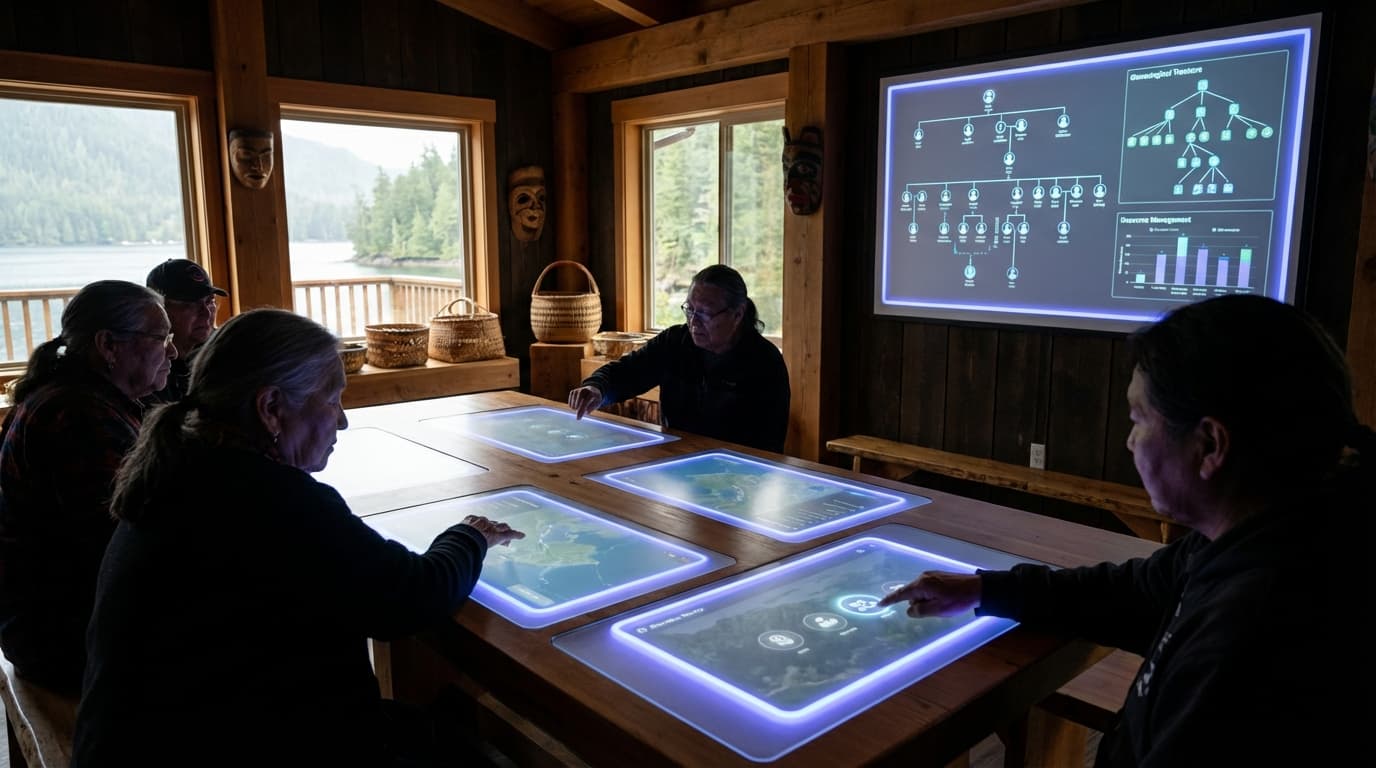
Indigenous communities worldwide have long maintained sophisticated governance systems rooted in consensus-building, elder wisdom, oral traditions, and customary law—yet these systems have often been marginalised or overwritten by colonial administrative structures. The fundamental challenge lies in how digital civic technologies can support rather than supplant these traditional decision-making processes. Most conventional e-governance platforms are built around Western parliamentary models, majority voting, and written documentation, making them fundamentally incompatible with Indigenous governance principles that may prioritise consensus over majority rule, oral testimony over written records, and kinship-based authority over individual representation. Indigenous Governance Systems Digitization addresses this gap by creating digital tools that are co-designed with Indigenous communities from the ground up, ensuring that technology serves cultural protocols rather than forcing communities to adapt their practices to fit predetermined digital templates.
These platforms operate through collaborative design processes where Indigenous knowledge holders, elders, and community members work alongside technologists to define how digital tools should function within their specific cultural contexts. Rather than imposing features like simple yes/no voting or majority-rule tallies, these systems might incorporate mechanisms for extended deliberation periods, multi-generational consultation processes, or consensus indicators that respect the time and dialogue required for legitimate decisions. Some implementations support oral testimony recording and sharing in Indigenous languages, ensuring that knowledge transmission occurs in culturally appropriate ways. Critically, these platforms embed principles of data sovereignty—ensuring that communities maintain complete control over their information, including who can access it, how it can be used, and where it is stored. This addresses historical patterns of extractive research and surveillance that have harmed Indigenous peoples, replacing them with technological infrastructure that reinforces self-determination and cultural continuity.
Early implementations have emerged in various contexts, from First Nations in Canada developing platforms for land management decisions to Aboriginal communities in Australia creating digital tools for cultural heritage protection that incorporate traditional custodianship protocols. These systems often integrate with existing community structures rather than replacing them, serving as complementary tools that extend the reach of traditional governance while maintaining its essential character. The broader significance of this approach extends beyond Indigenous communities themselves, offering alternative models for digital democracy that challenge the assumption that Western parliamentary systems represent the only legitimate form of collective decision-making. As conversations around digital governance evolve globally, Indigenous-led innovations demonstrate how technology can be designed to preserve cultural diversity in civic participation rather than homogenising it, pointing toward futures where digital tools amplify rather than erase the world's varied traditions of collective wisdom and community self-governance.
Related Organizations

Develops Traditional Knowledge (TK) Labels and Biocultural (BC) Labels, which are digital markers used to define attribution, access, and usage rights for indigenous data in digital systems.
Partners with marginalized communities to build technology (like Mapeo) that defends their rights and environment.
An international network promoting the CARE Principles for Indigenous Data Governance.
An open-source content management system built with Indigenous communities to manage digital heritage according to cultural protocols.

Māori media organization developing natural language processing (NLP) and AI tools for indigenous languages.
An indigenous-owned digital agency that builds custom software and web experiences centered on indigenous data sovereignty and social impact.

An application for mapping and locating place-based storytelling, allowing communities to control access.

An indigenous-led nonprofit that creates a digital map of indigenous territories, treaties, and languages, providing an API for other platforms to acknowledge traditional lands.
Supporting Evidence
Research this in Signals
Signals turns a topic into a sourced research record you can inspect and rerun. Your first scan is free, and this one starts with Indigenous Governance Systems Digitization already loaded, so edit it or scan as is.