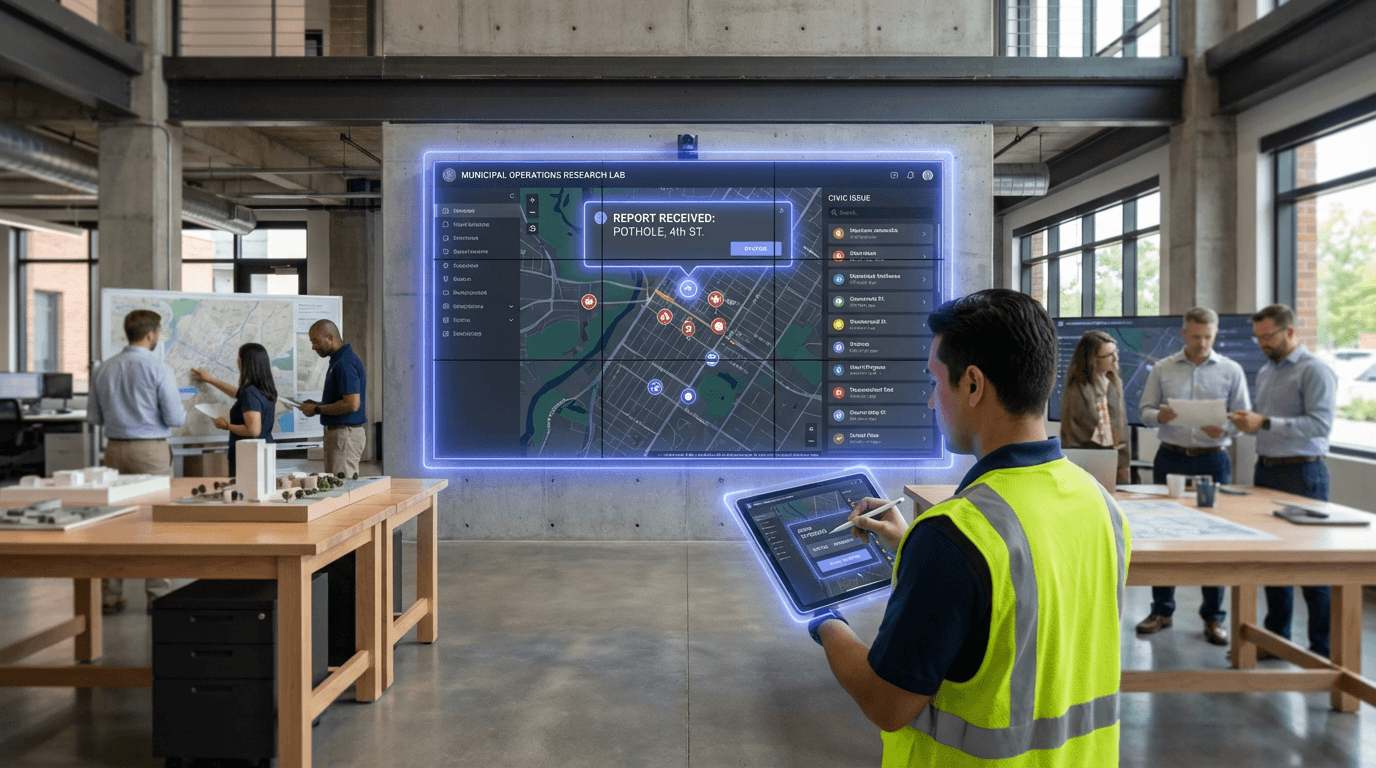
Civic Issue Reporting & Casework Portals
Civic issue reporting and casework portals are digital platforms that fundamentally transform how residents communicate service needs to local government and how municipalities respond to those requests. These systems provide structured channels for citizens to report infrastructure problems, safety hazards, service disruptions, and quality-of-life concerns directly to the appropriate municipal departments. The technical architecture typically combines mobile applications, web interfaces, and backend case management systems that route reports to relevant agencies based on geographic location, issue category, and jurisdictional responsibility. Modern implementations incorporate geolocation services, photo documentation capabilities, and automated categorization algorithms that help triage incoming requests. The platforms create a digital record of each interaction, assigning unique case identifiers and enabling status tracking throughout the resolution process.
The primary challenge these portals address is the historical opacity and inefficiency of citizen-government service interactions. Traditional methods—phone calls, walk-in visits, or written complaints—often disappeared into bureaucratic black boxes, leaving residents uncertain whether their concerns were even registered, let alone addressed. This lack of visibility eroded trust in local government and created perceptions of unresponsiveness regardless of actual service delivery performance. By making the entire lifecycle of a service request transparent and trackable, these platforms fundamentally alter the accountability relationship between residents and municipal agencies. They enable performance measurement through response time metrics, completion rates, and geographic distribution of issues, providing both internal management tools and public accountability mechanisms. This visibility creates institutional pressure for responsiveness while giving residents concrete evidence of government action, transforming abstract notions of civic engagement into tangible feedback loops.
Cities worldwide have deployed these systems with varying degrees of sophistication and integration. Early implementations often functioned as simple reporting interfaces with minimal backend connectivity, requiring manual data entry and offering limited tracking capabilities. Contemporary platforms increasingly integrate with enterprise resource planning systems, work order management tools, and geographic information systems, enabling automated routing, resource allocation, and performance analytics. Some municipalities publish aggregated data from these portals as open datasets, allowing civic technologists and researchers to identify service delivery patterns and equity gaps. The technology has evolved beyond simple complaint management to become a cornerstone of participatory governance, with some cities experimenting with features that allow residents to follow issues in their neighborhoods, vote on priority concerns, or receive proactive notifications about planned maintenance. As expectations for government responsiveness continue to rise and digital literacy becomes more universal, these portals represent an essential infrastructure for legitimate democratic governance, making the often-invisible work of municipal service delivery both measurable and accountable to the communities being served.
Related Organizations

Integrated technology platform for local government, including websites and 311 request systems.

Social enterprise building civic tech tools like FixMyStreet and WhatDoTheyKnow.

A collaborative model and open standard for tracking civic issues, allowing different apps to communicate with city servers.

Provides civic tech solutions for land management, asset management, and licensing, facilitating automated regulatory enforcement.

Develops OneView, a citizen engagement CRM that integrates mobile reporting apps with backend municipal workflows.

A global leader in CRM that recently launched Agentforce to deploy autonomous agents across the enterprise.

The largest software company in North America exclusively focused on the public sector, providing integrated cloud solutions.

Provides citizen engagement solutions including advanced 311 systems and digital self-service portals for local governments.
Provides a cloud computing platform to help companies manage digital workflows for enterprise operations.

A global network of civic technology organizations.
Supporting Evidence
Research this in Signals
Signals turns a topic into a sourced research record you can inspect and rerun. Your first scan is free, and this one starts with Civic Issue Reporting & Casework Portals already loaded, so edit it or scan as is.