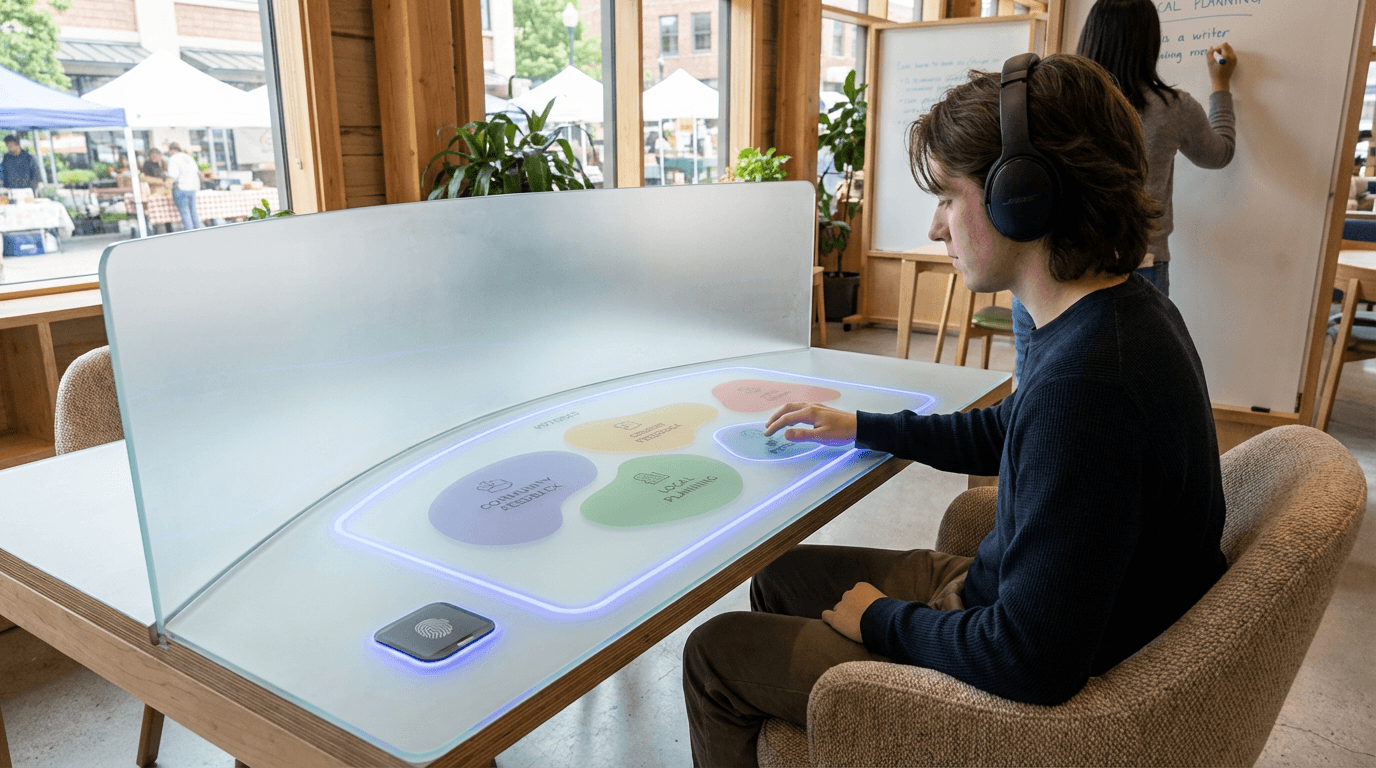
Neurodiversity-Aware Participation Design
Traditional civic engagement platforms have long operated under the assumption of a neurotypical user base, creating significant barriers for neurodivergent individuals who process information, communicate, and interact with digital systems differently. These conventional interfaces often overwhelm users with sensory stimuli, demand real-time participation that disadvantages those who need processing time, rely on implicit social cues that may be difficult to interpret, and present unstructured input formats that can be cognitively exhausting. Research suggests that neurodivergent individuals—including those with autism, ADHD, dyslexia, and other cognitive differences—represent a substantial portion of the population, yet their voices are systematically underrepresented in democratic processes due to these design oversights. Neurodiversity-aware participation design addresses this fundamental equity issue by creating civic engagement systems that accommodate diverse cognitive styles and sensory needs.
This approach employs specific design principles that reduce cognitive load and sensory overwhelm while maintaining the integrity of democratic deliberation. Sensory-friendly interfaces minimize visual clutter, avoid flashing elements, and provide adjustable contrast and font options to accommodate different processing needs. Asynchronous participation models allow users to engage with civic discussions and decision-making on their own timeline, removing the pressure of real-time interaction that can be particularly challenging for those who need additional processing time or who experience executive function differences. Structured input formats provide clear frameworks for contribution, such as guided prompts, templates, and explicit categorization systems that reduce the ambiguity inherent in open-ended discussion formats. Additionally, these systems make social expectations and communication norms explicit through clear labeling of tone, intent, and expected response formats—elements that neurotypical users might intuit but that neurodivergent participants benefit from having stated directly.
Early implementations of neurodiversity-aware design principles in civic technology platforms indicate promising improvements in participation rates and quality of engagement from previously underrepresented groups. Municipal consultation processes that have adopted these features report more diverse input and richer deliberative outcomes, as participants who might have been excluded by traditional formats find accessible pathways to contribute their perspectives. The approach aligns with broader movements toward universal design in digital governance, recognizing that accommodations for neurodivergent users often improve usability for everyone—just as curb cuts designed for wheelchair users benefit parents with strollers and travelers with luggage. As democratic institutions increasingly recognize the importance of truly representative participation, neurodiversity-aware design is emerging as an essential component of legitimate civic engagement infrastructure, ensuring that cognitive diversity is reflected in collective decision-making processes.
Related Organizations
A nonprofit ensuring that voter guides, ballots, and election materials are accessible and easy to understand.

A nonprofit run by and for autistic people, advocating for policy and inclusive design.

The international standards organization for the Web, responsible for the Decentralized Identifiers (DID) and Verifiable Credentials (VC) recommendations.

An international non-governmental educational organization dedicated to enhancing the experiences of people of all ages and abilities.

Provides a cloud-based web accessibility toolbar that allows users to customize the look and feel of websites.

Formerly 'Simply Secure', they provide design resources and research to open-source projects to improve usability, specifically around trust and consent.

Develops literacy and accessibility software like Read&Write and Equatio designed to assist individuals with dyslexia and other learning difficulties.

A resource hub dedicated to shaping the world for difference, focusing on learning and thinking differences.

A job network for neurodivergent talent that uses a specialized interface to match candidates.
Supporting Evidence
Research this in Signals
Signals turns a topic into a sourced research record you can inspect and rerun. Your first scan is free, and this one starts with Neurodiversity-Aware Participation Design already loaded, so edit it or scan as is.