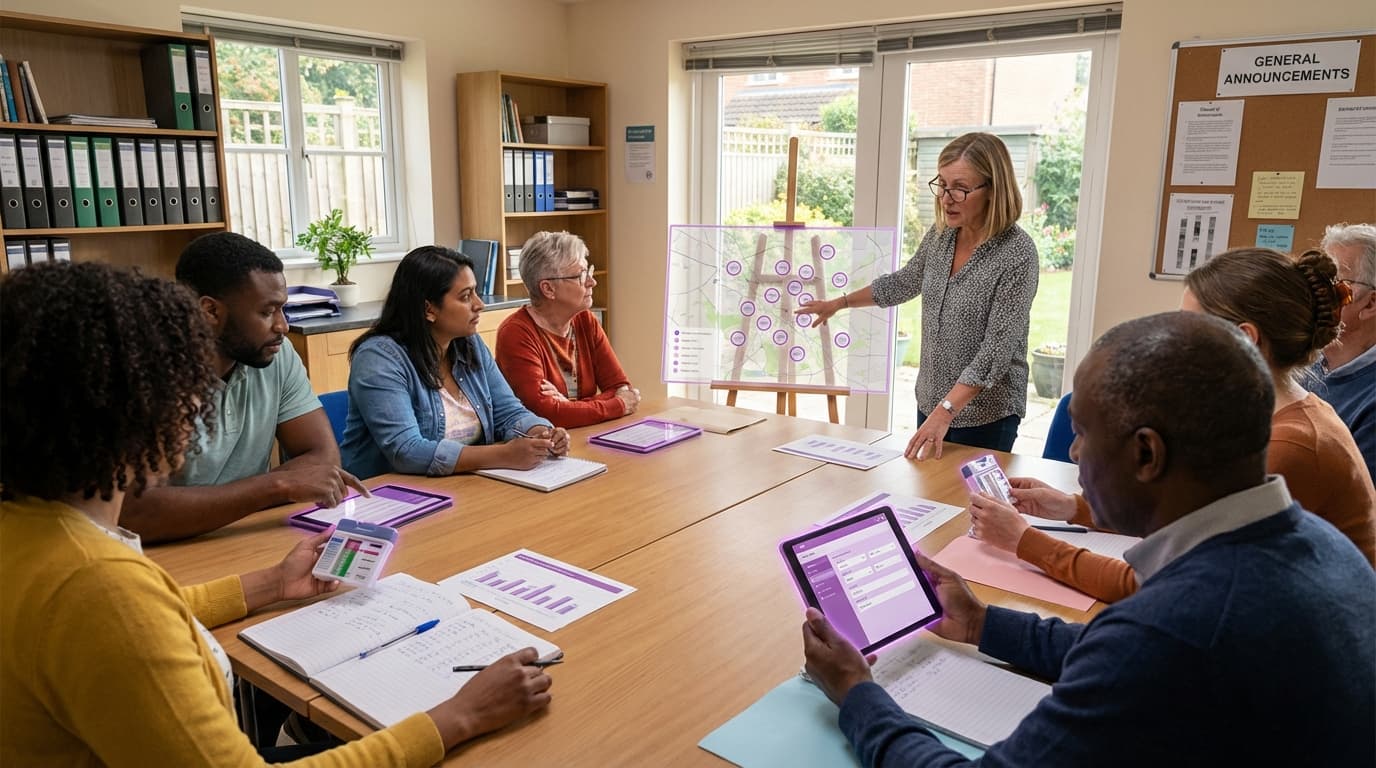
Citizen Science & Community-Generated Evidence
The traditional model of knowledge production has long been dominated by academic institutions and professional researchers, creating a hierarchical system where expertise is concentrated among credentialed specialists. This structure has often marginalized the lived experiences and observational capacities of communities directly affected by social, environmental, and health challenges. Citizen science and community-generated evidence represent a fundamental shift in this paradigm, enabling non-professional participants to engage in systematic data collection, analysis, and research activities. These approaches leverage distributed networks of community members equipped with accessible tools—ranging from smartphone applications to low-cost sensors—to gather observations across geographic scales and timeframes that would be impractical for traditional research teams. The methodology works by establishing protocols that allow for standardized data collection while remaining flexible enough to incorporate local knowledge and context. Communities document everything from air quality and water contamination to biodiversity patterns and public health trends, creating datasets that are both scientifically rigorous and grounded in community priorities and concerns.
This democratization of knowledge production addresses several critical limitations in traditional research models, particularly the disconnect between academic priorities and community needs. Conventional research often operates on timelines and funding cycles that don't align with urgent local issues, and findings may not be communicated in accessible formats or translated into actionable interventions. Community-generated evidence, by contrast, is inherently responsive to local concerns and can be rapidly deployed to inform advocacy, policy decisions, and resource allocation. Philanthropic organizations are increasingly recognizing the value of these approaches, funding initiatives that build community research capacity and create infrastructure for data collection and analysis. However, this shift also creates tension within funding ecosystems, as foundations grapple with how to evaluate community-generated knowledge using criteria traditionally applied to peer-reviewed academic research. Questions emerge around data quality, methodological rigor, and the role of professional researchers in validating or partnering with community efforts, revealing deeper power dynamics about who gets to define what counts as legitimate evidence.
Current applications span diverse domains, from environmental justice communities documenting pollution exposure to patient advocacy groups tracking treatment outcomes and indigenous communities monitoring traditional territories. Research suggests that these efforts are particularly effective when they combine community knowledge with technical support, creating hybrid models that respect both lived experience and scientific methodology. Early deployments indicate that community-generated evidence can be especially powerful in contexts where official data is absent, contested, or fails to capture community realities. As digital tools become more sophisticated and accessible, the capacity for communities to generate, analyze, and share evidence will likely expand, potentially reshaping relationships between communities, researchers, funders, and policymakers. This trajectory points toward a future where knowledge systems are more pluralistic and participatory, though realizing this vision will require ongoing negotiation of standards, resources, and authority in determining what evidence matters and how it should inform decisions about collective resources and social investment.
Related Organizations

A volunteer-driven organization created after Fukushima to collect and publish open environmental data (radiation and air quality).

The world's largest platform for people-powered research, hosting dozens of transcription and tagging projects.

Runs the 'BirdCast' project, which uses weather radar to track bird migration and issues light pollution warnings to cities.

A community developing open-source tools for environmental exploration and investigation (e.g., balloon mapping, DIY spectrometers).

A globally acclaimed online citizen science hub connecting millions of people to thousands of science projects.

Technology leader in the development of open-source software for information collection, visualization, and interactive mapping.

An independent international collective of researchers, investigators, and citizen journalists using open-source intelligence (OSINT).

A non-profit association set up to encourage the growth of the citizen science movement in Europe.
An organization building the systems to strengthen the role of data in environmental governance.

A health information sharing website for patients to track and share their own health data.