A signal is often described as an early sign of change. That is indeed a useful definition, but it only gets us part of the way there.
In practice, a signal is not just an interesting data point, a surprising headline, or the launch of a new technology. It is a piece of evidence that something may be shifting, whether in technology, markets, culture, behavior, policy, or society more broadly. On its own, a signal may seem small. But when placed in the right context, it can help reveal where change is beginning to take shape.
This matters because futures work rarely begins with certainty. It begins with attention. Before a shift becomes obvious, measurable, or widely discussed, it often appears in fragments: a new research direction, an unusual startup model, a policy experiment, a change in consumer behavior, or a niche community practice. Signal mapping helps make those fragments visible, including the weak signs and blind spots that might otherwise be missed.
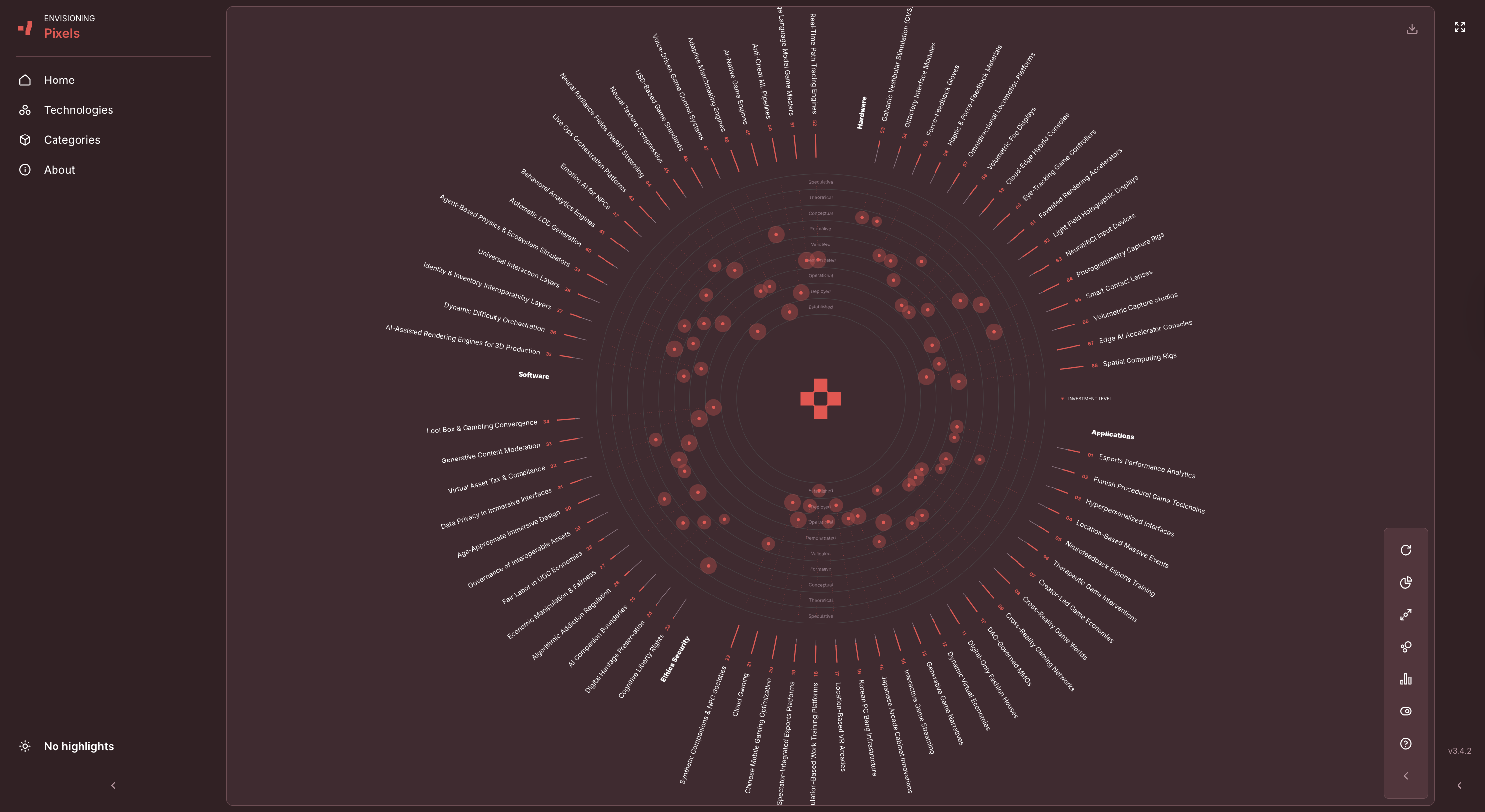
Signals become more powerful when they are compared
An isolated signal may be interesting. A set of related signals creates vectors of change, with directions and movements.
When signals are compared across domains, clustered around themes, and visualized as part of a wider landscape, patterns begin to emerge. It becomes possible to see convergence between technological development, market movement, and cultural change. It becomes easier to distinguish one-off noise from repeated movement, and to identify where weak signs are starting to become stronger. That’s why our new tool offers flexibility and malleability: you can change the signals order, direction, grouping and metrics position, helping you visualize the same dataset from different perspectives.
This is where signals move from observation to strategic value. They stop being scattered inputs and begin to function as part of a broader intelligence system.
Take Pixels, for instance, where we track signals shaping the future of game ecosystems. The Interactive Game Streaming entry shows how viewers can directly affect gameplay through chat, votes, or triggered events. This has certain implications around interactivity. When combined with Spectator-Integrated Esports Platforms, Creator-Led Game Economies, and Dynamic Virtual Economies, there’s a clearer trend toward games becoming more participatory and audience-shaped, not just developer-authored. How do different industry players react when the boundary between playing, watching, and co-creating is dissolving?
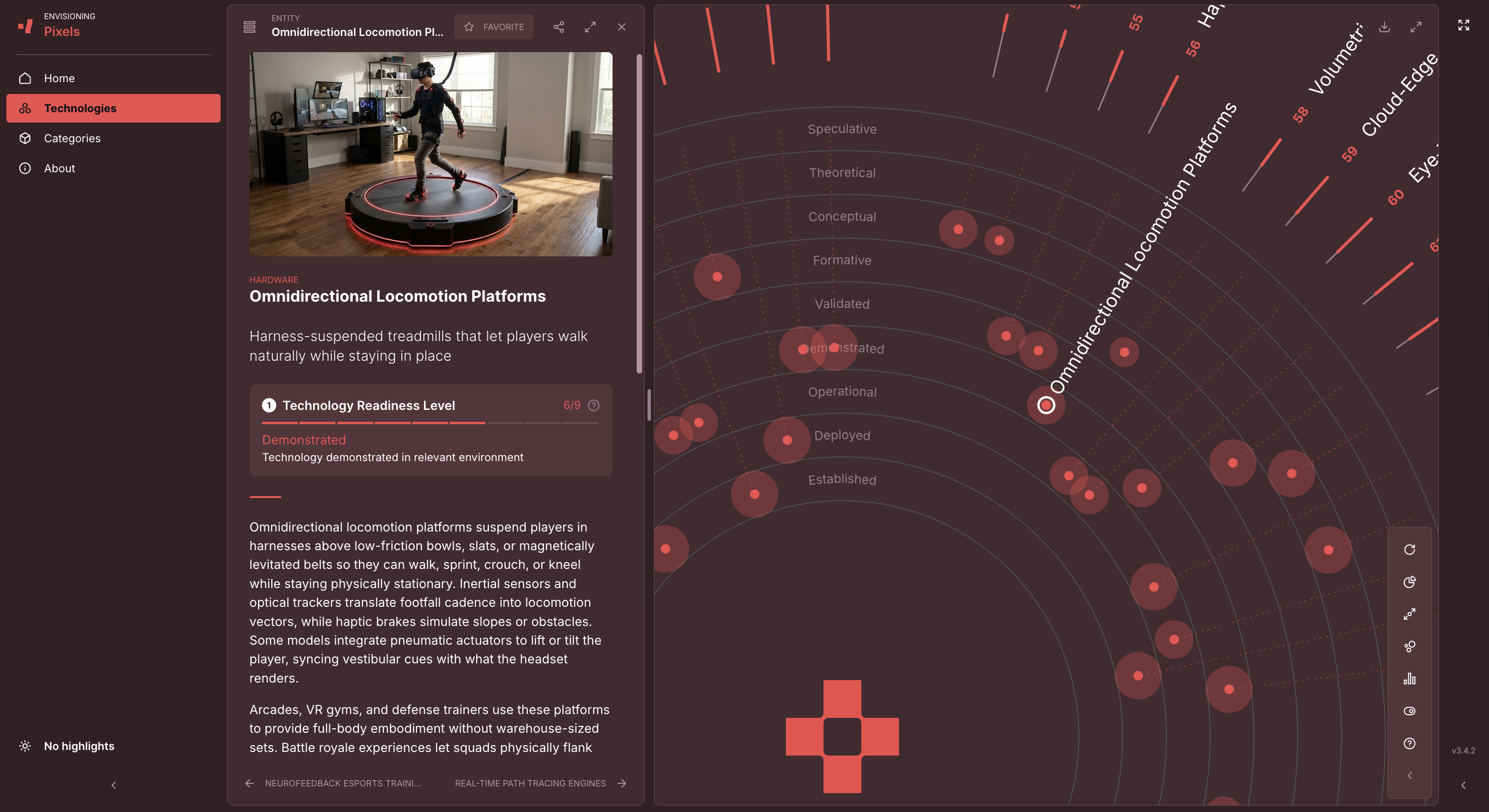
The same signal can mean different things to different people
Signals do not speak for themselves. Their meaning depends on who is looking at them, what question they are asking, and what expertise they bring.
A cultural shift may seem peripheral to one organization and strategically important to another. A new technical capability may look incremental in one sector and transformative in another. The signal is the same, but its relevance changes depending on the lens.
This is why signal work cannot be reduced to collection alone. The real work begins with interpretation: understanding what a signal might mean in context, what it connects to, and why it deserves attention.
Looking again at Pixels, different industries will have different insights. A game studio may see a new mode of play. A media company may see a new form of audience participation. A regulator may see a governance gap. A brand may see new expressions of identity and worldbuilding.
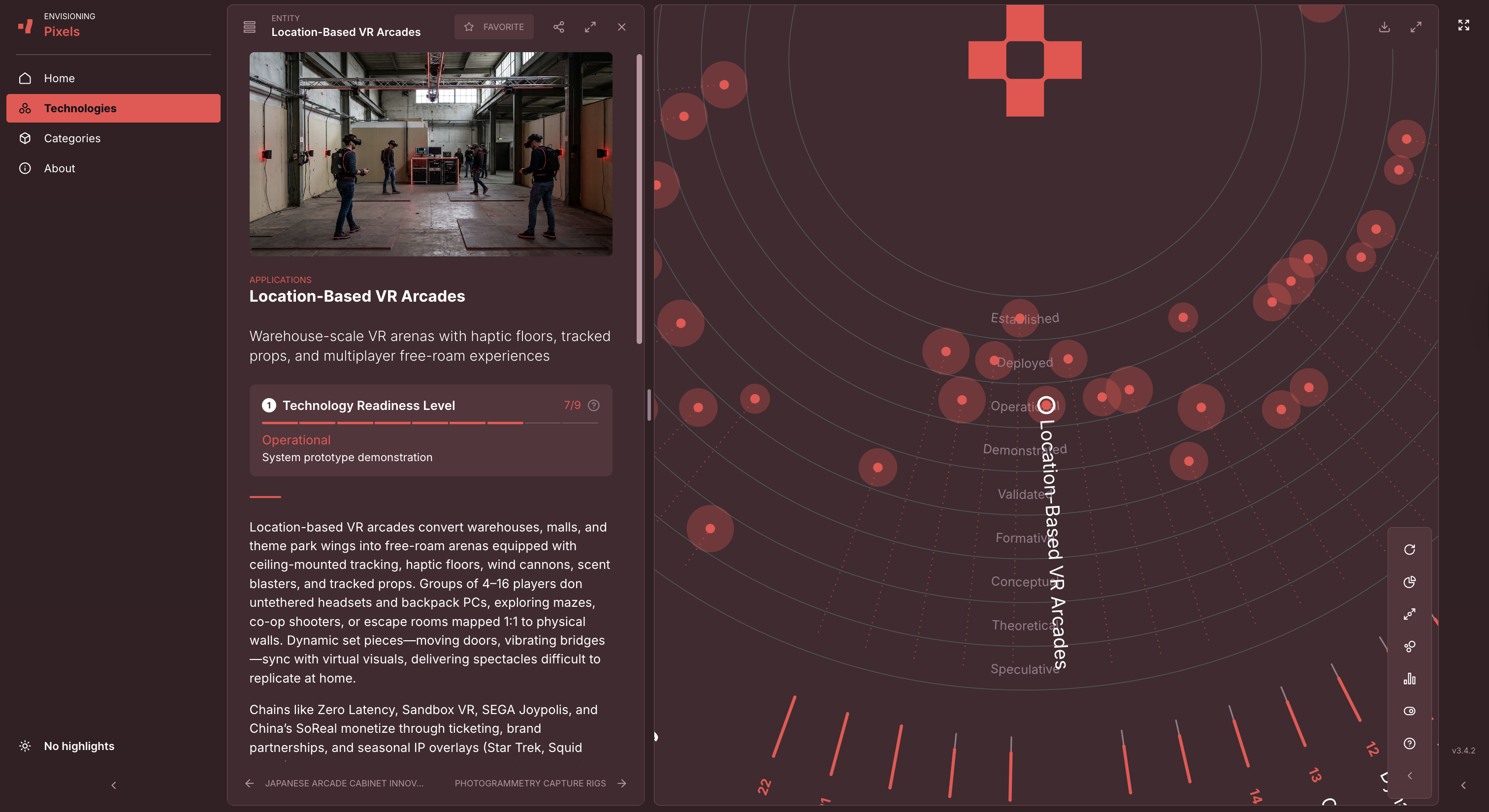
How we work with signals
At Envisioning, signals are part of a continuous research process designed to detect, compare, and interpret change across sectors and domains.
That means looking beyond individual examples and asking larger questions. What broader shift could this point to? What other signals reinforce or complicate it? Where are we seeing similar movement elsewhere? What becomes visible only when these developments are read together?
This is also why open research matters. Through our research hubs, we track signals across more than 45 areas, helping build a broader and more connected view of change. The goal is not simply to collect more information, but to create a clearer basis for sensemaking, discussion, and decision-making.
Explore our Research pages:
Why this matters
Signals matter because they help make the future more legible before it becomes obvious.
They do not predict the future on their own. But they give us something essential: a way to notice change early, interpret it thoughtfully, and place it in relation to other developments. That is what makes them useful for futures work, and for any organization trying to build a more informed view of what may come next.
To explore how signals are tracked across industries, visit our Research page.
To see how this approach can support your organization, request a signal scan.