For many people, Envisioning is associated with the technology radar: a visual way to map emerging technologies, compare signals, and understand how different developments relate to one another. But the radar is only one expression of a broader research system.
The Envisioning Research Hubs show what happens when foresight becomes more than a static output. They bring different research projects into one navigable environment, where technologies, signals, metrics, images, translations, and editorial layers can be adapted to different questions.
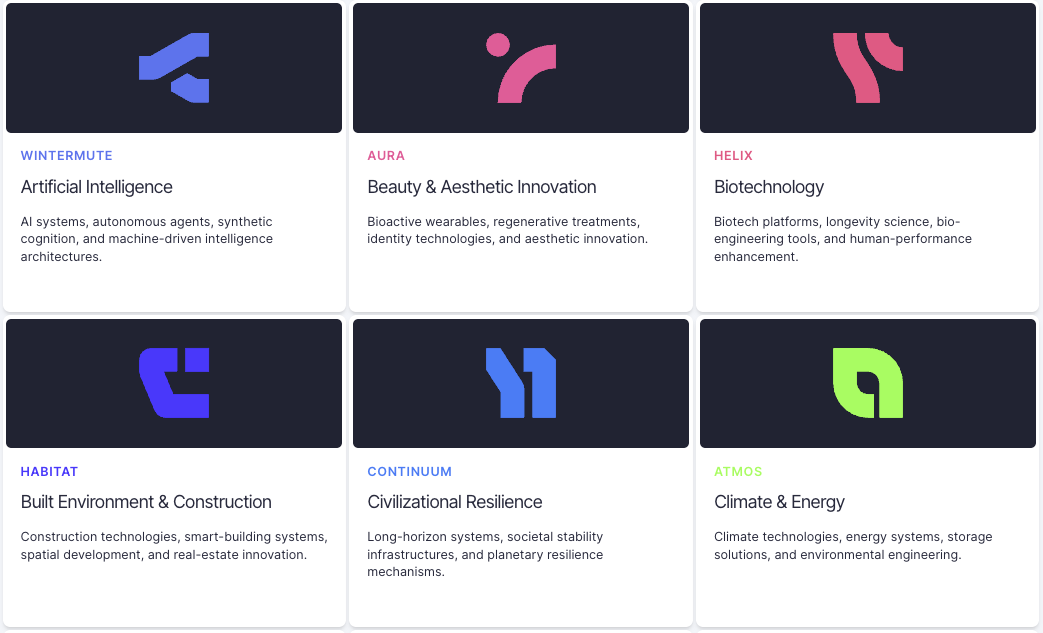
Some projects are commissioned and highly curated. Others are more generative and experimental. Some focus on established industries. Others explore speculative territories that sit between fiction, science, and emerging possibility.
Together, they show the flexibility of our app: not as a single format applied repeatedly, but as a research environment that can be configured around different levels of human input, automation, editorial control, and strategic purpose.
A hub for different kinds of research
A project can begin with a sector, such as agriculture, beauty, consumer electronics, or urban innovation. It can also begin with a more unusual question: What technologies surround early life? What systems are emerging around end-of-life care? What would happen if we examined fictional technologies from Star Trek through the lens of real-world science?
The format is flexible because the app is flexible. Each project can define its own scope, categories, metrics, signal types, and editorial treatment. Some require deeper human involvement, expert review, and tailored writing. Others can operate closer to a signal-monitoring workflow, where AI helps generate and organize entries with lighter human oversight.
This matters because foresight work does not always need the same level of intervention. A commissioned strategic project requires a different research process than an experimental scan. A public-facing innovation map requires a different editorial standard than an internal signal feed. A speculative research project may need a different logic of plausibility, readiness, and interpretation.
And you can browse through these projects to see what works best for you.
From commissioned projects to generative spaces
Cities is a good example of a more curated research project. Developed to highlight urban innovation and smart cities, it involves human judgment across the research process: selecting relevant innovations, shaping the writing, reviewing the material, generating images, and adapting the content through translation.
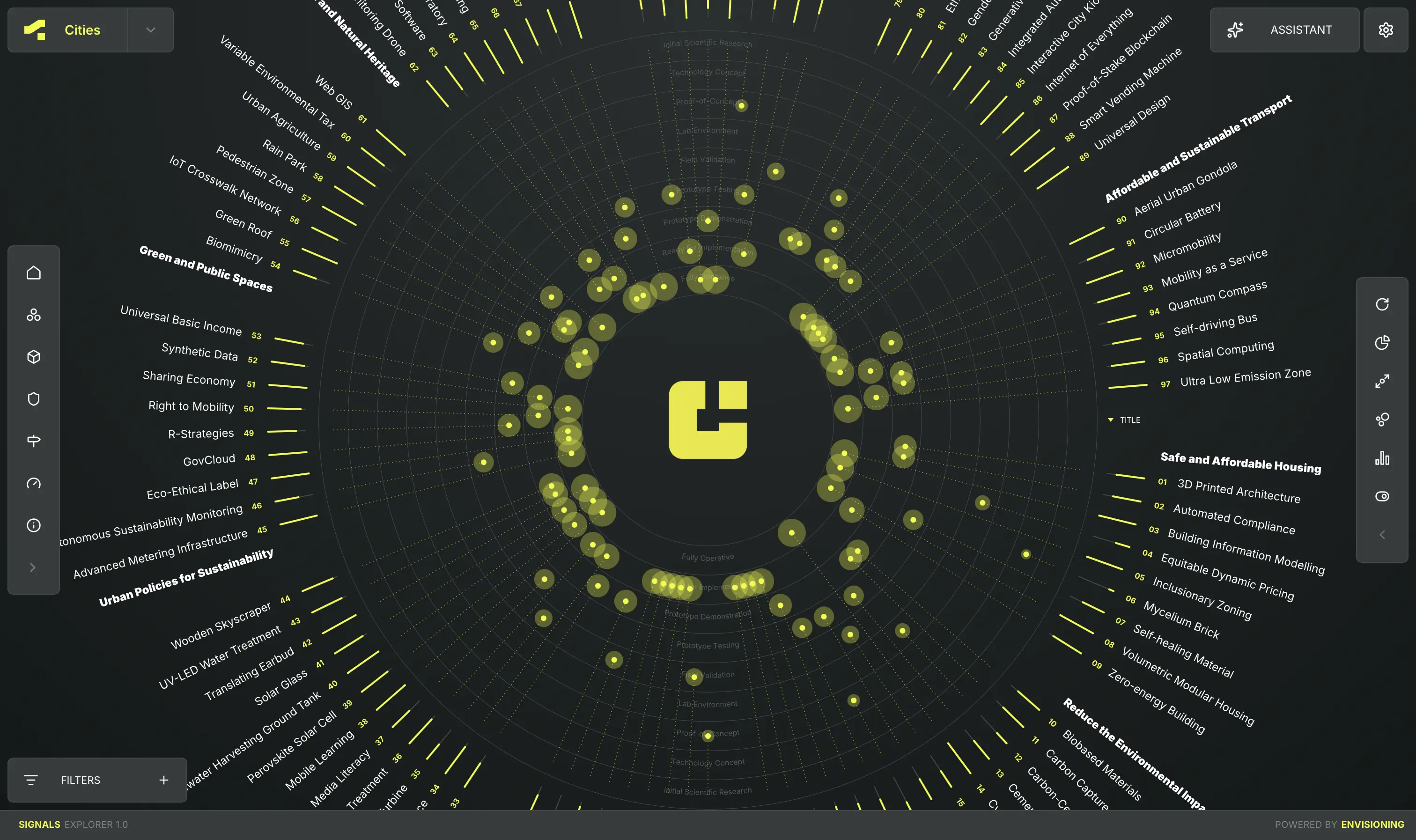
In this kind of project, the app supports a more editorial and strategic workflow. It is not just collecting entries. It is helping build a coherent research environment around a specific domain, with enough structure and oversight to make the material useful for exploration, communication, and decision-making.
Other projects can work differently.
Some research spaces can be more generative, closer to our Signals offer. They may rely more heavily on AI-assisted discovery, drafting, classification, and enrichment, with human input focused on direction, validation, and quality control. This allows the app to support faster scans, broader experimentation, and continuous updates across multiple fields.
The point is not that one mode is better than the other, but that different questions need different research configurations.
A city innovation project may need careful curation and translation. An industry scan may need breadth and comparability. A signals project may need speed and adaptability. A speculative project may need a framework for separating inspiration from plausible development.
Established industries, experimental questions
The Research Hubs also shows how foresight can move between familiar and unfamiliar territories.
Some projects focus on more established industries and systems. These are useful because they help users explore known domains through emerging technologies and market shifts. They make it easier to ask what is changing in a sector, which innovations are gaining relevance, and where future opportunities or tensions may appear.
Other projects are more experimental by design.
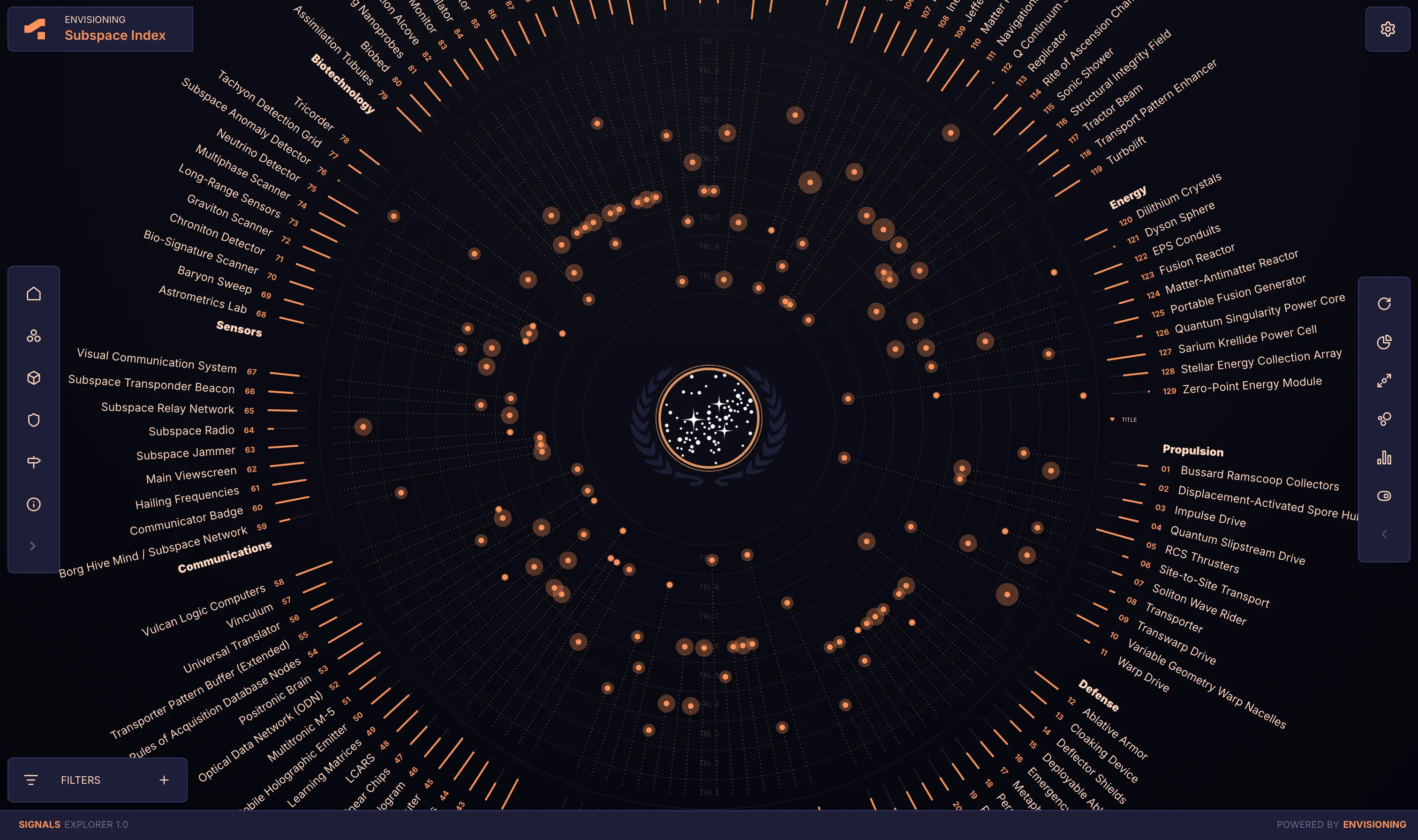
Subspace, for example, explores Star Trek technologies through the lens of real-world science. It asks how fictional concepts can be examined in terms of scientific grounding, plausibility, and readiness. This may sound playful, but it reveals something important about the app: the same research logic used to map current technologies can also be used to test speculative ideas.
That range is valuable. It shows that foresight is not only about tracking what is already visible in the market. It can also help organizations explore the edges of imagination, science, and strategic possibility.
A research system should be able to move across both.
The app as a research environment
What connects these projects is not their topic. It is the underlying capability.
Our app can support different kinds of research workflows: expert-curated projects, public innovation maps, generative signal spaces, multilingual outputs, image generation, custom taxonomies, readiness assessments, and speculative plausibility frameworks.
This makes the Research Hubs more than a portfolio of examples. It becomes a demonstration of how foresight can be configured.
For some organizations, this may mean creating a public-facing hub around an industry or societal challenge. For others, it may mean building an internal intelligence space to track signals, align teams, and support strategic conversations. For associations, it may become a shared knowledge environment for members. For research groups, it may become a way to organize and communicate emerging evidence around a specific field.
The same app can support different degrees of openness, automation, editorial oversight, and customization.
That is the real shift beyond the radar. The radar remains a powerful way to visualize emerging change. But the Research Hub shows how the work can expand into a broader research environment: one where different projects can be structured, generated, translated, visualized, and continuously explored.
Building around the question
Every research project starts with a question.
Sometimes the question is practical: which technologies are reshaping a sector? Sometimes it is strategic: where should an organization pay attention next? Sometimes it is exploratory: what patterns are emerging across signals? Sometimes it is speculative: how close is an imagined technology to scientific possibility?
The value of the Research Hubs is that they can adapt to these different questions without forcing them into the same format.
That is why it can host both commissioned projects and experimental scans. It can support human-led editorial work and AI-assisted generation. It can organize grounded industry research and more imaginative inquiries. It can help make research public, or it can become the basis for a dedicated environment built around a specific organization, community, or challenge.
For Envisioning, going beyond the radar does not mean leaving the radar behind. It means showing what becomes possible when the radar is part of a larger app: a flexible research system for mapping, generating, organizing, and exploring emerging change.
Explore the Envisioning Research Hubs to see how different research projects take shape across industries, systems, and speculative domains.
If your organization needs a dedicated research environment around a sector, challenge, or strategic question, Envisioning can help build one.