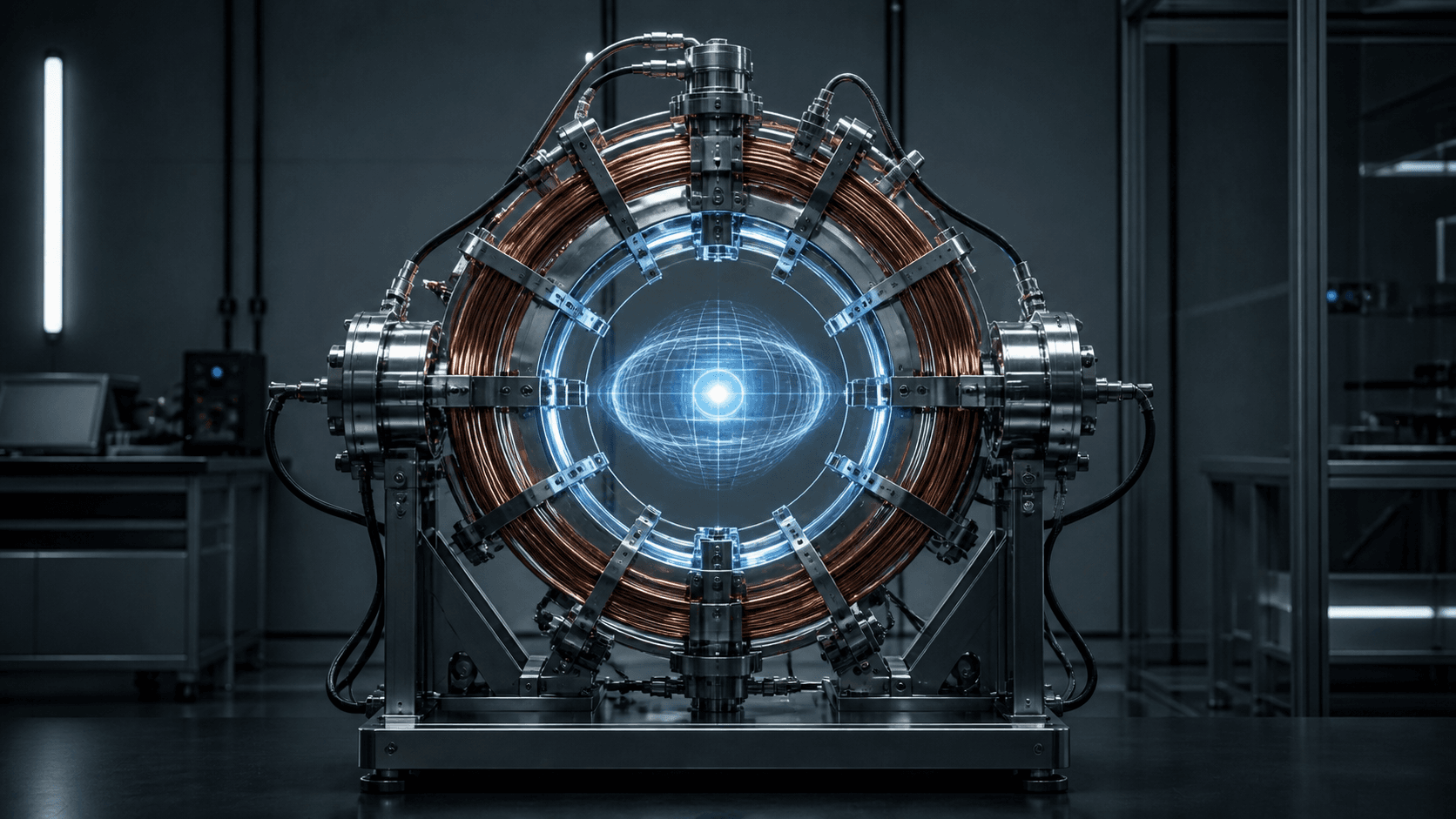
Eagleworks Warp
NASA's Eagleworks Laboratories (Johnson Space Center), led by Harold 'Sonny' White, conducted research (2010s) into practical warp field generation using modified Alcubierre metrics. White proposed toroidal warp field geometries reducing exotic matter requirements from Jupiter-mass to spacecraft-scale. The program included White-Juday Warp Field Interferometer attempting to detect microscopic spacetime perturbations from high-voltage capacitor rings. Published results reported possible detection of warp field signatures, though peer review questioned methodology and interpretation. Eagleworks also tested EmDrive and other anomalous thrust devices.
Relativistic Metric Engineering for UAPs
Application of general relativity to explain observed UAP capabilities—90° turns at hypersonic speeds, transmedium travel, thermal management—through controlled spacetime curvature around craft. Published analysis (JBIS 2010) applies GR formalism to UAP observations, proposing testable predictions. Key proposed effects include: time dilation inside craft reducing experienced g-forces during extreme accelerations; gravitational lensing and blueshift of thermal emissions producing UV/soft X-ray radiation detectable in atmosphere; 'bond hardening' via spacetime stress enabling transmedium passage without structural failure; and nitrogen spectral line emissions as signatures of high-energy photon interactions with air. While general relativity is established physics, engineering controllable spacetime curvature requires exotic matter, enormous energy densities, or unknown physical principles. The framework provides mathematical rigor for analyzing reported observations but doesn't explain propulsion mechanism itself—representing attempt to bridge UAP phenomenology with conventional GR rather than invoke new physics.
Significance and Status
While controversial, Eagleworks represents rare official institutional research into breakthrough propulsion. Funding ceased mid-2010s. The program bridges theoretical Alcubierre concepts with laboratory experimentation, demonstrating mainstream aerospace interest in exotic propulsion physics despite skepticism about results. Combined with UAP metric analysis, it legitimized warp field research as marginally respectable scientific inquiry while offering GR-based framework for understanding anomalous performance without requiring exotic new physics—just extreme applications of established relativity.
Research this in Signals
Signals turns a topic into a sourced research record you can inspect and rerun. Your first scan is free, and this one starts with Eagleworks Warp already loaded, so edit it or scan as is.