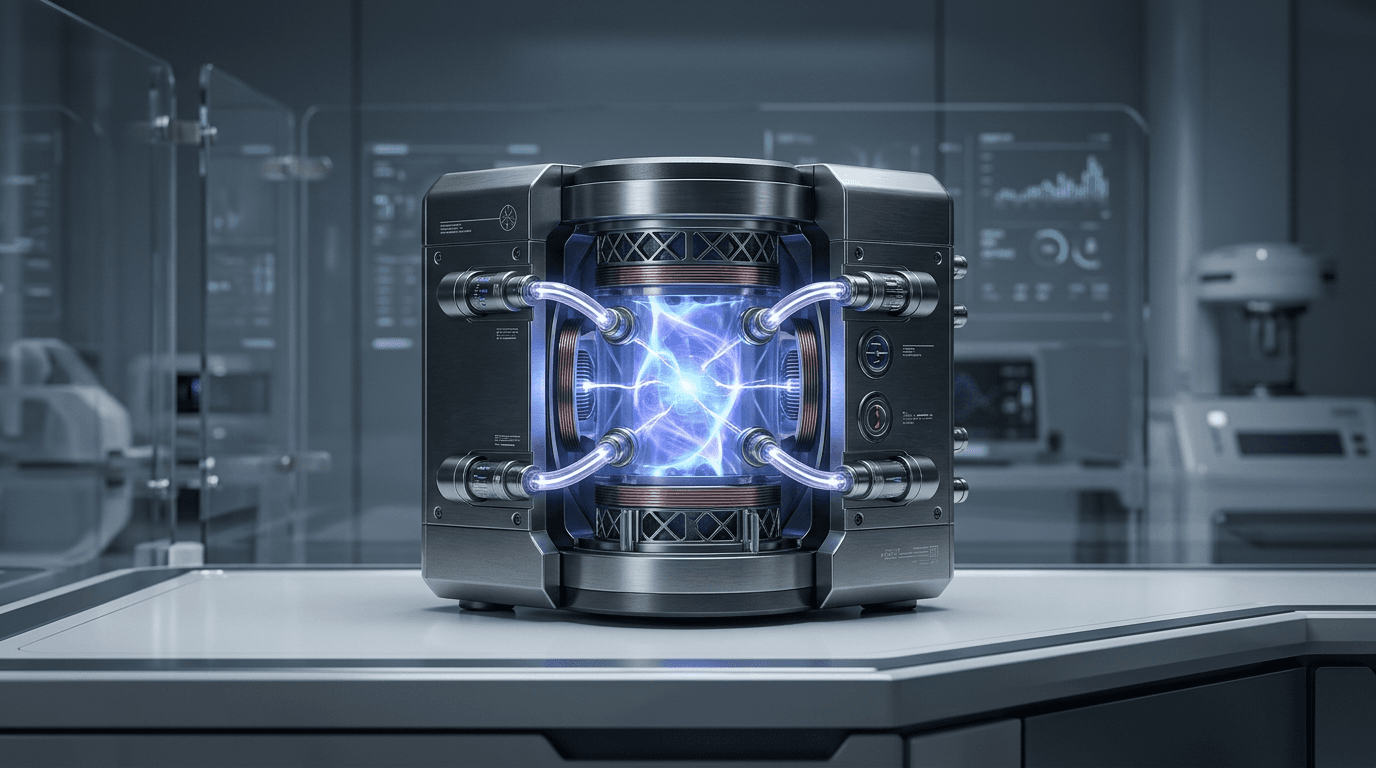
Isotope Power
Exotic isotope power cells represent theoretical long-life micro-reactors using unknown isotope decay channels for energy generation, claiming efficiency orders of magnitude beyond conventional fission with applications in advanced power systems.
Trinity Case Material Analysis
The Trinity case involved analysis of material samples allegedly from the 1945 Trinity nuclear test site, revealing unusual isotopic signatures and material properties. Dr. Jacques Vallée and Dr. Garry Nolan conducted extensive analysis of these materials, revealing isotopic ratios inconsistent with known nuclear processes.
Stable-Isotope Reactor Technology
The technology involves using stable isotopes in reactor configurations including: controlled isotope decay processes; enhanced energy extraction from isotope decay; and optimized reactor designs for specific isotope combinations. The approach seeks to achieve high-efficiency energy generation through isotope manipulation.
Unknown Isotope Decay Channels
The systems claim to access unknown isotope decay channels including
non-standard decay processes; enhanced decay rates through field manipulation; and controlled isotope decay for energy extraction. The approach seeks to harness isotope decay for practical energy applications.
Efficiency Beyond Fission
The technology claims efficiency orders of magnitude beyond conventional fission including
enhanced energy extraction from isotope decay; optimized reactor designs for specific isotopes; and controlled decay processes for maximum energy output. The approach seeks to achieve superior energy generation efficiency.
Micro-Reactor Applications
The systems could provide compact power sources including
long-life micro-reactors for spacecraft; portable power systems for advanced applications; and distributed power generation for remote locations. The approach seeks to provide efficient, long-lasting power sources.
Material Residue Analysis
Analysis of material samples revealed unusual properties including
non-standard isotopic signatures; enhanced energy density characteristics; and material properties optimized for energy applications. The materials suggest advanced isotope manipulation capabilities.
Current Status
While theoretically grounded in isotope physics and reactor technology, exotic isotope power cells remain speculative with significant technical challenges. The technology represents an extension of isotope research into practical energy applications, though practical implementation requires advanced isotope manipulation capabilities.
Research this in Signals
Signals turns a topic into a sourced research record you can inspect and rerun. Your first scan is free, and this one starts with Isotope Power already loaded, so edit it or scan as is.