Ball Lightning
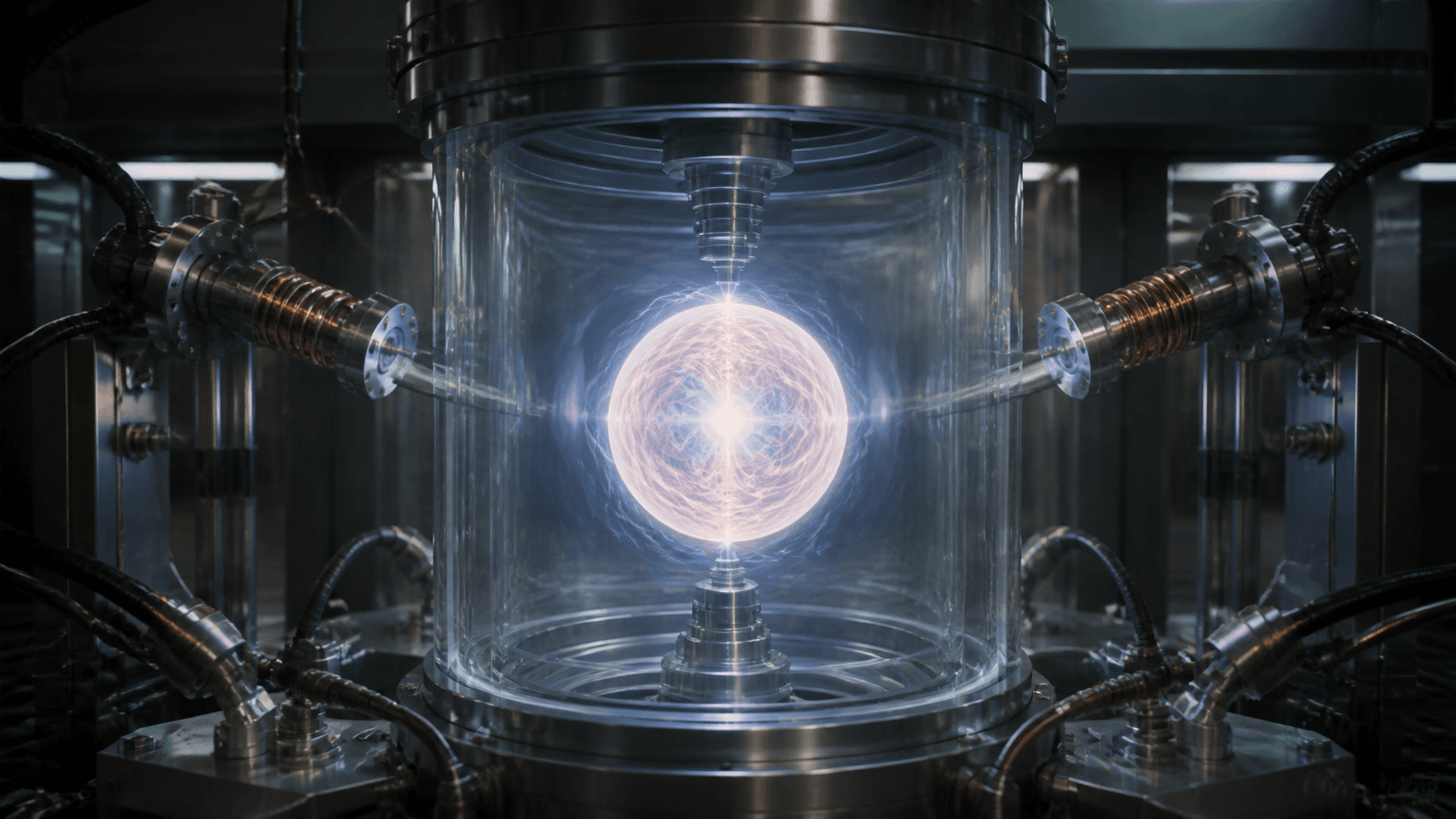
Ball lightning—luminous, floating plasma spheres lasting seconds to minutes—has been documented for centuries but remains poorly understood. Starting in the 1960s, Soviet laboratories (Kapitza Institute, Ioffe Institute) and later Western facilities attempted controlled generation and containment, seeking to understand natural ball lightning and exploit it for energy or propulsion applications.
Soviet Research and Characteristics
Soviet researchers reported creating artificial ball lightning using high-voltage arc discharges, microwave resonance cavities, and electromagnetic vortex confinement. Some experiments produced self-sustaining plasma spheres exhibiting remarkable stability—floating freely, passing through materials, and persisting far longer than plasma physics predicts. Reported characteristics include: spherical geometry maintained without external confinement; slow drift or purposeful-seeming movement; ability to penetrate solid barriers without damage; and energy content exceeding input by orders of magnitude.
Western Research and UAP Connections
Western interest intensified after declassified Soviet reports and independent observations. DARPA, Air Force Research Laboratory, and academic institutions investigated connections between ball lightning and UAP reports—both exhibit similar behavior: spherical luminous forms, erratic movement patterns, electromagnetic effects on nearby electronics, and apparent violation of conventional plasma physics (which predicts rapid dissipation). Some researchers propose ball lightning as explanation for percentage of UAP sightings, while others suggest both phenomena share exotic physics—possibly involving atmospheric zero-point energy coupling, plasmoid self-organization, or coherent electromagnetic solitons.
Energy Anomalies and Mechanisms
The most controversial claims involve energy anomalies. If ball lightning taps ambient energy (atmospheric electric fields, quantum vacuum fluctuations, or geomagnetic coupling), it might sustain itself far beyond initial energy input—potentially explaining both natural ball lightning longevity and alleged over-unity observations. Some theorists connect this to Shoulders' charge clusters (EVO—Exotic Vacuum Objects), proposing self-organized electron bunches in coherent quantum states as underlying mechanism.
Critical Assessment
Skeptics note laboratory ball lightning rarely exceeds seconds in duration, far shorter than anecdotal natural reports (minutes). Energy balance calculations remain controversial—initial discharge energy may account for observed effects if energy release is is delayed. Nevertheless, ball lightning represents rare intersection of: documented natural phenomenon, laboratory reproduction attempts, institutional research programs, and UAP phenomenology overlap. It bridges conventional plasma physics, exotic energy claims, and observational mystery—making it legitimate fringe science rather than pure speculation.
Research this in Signals
Signals turns a topic into a sourced research record you can inspect and rerun. Your first scan is free, and this one starts with Ball Lightning already loaded, so edit it or scan as is.