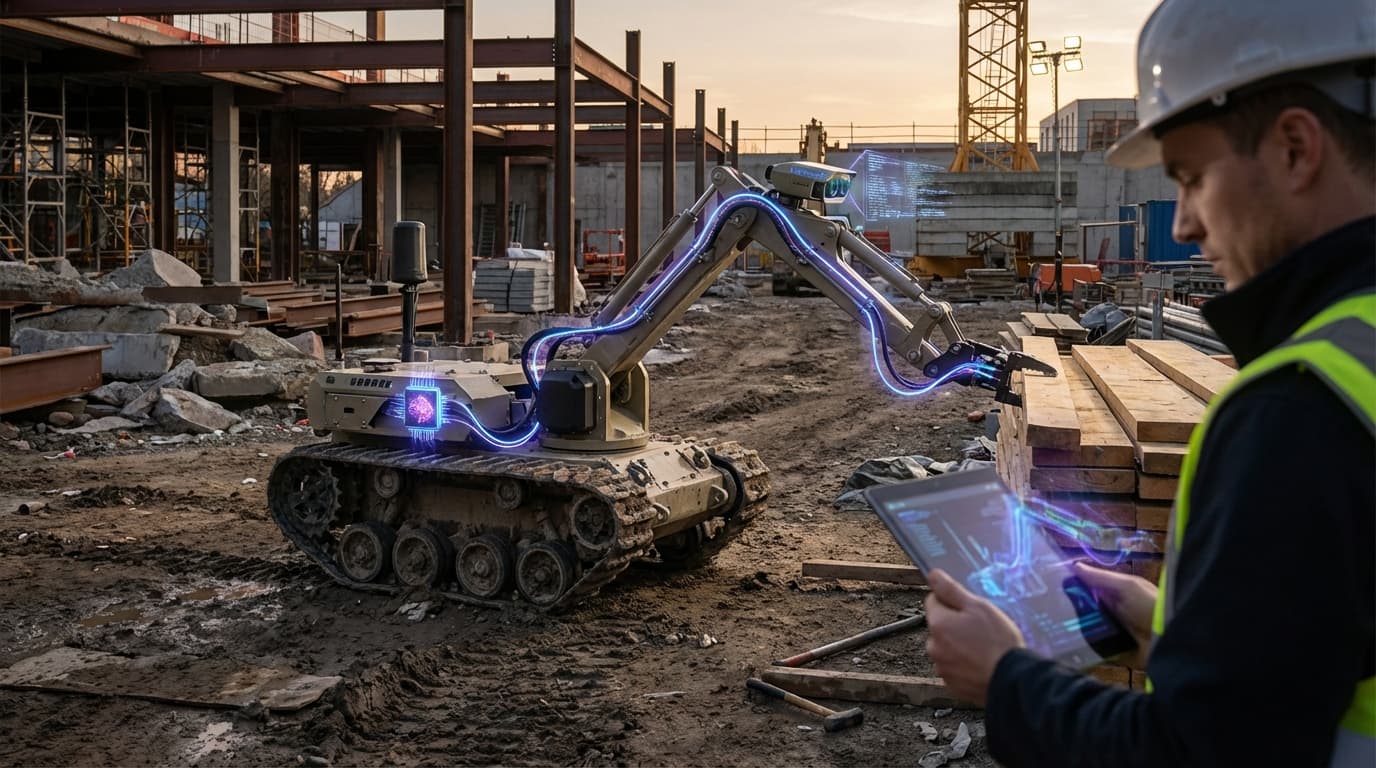
Continual & Embodied Learning
Continual and embodied learning algorithms enable AI agents to learn continuously from real-world sensory experiences while retaining previously learned knowledge, avoiding the catastrophic forgetting problem where learning new information erases old memories. These systems use techniques like experience replay, regularization, and architectural methods to protect important knowledge while allowing adaptation to new situations and tasks.
This innovation addresses fundamental limitations of traditional machine learning, which typically requires static training datasets and struggles to adapt to new situations or learn continuously. For embodied agents like robots that must operate in dynamic environments, the ability to learn from ongoing experience while retaining past knowledge is essential. Research institutions are developing these capabilities, with some systems demonstrating the ability to learn new tasks without forgetting previous ones.
The technology is essential for creating AI agents that can operate autonomously in real-world environments, where conditions change, new situations arise, and agents must adapt while maintaining their core capabilities. As AI systems are deployed in applications requiring long-term operation and adaptation—from autonomous robots to personal assistants to industrial systems—continual learning becomes crucial. However, the technology faces significant challenges including balancing stability and plasticity, managing memory efficiently, and ensuring that new learning doesn't degrade performance on previous tasks.
Related Organizations

AI robotics company building a universal AI brain for robots.

Developers of the Gemini family of models, which are trained from the start to be multimodal across text, images, video, and audio.

A startup building a general-purpose brain for robots, backed by OpenAI and Thrive Capital.

Creators of Digit, a bipedal robot designed for logistics work.

Building autonomous humanoid robots, partnering with OpenAI for the underlying intelligence.

Developing foundation models for robotics (Project GR00T) and vision-language models like VILA.

Developing general-purpose humanoid robots (Phoenix) powered by Carbon, their AI control system.
A Norwegian robotics company (backed by OpenAI) developing androids like EVE and NEO.

Famous for Spot and Atlas, now integrating reinforcement learning for dynamic movement.

The global hub for open-source AI models and datasets. Founded by French entrepreneurs with a major office in Paris.
Supporting Evidence
Research this in Signals
Signals turns a topic into a sourced research record you can inspect and rerun. Your first scan is free, and this one starts with Continual & Embodied Learning already loaded, so edit it or scan as is.