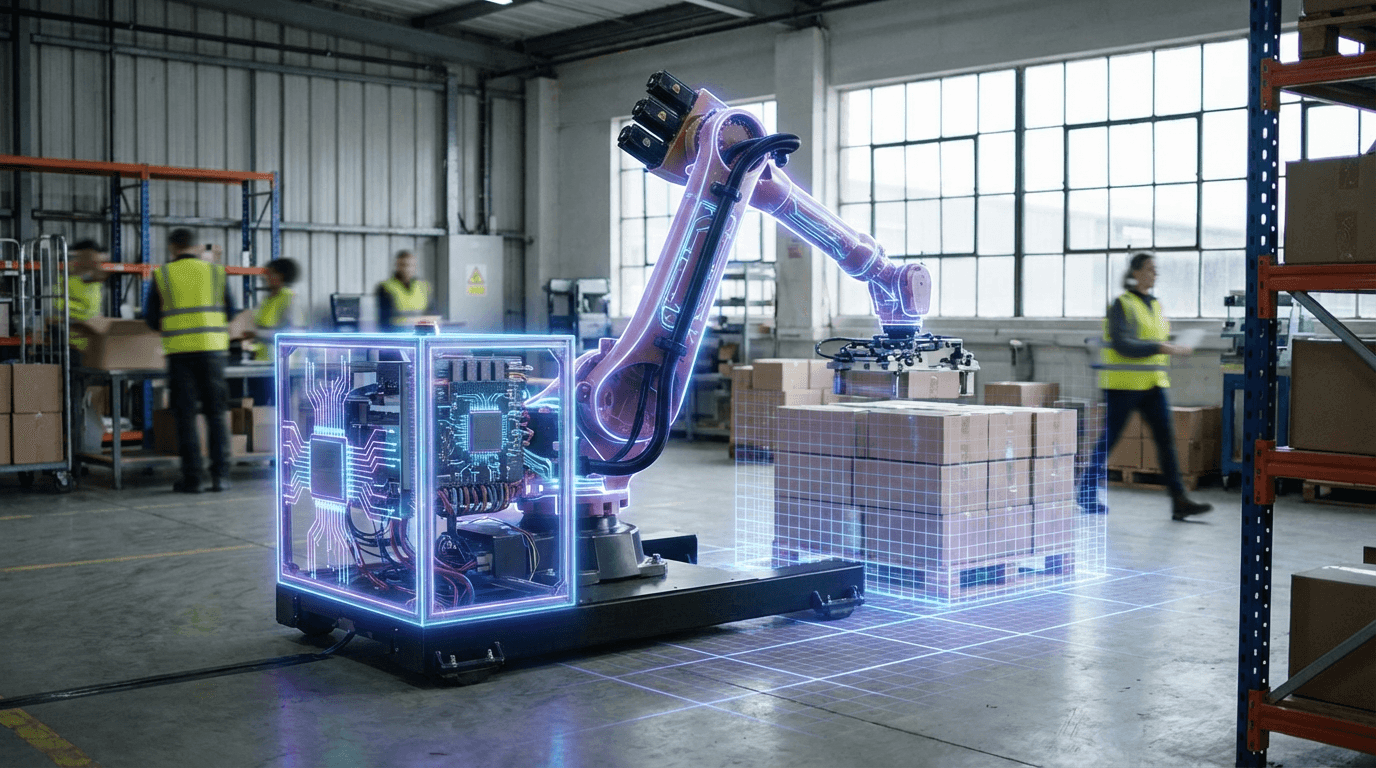
World-Model Planning Engines
World-model planning engines learn compressed, latent representations of how environments work—predicting how states change in response to actions—and use these models with planning algorithms to reason about long-horizon sequences of actions. By learning world dynamics separately from decision-making, these systems can simulate possible futures, evaluate different strategies, and plan complex sequences of actions without requiring extensive trial-and-error in the real world.
This innovation addresses the sample efficiency problem in reinforcement learning, where agents typically require millions of interactions to learn effective policies. By learning predictive models of the world, agents can "imagine" the consequences of actions and plan ahead, dramatically reducing the amount of real-world experience needed. Research has demonstrated that world models enable more efficient learning and better generalization, with applications in robotics, game playing, and autonomous systems.
The technology is particularly valuable for applications where real-world experience is expensive, dangerous, or slow to obtain, such as robotics, autonomous vehicles, and complex decision-making tasks. As AI systems are deployed in real-world applications requiring sophisticated planning and reasoning, world models provide the predictive capabilities needed for effective long-horizon decision-making. However, learning accurate world models remains challenging, especially for complex, high-dimensional environments, and model errors can lead to poor planning decisions.
Related Organizations

Developers of the Gemini family of models, which are trained from the start to be multimodal across text, images, video, and audio.


United States · University
One of the leading academic centers for AI research.

AI robotics company building a universal AI brain for robots.
Israel · Startup
AI infrastructure company focusing on real-time generative models.

A startup building a general-purpose brain for robots, backed by OpenAI and Thrive Capital.

Applied AI research company shaping the next era of art, entertainment and human creativity.

R&D arm of Toyota focusing on active safety, automated driving, and robotics.

Creators of Dream Machine, a high-quality video generation model, and 3D capture technology.
Supporting Evidence
Research this in Signals
Signals turns a topic into a sourced research record you can inspect and rerun. Your first scan is free, and this one starts with World-Model Planning Engines already loaded, so edit it or scan as is.