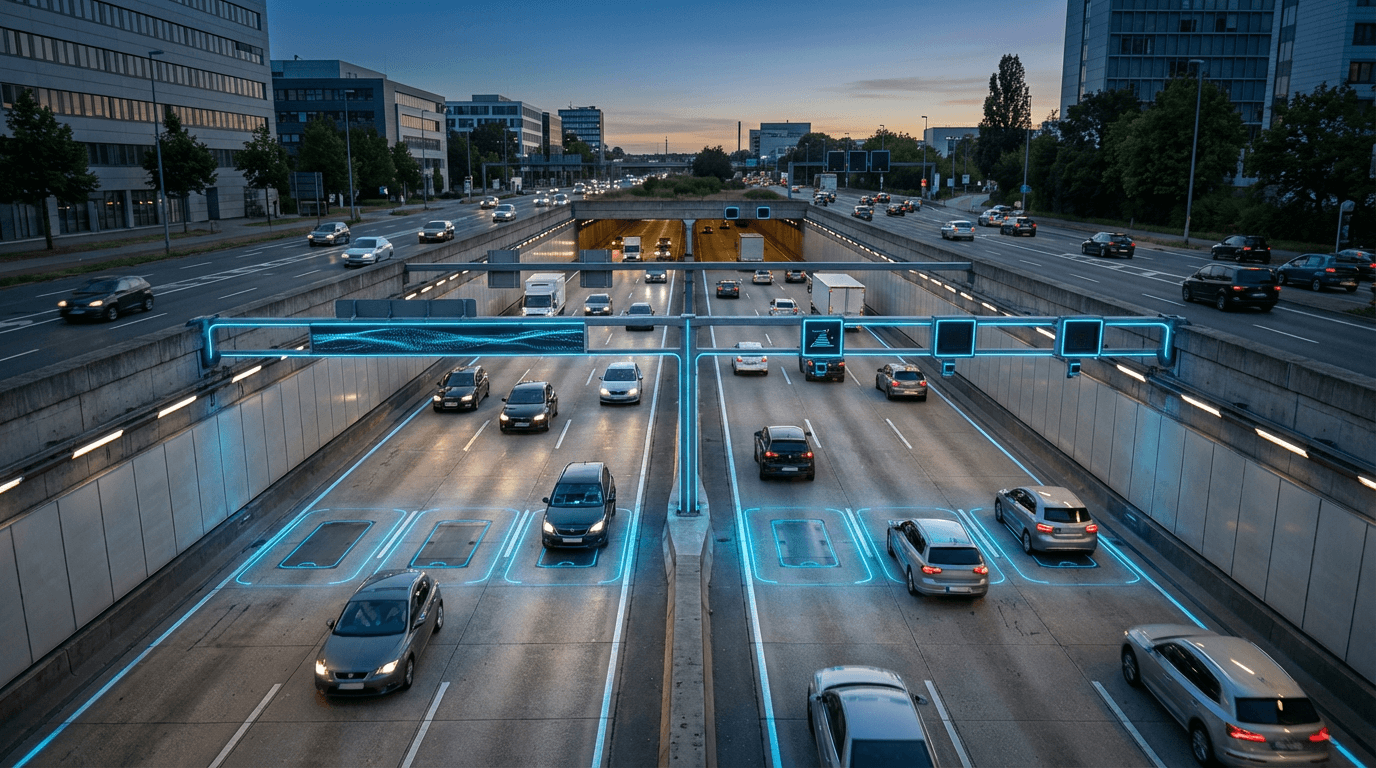
Smart Road Infrastructure
Smart road infrastructure represents a fundamental shift from passive asphalt surfaces to active, intelligent systems that communicate bidirectionally with vehicles and traffic management centers. At its technical core, these roadways integrate a network of embedded sensors, edge computing nodes, and dedicated short-range communication (DSRC) or cellular V2X (C-V2X) transceivers directly into the road environment. The infrastructure typically includes inductive loop detectors, piezoelectric sensors, radar units, and environmental monitoring stations that continuously gather data on traffic flow, pavement conditions, weather patterns, and potential hazards. This sensor data feeds into roadside units (RSUs) that process information locally and broadcast it to approaching vehicles through standardized communication protocols. Some implementations also incorporate smart traffic signals that adapt timing based on real-time conditions, dynamic lane markings using LED arrays, and even wireless charging strips for electric vehicles. The physical infrastructure may include fiber optic networks running beneath roadways to ensure low-latency data transmission, creating a cohesive ecosystem where the road itself becomes an active participant in the transportation network.
The transportation industry faces mounting pressure to reduce accidents, optimize traffic flow, and support the transition to autonomous vehicles, challenges that traditional infrastructure cannot adequately address. Smart road infrastructure tackles these issues by providing vehicles with information that onboard sensors alone cannot reliably detect—such as conditions beyond line-of-sight, upcoming construction zones, or the precise timing of traffic signal changes. This enhanced situational awareness is particularly critical for autonomous vehicles operating at SAE Level 3 and above, where the vehicle must make complex decisions without human intervention. By offloading some sensing and decision-making responsibilities to the infrastructure, these systems can reduce the computational burden and sensor requirements on individual vehicles, potentially lowering the cost barrier to autonomous technology adoption. The infrastructure also enables new traffic management paradigms, such as platooning coordination where multiple vehicles travel in close formation to reduce aerodynamic drag and increase road capacity, or dynamic speed harmonization that prevents the stop-and-go waves responsible for phantom traffic jams.
Several regions have begun deploying smart road infrastructure in controlled environments and high-priority corridors. Research suggests that early implementations focus on highways and urban arterials where the safety and efficiency benefits justify the substantial installation costs. Pilot programs in various countries have demonstrated the technology's potential to reduce collision rates and improve traffic throughput, though widespread adoption remains constrained by standardization challenges and the need for coordinated investment between public agencies and private stakeholders. The infrastructure proves particularly valuable in supporting mixed-traffic scenarios where autonomous and human-driven vehicles share the same roads, providing a bridge technology during the extended transition period. As connected vehicle penetration increases and 5G networks expand coverage, industry analysts note growing momentum toward integrating smart road infrastructure into broader intelligent transportation systems. This evolution aligns with the push toward zero-emission mobility and smart city initiatives, positioning intelligent roadways as essential enablers of the next generation of transportation networks that are safer, more efficient, and increasingly automated.
Related Organizations

Provides wireless charging solutions for electric vehicles (EVs) through dynamic in-road inductive technology.

A leading provider of intelligent traffic systems, Yunex develops the camera and software infrastructure used to enforce Low Emission Zones in major cities like London.

Develops physical and digital infrastructure for connected and autonomous vehicle corridors.

Specializes in V2X (Vehicle-to-Everything) hardware and software that enables infrastructure to broadcast pedestrian presence to connected vehicles.

A global provider of intelligent transportation systems, specializing in tolling, traffic management, and urban access management solutions required for emission zones.

A large traffic technology group providing intelligent traffic lights, LED signage, and detection systems for safer pedestrian crossings.

Developer of smart cities and connected vehicle infrastructure technology.


Provides AI-powered video analytics solutions that predict road user behavior, specifically detecting pedestrians at intersections to trigger safety alerts.

Offers a traffic management platform powered by IoT sensors installed in road studs (smart cat's eyes).
Supporting Evidence
Research this in Signals
Signals turns a topic into a sourced research record you can inspect and rerun. Your first scan is free, and this one starts with Smart Road Infrastructure already loaded, so edit it or scan as is.