AI Supply Chain Orchestration
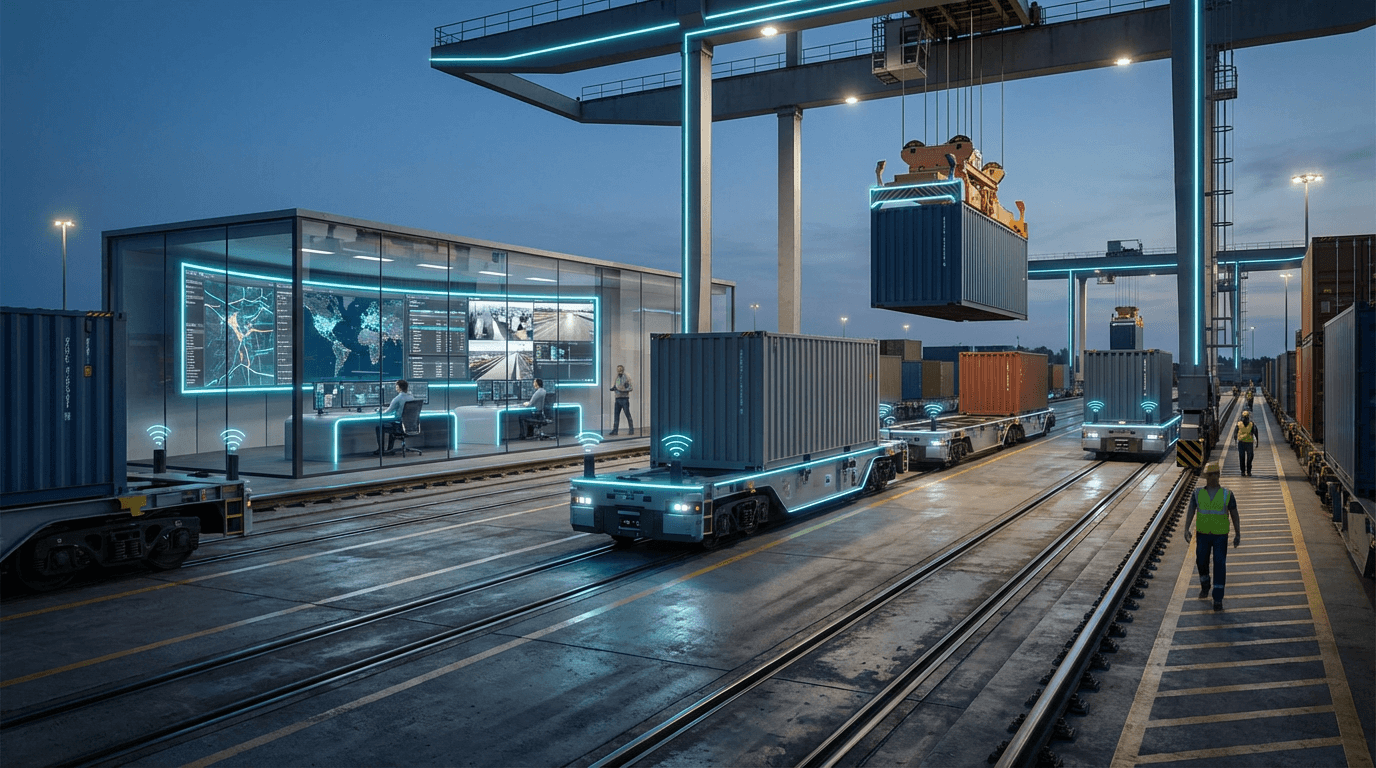
AI Supply Chain Orchestration represents a fundamental shift from traditional logistics management to autonomous, self-optimizing systems that coordinate complex supply chain operations with minimal human intervention. Unlike conventional supply chain software that requires manual oversight and decision-making, these platforms employ advanced machine learning algorithms and agentic AI architectures to continuously analyze vast streams of operational data and execute decisions in real-time. The technology integrates multiple data sources—including IoT sensors embedded in vehicles and warehouses, weather forecasting systems, geopolitical risk assessments, and demand prediction models—into a unified decision-making framework. Through reinforcement learning and neural network architectures, these systems develop sophisticated understanding of trade-offs between cost, speed, reliability, and sustainability, enabling them to navigate the inherent complexity of modern global logistics networks. The platforms operate through distributed agent systems where specialized AI modules handle specific domains such as route optimization, inventory positioning, carrier selection, and exception management, while coordinating through centralized orchestration layers that ensure alignment with broader business objectives.
The logistics industry faces mounting pressures from escalating customer expectations for faster delivery, increasing supply chain volatility driven by geopolitical tensions and climate events, and the operational complexity of managing multi-modal transportation across global networks. Traditional approaches relying on static planning cycles and human decision-makers struggle to respond quickly enough to disruptions or capitalize on fleeting optimization opportunities. AI Supply Chain Orchestration addresses these challenges by enabling continuous replanning and adaptation at machine speed. When a port closure, severe weather event, or sudden demand spike occurs, these systems can instantly evaluate thousands of alternative scenarios, reroute shipments across different carriers and modes, reallocate inventory between distribution centers, and adjust production schedules—all while maintaining service commitments and cost targets. This capability transforms supply chains from rigid, plan-driven operations into adaptive networks that can absorb shocks and maintain performance under uncertainty. The technology also unlocks new business models, such as dynamic pricing for logistics services, predictive inventory positioning that reduces working capital requirements, and collaborative logistics networks where multiple companies share capacity and resources through AI-mediated coordination.
Early implementations of autonomous supply chain orchestration are emerging across industries, with logistics providers and large retailers piloting systems that handle specific operational domains such as last-mile delivery routing or warehouse inventory management. Research in this space suggests that the technology delivers measurable improvements in key performance metrics, including reduced transportation costs, lower inventory levels, and improved on-time delivery rates. The automotive and consumer electronics sectors, which face particularly complex multi-tier supply networks and demand volatility, are among the early adopters exploring end-to-end orchestration capabilities. As the technology matures, industry analysts anticipate broader adoption driven by the convergence of several enabling trends: the proliferation of IoT sensors providing granular visibility into supply chain operations, advances in edge computing that enable faster local decision-making, and the development of industry-standard data protocols that facilitate integration across fragmented logistics ecosystems. The trajectory points toward supply chains that function more like living organisms—sensing their environment, learning from experience, and autonomously adapting to changing conditions—fundamentally transforming how goods move through the global economy.
Related Organizations

Owned by Panasonic, their Luminate platform offers a digital twin of the supply chain for real-time visibility and prediction.

Provides an advanced visibility platform for shippers and logistics service providers, connecting data across the supply chain.

A digital-first freight forwarder that uses a cloud platform to manage global logistics and supply chain visibility.

Real-time supply chain visibility platform that uses predictive analytics to track shipments across modes.

Supply chain planning software (RapidResponse) that provides concurrent planning via the cloud.

Provides an AI-powered 'Digital Brain' platform that creates digital twins of enterprise supply chains, heavily utilized by major fashion and apparel retailers.

Uses AI to build a shared source of truth for the global supply chain, mapping networks and compliance.
An operational resilience company that maps supply chains to the Nth tier.

Provides cloud-native supply chain commerce solutions, specifically Warehouse Management Systems (WMS).
Supporting Evidence
Research this in Signals
Signals turns a topic into a sourced research record you can inspect and rerun. Your first scan is free, and this one starts with AI Supply Chain Orchestration already loaded, so edit it or scan as is.