Culture Sensing Dashboards
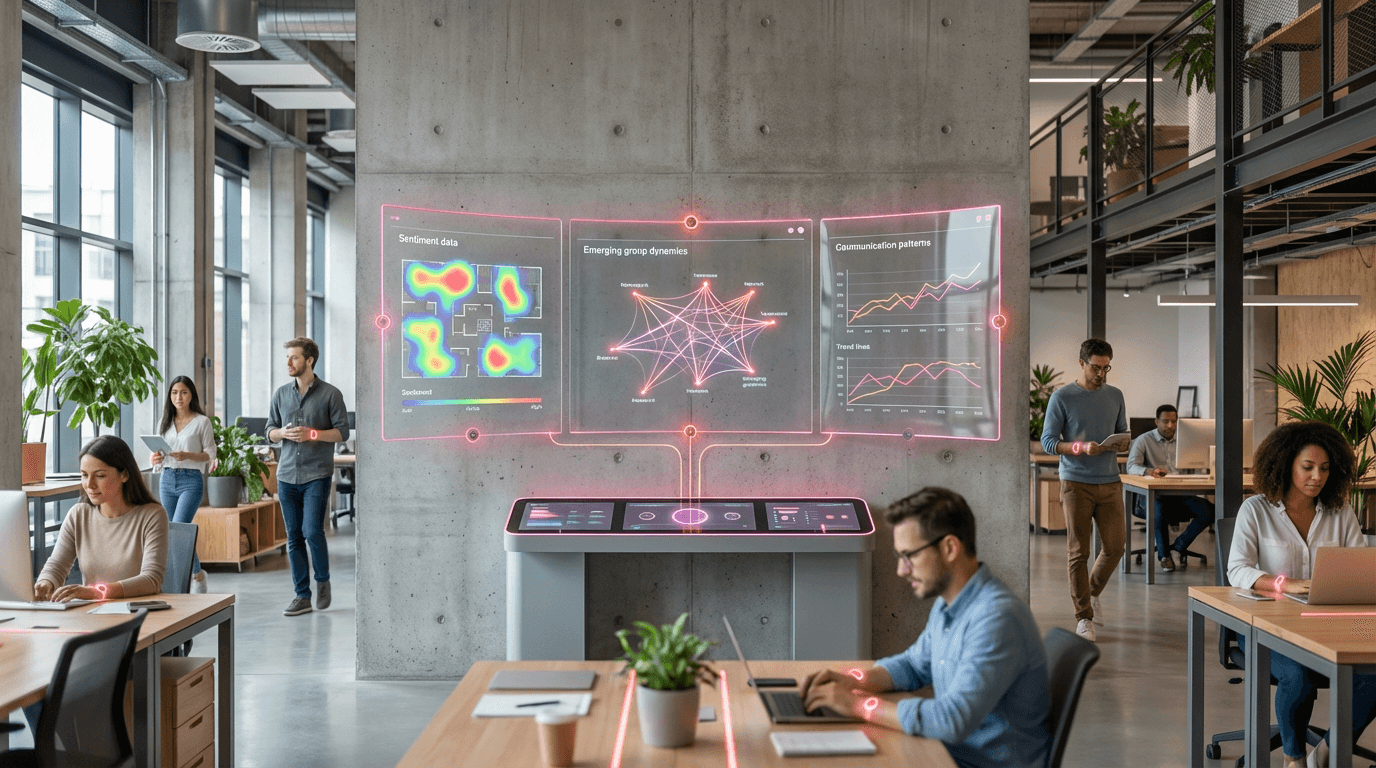
Culture Sensing Dashboards represent a sophisticated approach to organizational health monitoring, combining multiple data streams to provide leadership with real-time visibility into the often-invisible dynamics that shape workplace culture. These systems integrate various inputs—including periodic pulse surveys, anonymized analysis of communication patterns from collaboration platforms, meeting attendance and participation metrics, peer recognition data, and behavioral signals such as response times and work-hour patterns. Advanced natural language processing algorithms analyze aggregated communication data to detect shifts in sentiment, identify emerging concerns before they escalate, and surface patterns that might indicate declining psychological safety or eroding trust. Unlike traditional annual engagement surveys that provide only retrospective snapshots, these dashboards operate continuously, processing signals as they emerge and presenting them through intuitive visualizations that highlight trends, anomalies, and areas requiring attention. The underlying architecture typically employs privacy-preserving techniques to ensure individual employees cannot be identified, focusing instead on team-level and organizational patterns that reveal collective cultural dynamics.
The fundamental challenge these systems address is the growing complexity of managing distributed, hybrid, and rapidly evolving workforces where traditional management intuition often fails to detect problems until they become crises. Leaders in modern organizations struggle to maintain cohesion across teams spread across time zones, to identify which groups are thriving and which are quietly struggling, and to understand whether organizational values are genuinely shaping behavior or merely decorating presentation slides. Culture Sensing Dashboards solve this visibility gap by transforming abstract concepts like psychological safety, alignment, and belonging into measurable, trackable dimensions. They enable organizations to move from reactive crisis management to proactive culture stewardship, identifying early warning signs of burnout, detecting pockets of disengagement before they spread, and recognizing when subcultures within the organization are drifting away from stated values. This capability is particularly valuable during periods of organizational change, when mergers create cultural collisions, or when rapid growth threatens to dilute founding principles. By providing empirical evidence of cultural health, these tools also help justify investments in interventions that might otherwise be dismissed as soft or unmeasurable.
Early implementations of culture sensing technology have emerged primarily within large technology companies and progressive enterprises that view culture as a competitive advantage rather than an HR checkbox. These organizations are experimenting with targeted interventions based on dashboard insights—adjusting team structures when collaboration patterns reveal silos, modifying meeting practices when data shows declining participation, or deploying additional support resources to teams exhibiting stress signals. Research suggests that organizations using continuous culture monitoring can reduce voluntary turnover and identify process improvements that might otherwise remain hidden in the noise of daily operations. However, the technology also raises important questions about surveillance, employee autonomy, and the potential for misuse if not implemented with robust ethical guardrails and transparent communication about what is measured and why. As workforce expectations continue to evolve and the competition for talent intensifies, culture sensing capabilities are likely to become standard components of organizational infrastructure, sitting alongside financial dashboards and operational metrics as essential tools for sustainable performance. The trajectory points toward increasingly sophisticated systems that not only diagnose cultural challenges but also recommend evidence-based interventions, creating a feedback loop that enables organizations to continuously refine their cultural practices in response to real-world signals rather than assumptions.
Related Organizations

Employee experience platform focused on engagement, performance, and retention.

Analyzes email and chat metadata/linguistics to detect unwritten risks and cultural tension.

A people analytics platform that correlates workforce data with business outcomes, including metrics on burnout and engagement.
An employee listening and people analytics platform that acquired Humu to drive behavioral change.

TrustSphere
Singapore · Company
Relationship analytics and Organizational Network Analysis (ONA) provider.

People management platform for building high-performing teams.


Self-service people analytics platform for HR and leadership.

Through Copilot and the 'Recall' feature in Windows, Microsoft is integrating persistent memory and agentic capabilities directly into the operating system.

A leading provider of enterprise cloud applications for finance and human resources.
Supporting Evidence
Research this in Signals
Signals turns a topic into a sourced research record you can inspect and rerun. Your first scan is free, and this one starts with Culture Sensing Dashboards already loaded, so edit it or scan as is.