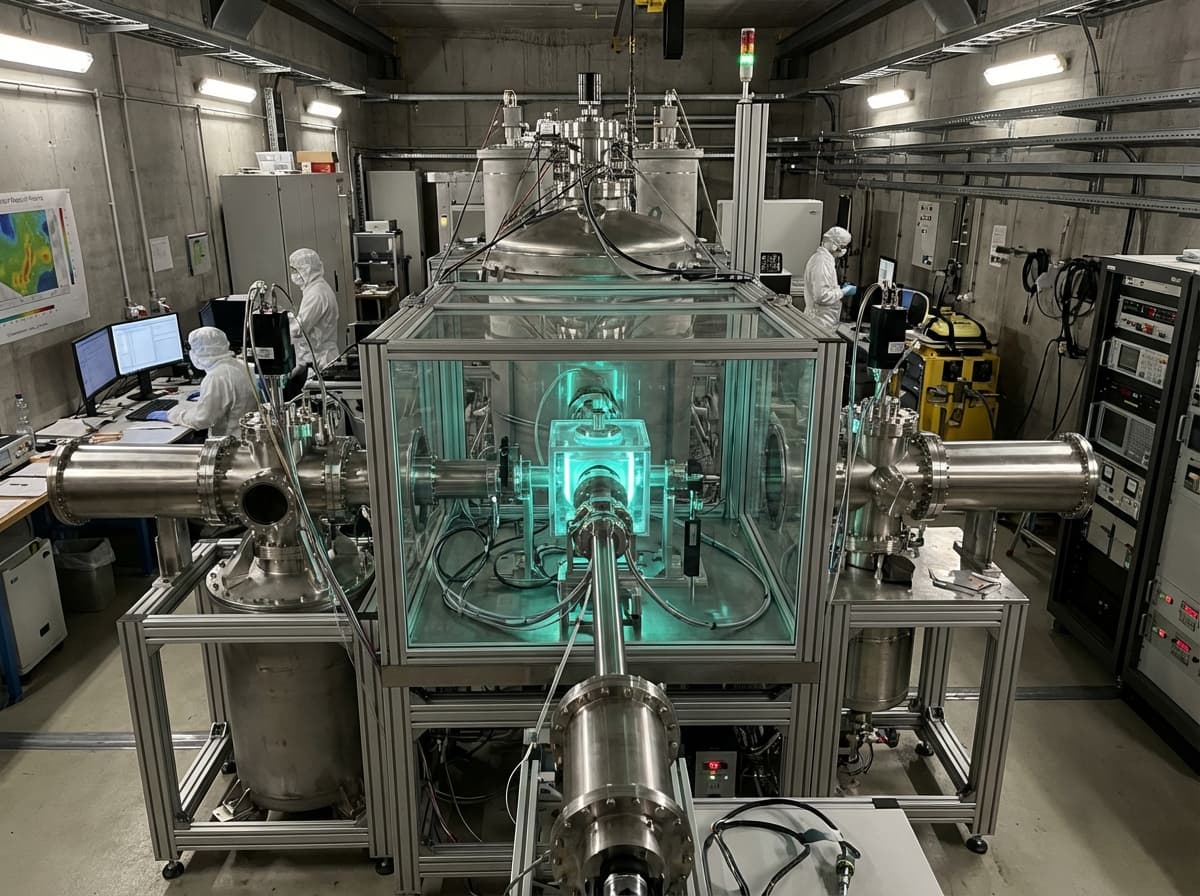
Quantum Magnetometers
Quantum magnetometers are ultra-sensitive sensors that detect minute changes in magnetic fields using quantum defects in diamonds (like NV centers) or atomic vapors (clouds of atoms), providing extreme sensitivity enabled by quantum effects. Applications range from magnetoencephalography (MEG, brain imaging using magnetic fields) for brain imaging (detecting brain activity) to detecting anomalies underground (finding buried objects or geological features) for mining (finding mineral deposits) or navigation (navigating without GPS), making these sensors useful for a wide range of applications where extremely precise magnetic field measurement is needed, from medical diagnostics to resource exploration to navigation systems.
This innovation addresses the need for extremely sensitive magnetic field sensors, where quantum effects enable much better sensitivity than classical sensors. By using quantum systems, these sensors can detect very weak magnetic fields. Companies and research institutions are developing these sensors.
The technology is particularly significant for applications requiring extreme sensitivity, where quantum magnetometers can provide capabilities that classical sensors cannot. As the technology improves, it could enable new applications. However, ensuring sensitivity, managing complexity, and achieving commercial viability remain challenges. The technology represents a mature application of quantum sensing, with commercial products available. Success is already being achieved, with quantum magnetometers being used in various applications. Quantum magnetometers are one of the most mature quantum sensing technologies, with several commercial applications.
Research this in Signals
Signals turns a topic into a sourced research record you can inspect and rerun. Your first scan is free, and this one starts with Quantum Magnetometers already loaded, so edit it or scan as is.