Osmotic Power Generation
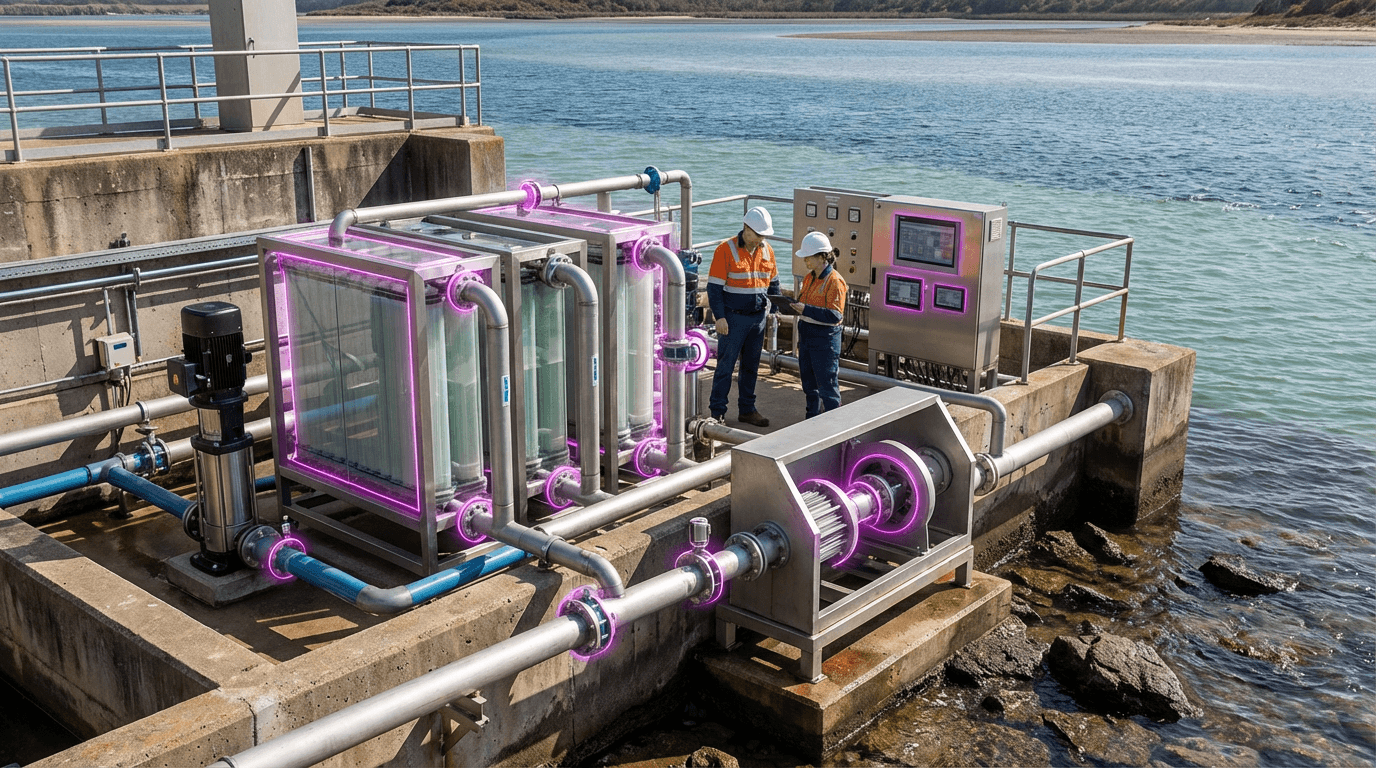
Osmotic power generation, also known as blue energy or salinity gradient power, harnesses the natural phenomenon that occurs when fresh water and salt water meet. At its core, the technology exploits the osmotic pressure differential created when water molecules move across a semi-permeable membrane from a less concentrated solution (fresh water) to a more concentrated one (salt water). Two primary technical approaches have emerged: Pressure Retarded Osmosis (PRO), which uses this pressure differential to drive turbines, and Reverse Electrodialysis (RED), which generates electricity through ion exchange across alternating membranes. The PRO method employs specially engineered membranes that allow water molecules to pass while blocking salt ions, creating hydraulic pressure that can reach up to 26 bar—equivalent to a 270-meter water column. RED systems, meanwhile, utilize stacks of alternating cation and anion exchange membranes to create an electrical potential as ions migrate between fresh and salt water streams.
The technology addresses a critical challenge in the renewable energy landscape: providing consistent baseload power without the intermittency issues that plague solar and wind generation. Unlike these weather-dependent sources, osmotic power can theoretically operate continuously wherever fresh and salt water converge, offering a predictable and stable energy output. Research suggests that global theoretical potential could reach 2 terawatts of continuous power—roughly equivalent to 2,000 large nuclear power plants—if all river mouths worldwide were exploited. Beyond dedicated power generation facilities, the technology presents opportunities for integration with existing water infrastructure, particularly desalination plants and wastewater treatment facilities, where the necessary water streams are already present. This dual-purpose approach could offset the significant energy costs of water treatment while generating additional revenue streams for municipal utilities.
Early pilot installations have demonstrated the technical feasibility of osmotic power, with facilities in Norway and the Netherlands testing both PRO and RED systems at estuary locations. Current deployments remain at relatively small scales, typically generating kilowatts rather than megawatts, as researchers work to overcome challenges related to membrane fouling, durability, and cost-effectiveness. The technology shows particular promise in regions with abundant freshwater river discharge into oceans, such as the Amazon delta, the Congo River mouth, and major Asian river systems. Industry analysts note that advances in membrane materials—including the development of more robust, higher-flux membranes resistant to biological fouling—could significantly improve the economic viability of osmotic power within the next decade. As coastal cities face mounting pressure to decarbonize their energy systems while managing water resources more efficiently, osmotic power generation represents a convergence of energy and water infrastructure that could play an increasingly important role in the sustainable urban systems of the future.
Related Organizations

Pioneers of Reverse Electrodialysis (RED) technology, operating a pilot plant on the Afsluitdijk dam.
Sweetch Energy
France · Startup
Developing INOD (Ionic Nano Osmotic Diffusion) technology to harvest osmotic energy efficiently at estuaries.

Develops technology to generate energy from the osmotic difference between high-salinity geothermal brine and fresh water.
European centre of excellence for sustainable water technology, conducting extensive research on Blue Energy.
Developing a 'Blue Battery' that stores electricity in the form of chemical energy in salt water and fresh water.
France's leading producer of 100% renewable electricity, partnering to deploy osmotic power in the Rhône delta.

Korea Institute of Energy Research (KIER)
South Korea · Research Lab
Government research institute actively developing salinity gradient power generation systems.

Conducts advanced research into cryogenic CMOS and quantum computing interconnects.
Supporting Evidence
Research this in Signals
Signals turns a topic into a sourced research record you can inspect and rerun. Your first scan is free, and this one starts with Osmotic Power Generation already loaded, so edit it or scan as is.