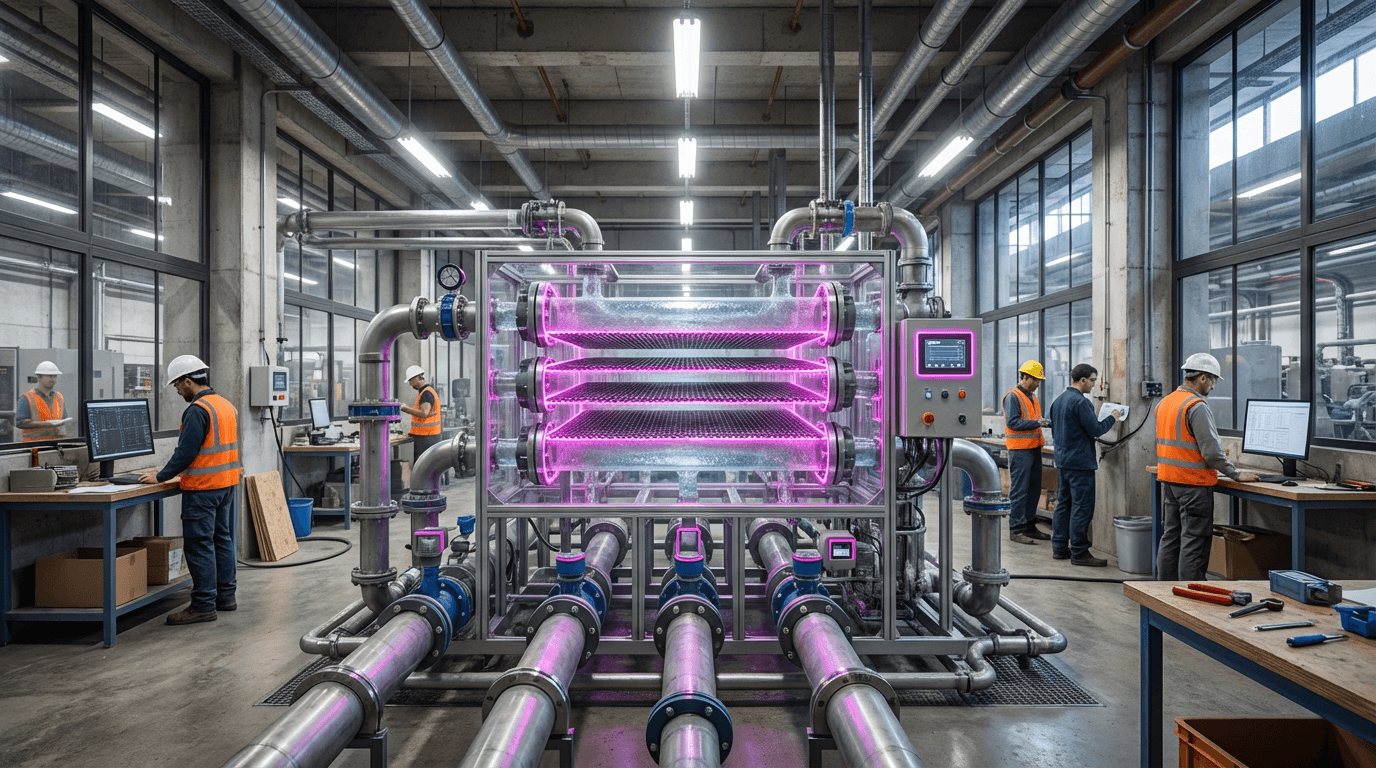
Graphene Desalination Membranes
Access to clean, potable water represents one of the most pressing challenges facing growing urban populations, particularly in coastal regions where freshwater resources are scarce. Traditional desalination methods, primarily reverse osmosis, have provided a solution but at significant energy and economic costs. These conventional systems require high pressure to force seawater through polymer-based membranes, consuming substantial amounts of electricity and requiring extensive infrastructure. Graphene desalination membranes emerge as a transformative alternative, leveraging the unique properties of graphene—a single-atom-thick sheet of carbon atoms arranged in a hexagonal lattice—to create molecular sieves with unprecedented precision. When engineered into graphene oxide membranes, this material forms nanoscale pores that can be precisely controlled to allow water molecules to pass through while blocking dissolved salts, heavy metals, and other contaminants at the atomic level. The exceptional thinness of graphene, combined with its mechanical strength and chemical stability, enables water to permeate the membrane with significantly less resistance than conventional polymer filters, fundamentally changing the energy equation of desalination.
The implications for water infrastructure are substantial, particularly as municipalities worldwide grapple with water scarcity intensified by climate change and population growth. Research suggests that graphene-based membranes could reduce the energy requirements of desalination by up to 50% compared to traditional reverse osmosis systems, translating to lower operational costs and reduced carbon footprints for water treatment facilities. This efficiency gain addresses one of the primary barriers to widespread desalination adoption: the prohibitive cost of converting seawater into drinking water at scale. Beyond energy savings, graphene membranes offer enhanced selectivity, potentially removing a broader spectrum of contaminants including microplastics, pharmaceuticals, and emerging pollutants that conventional systems struggle to filter. The technology also promises longer membrane lifespans due to graphene's resistance to fouling and degradation, reducing maintenance requirements and replacement costs that burden existing desalination plants.
Early laboratory demonstrations and pilot programs have validated the fundamental principles of graphene desalination, though commercial-scale deployment remains in development stages. Researchers have successfully produced graphene oxide membranes capable of rejecting salt ions while maintaining high water flux rates, with ongoing work focused on manufacturing processes that can produce these membranes consistently and economically at industrial scales. The technology aligns with broader trends toward advanced materials in water infrastructure, where nanotechnology and precision engineering are increasingly applied to resource management challenges. As coastal cities expand and freshwater sources become more stressed, graphene desalination membranes represent a pathway toward making seawater a practical, sustainable municipal water source. The convergence of materials science advances, manufacturing scalability improvements, and urgent water security needs suggests that this technology could transition from laboratory innovation to critical infrastructure component within the coming decades, fundamentally reshaping how cities secure their water supplies.
Related Organizations

World-leading center for 2D materials research and atomic manipulation.

Manufactures 3D-printed titanium membranes and graphene-based water filtration solutions.

Producers of Graphene Plus (G+), a chemical-free graphene used in textiles for thermal regulation.

US Department of Energy lab that has historically run FACE experiments and currently models data from them.

Uses graphene oxide membranes to decarbonize industrial separation processes.

LG Chem
South Korea · Company
A major global supplier of Reverse Osmosis (RO) membranes, actively researching nanocomposite improvements.

Japanese chemical giant producing advanced textiles, including nanofiber-based nonwovens for medical and industrial use.
Supporting Evidence
Research this in Signals
Signals turns a topic into a sourced research record you can inspect and rerun. Your first scan is free, and this one starts with Graphene Desalination Membranes already loaded, so edit it or scan as is.