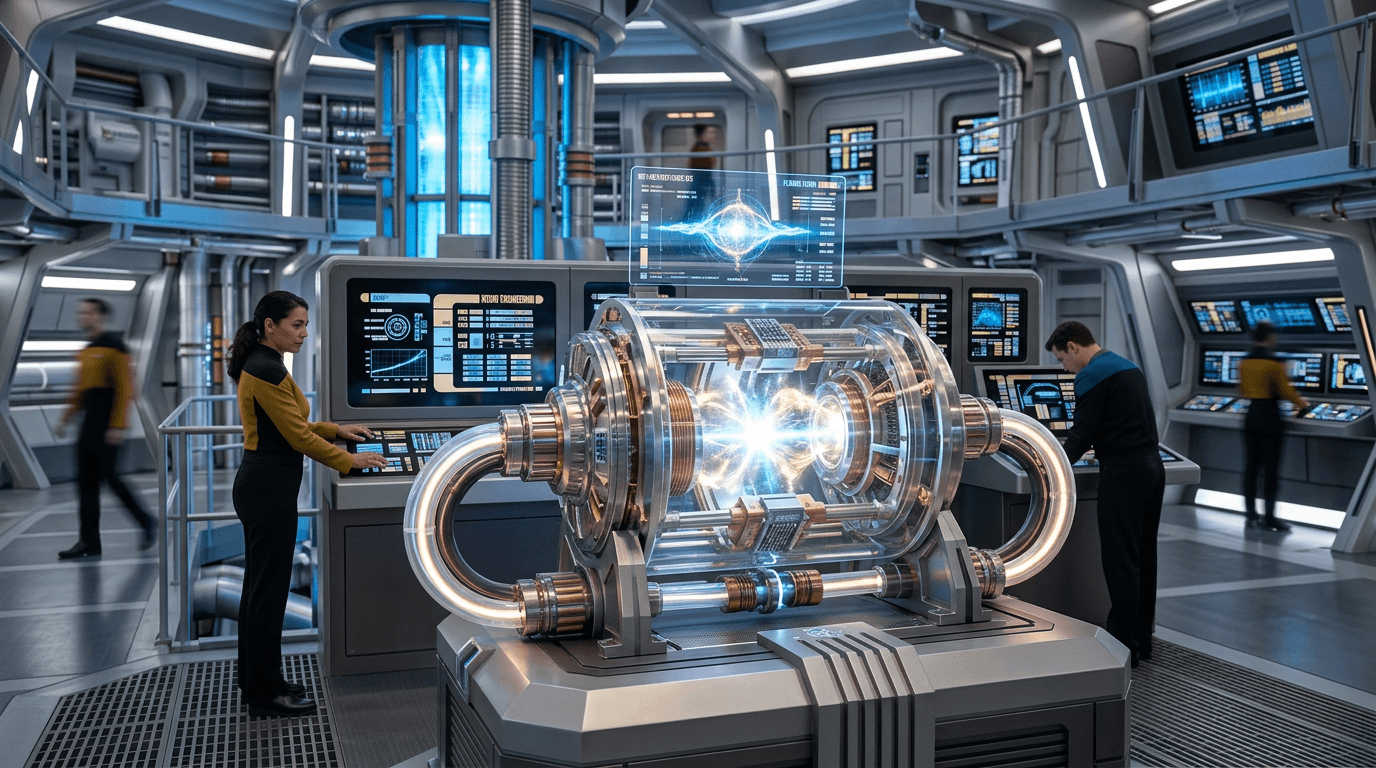
Zero-Point Energy Module
Zero-point energy modules represent one of the most ambitious attempts to harness quantum mechanical phenomena for practical power generation. The concept builds on the theoretical foundation that even in a perfect vacuum at absolute zero temperature, quantum fields exhibit residual energy fluctuations—a consequence of the Heisenberg uncertainty principle. These modules are envisioned to extract usable energy from these vacuum fluctuations through carefully engineered quantum field interactions. The proposed mechanism involves creating controlled perturbations in the quantum vacuum using exotic materials with specific electromagnetic properties, potentially including metamaterials or hypothetical substances with negative energy densities. These perturbations would theoretically allow the temporary capture of virtual particle-antiparticle pairs before they annihilate, converting a fraction of their energy into conventional electrical power. The engineering challenges are formidable: maintaining the precise quantum coherence required, preventing decoherence from environmental interference, and achieving energy extraction rates that exceed the power required to sustain the quantum field manipulation itself.
Within science fiction narratives, particularly military science fiction and space exploration scenarios, zero-point energy modules serve as a narrative solution to the fundamental constraint of carrying fuel across interstellar distances. They appear frequently in contexts requiring compact, long-duration power sources independent of external energy inputs—from powering remote outposts to enabling energy-intensive technologies like defensive shields or faster-than-light propulsion systems. The appeal lies in the conceptual elegance of drawing power from the fabric of space-time itself, effectively providing unlimited energy density. In strategic discourse, the concept occasionally surfaces in discussions of breakthrough energy technologies, though typically as a long-horizon speculative possibility rather than a near-term development pathway. Real-world research into quantum vacuum phenomena, such as the Casimir effect, demonstrates that quantum fluctuations do produce measurable forces, lending a degree of theoretical plausibility to the underlying physics, even if practical energy extraction remains undemonstrated.
The primary scientific constraint is thermodynamic: extracting net positive energy from quantum vacuum fluctuations appears to violate fundamental principles, particularly the second law of thermodynamics and conservation of energy. While the Casimir effect proves quantum vacuum fluctuations exist, no experimental evidence suggests these fluctuations can serve as a net energy source. Theoretical analyses indicate that any energy extraction would require energy input exceeding the output, making such devices perpetual motion machines of the first kind—physically impossible under current understanding of physics. For zero-point energy modules to transition from fiction to reality would require either a fundamental revision of quantum field theory or the discovery of loopholes in thermodynamic laws under exotic conditions. The concept remains valuable in speculative contexts for exploring the implications of abundant, compact energy sources, but should be clearly distinguished from emerging energy technologies with demonstrated physical principles, such as fusion power or advanced battery systems.
Research this in Signals
Signals turns a topic into a sourced research record you can inspect and rerun. Your first scan is free, and this one starts with Zero-Point Energy Module already loaded, so edit it or scan as is.