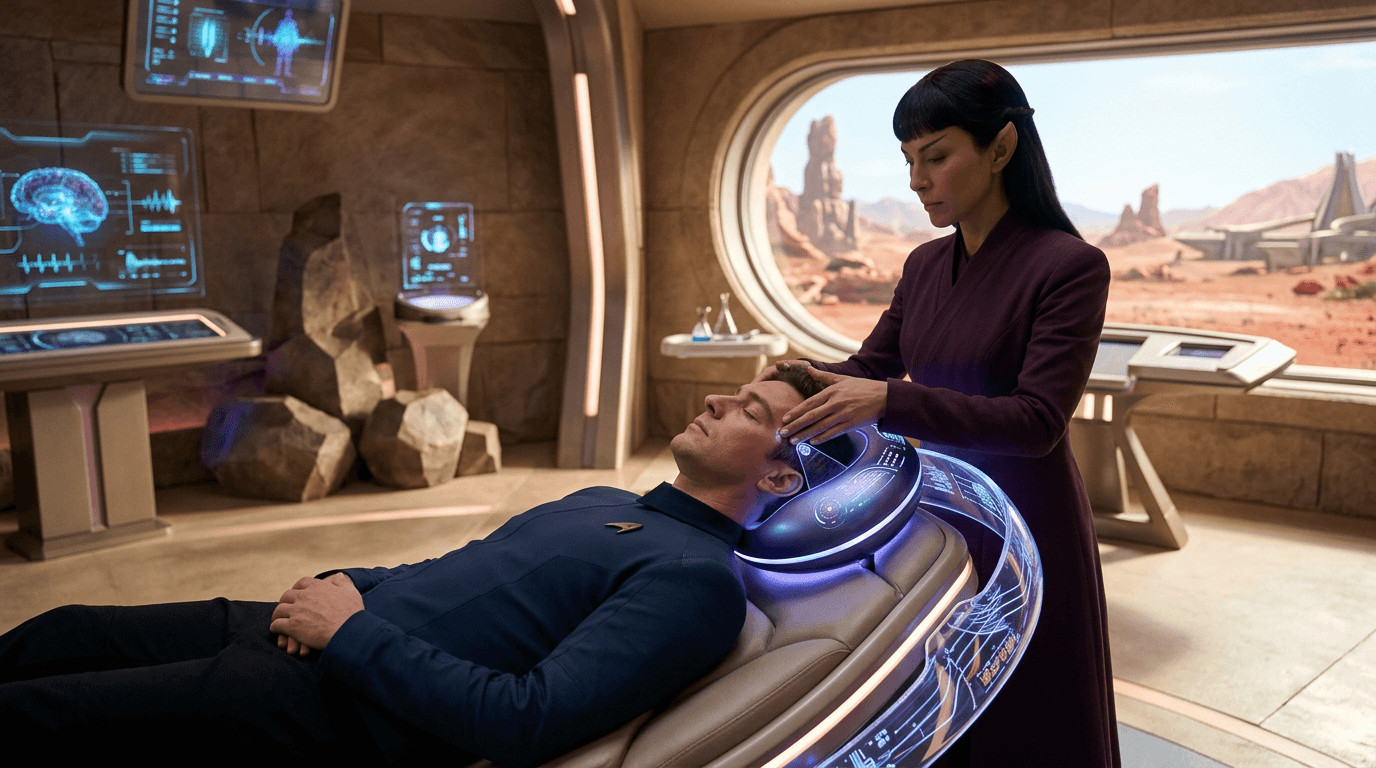
Vulcan Neuropressure
Vulcan neuropressure represents a speculative fusion of ancient healing traditions with advanced neurological intervention, imagined within science fiction narratives as a sophisticated therapeutic modality. The concept posits that practitioners can access and influence the nervous system through precisely calibrated physical pressure applied to specific anatomical points, while simultaneously monitoring real-time neurological feedback to guide treatment. This fictional technique assumes the existence of mappable neural pathways that respond predictably to external stimulation, combined with the practitioner's ability to perceive and interpret subtle physiological responses—capabilities that extend beyond current medical practice. In narrative contexts, the therapy serves as both a medical intervention and a cultural touchstone, representing the integration of empirical knowledge with disciplined physical technique. The speculative framework suggests that pressure application could directly modulate neural activity, reduce inflammatory responses, and induce measurable relaxation states through mechanisms that remain undefined in contemporary neuroscience.
Within fictional universes, Vulcan neuropressure often appears as a plot device that explores themes of trust, cultural exchange, and the boundaries between physical and mental healing. The practice's narrative function extends beyond simple medical treatment to encompass emotional vulnerability and interpersonal connection, as the intimate nature of the therapy requires practitioners and patients to establish profound trust. This cultural dimension positions neuropressure as a window into alien psychology and social structures, where physical touch carries weighted significance and healing practices intertwine with philosophical principles. The concept resonates with real-world interest in integrative medicine, acupressure, and biofeedback therapies, though it extrapolates these approaches into speculative territory. Contemporary research in neurostimulation, pressure therapy, and mind-body interventions provides adjacent reference points, but the fictional technique assumes capabilities—such as direct neural pathway manipulation through surface pressure and species-adaptable protocols—that remain firmly in the realm of imagination.
The plausibility of Vulcan neuropressure as depicted in fiction faces substantial scientific constraints. While acupressure and massage therapy demonstrate measurable effects on stress reduction and muscle tension, the mechanism of action remains primarily mechanical and biochemical rather than involving direct neural pathway modulation. Current neuroscience lacks evidence for the kind of precise, targeted neural control through external pressure that the concept requires. Real-world biofeedback systems can monitor physiological responses, but they cannot provide the instantaneous, detailed neural mapping that fictional practitioners supposedly access. For such a technique to approach viability, significant advances would be needed in non-invasive neural sensing, our understanding of pressure-responsive neural mechanisms, and the development of standardized protocols for translating surface stimulation into predictable neurological outcomes. The concept's most valuable contribution may lie not in its technical feasibility but in its exploration of how future healing practices might integrate physical intervention with sophisticated biological monitoring, and how therapeutic relationships might evolve when practitioners can perceive patients' physiological states with unprecedented clarity.
Research this in Signals
Signals turns a topic into a sourced research record you can inspect and rerun. Your first scan is free, and this one starts with Vulcan Neuropressure already loaded, so edit it or scan as is.