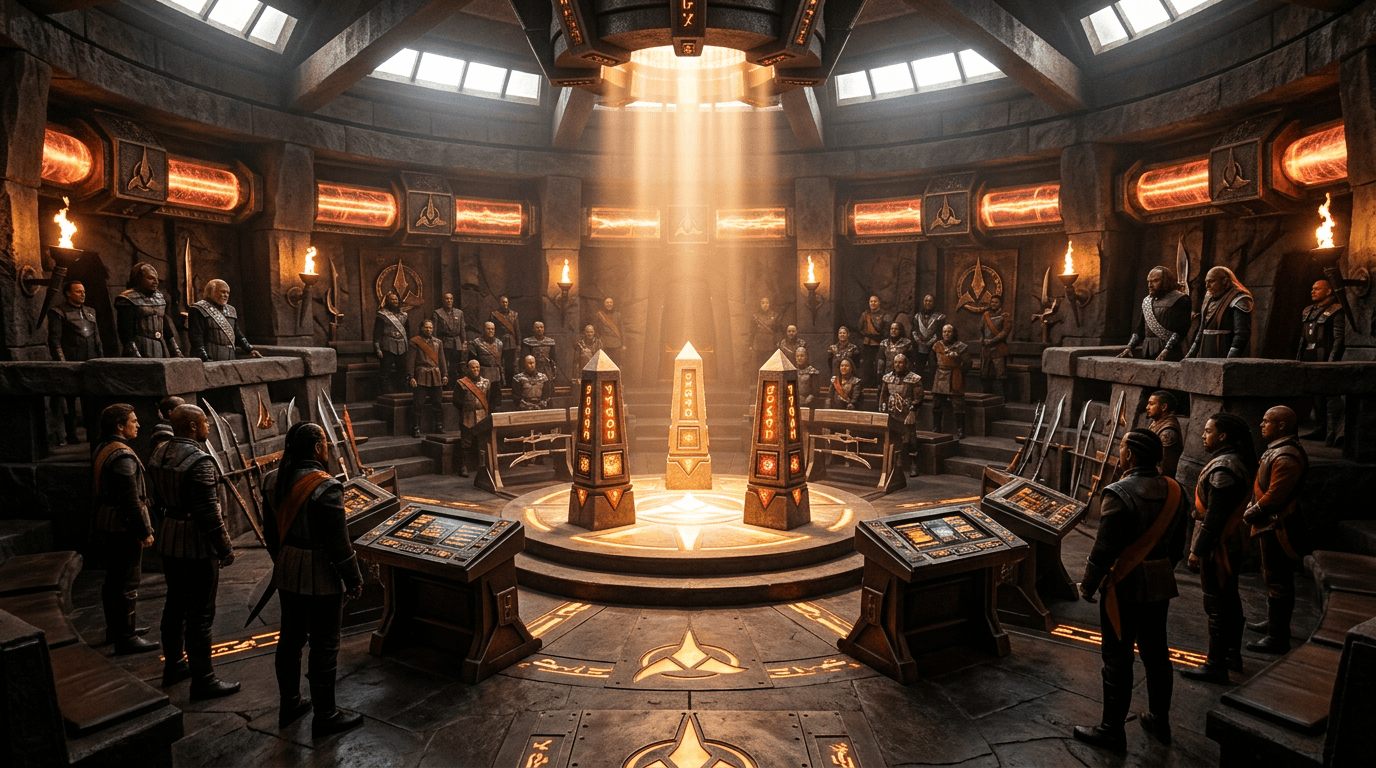
Rite of Ascension Chamber
The Rite of Ascension Chamber represents a convergence of ceremonial architecture and controlled energy technology designed to formalize the transition from adolescence to warrior status within Klingon cultural narratives. As depicted in Star Trek lore, the chamber functions as a ritualized testing environment where young warriors demonstrate their capacity to endure pain through exposure to calibrated energy discharges from painstik devices—fictional instruments that deliver localized electrical or neural stimulation without causing permanent injury. The chamber's design integrates both symbolic and functional elements: ceremonial electronics monitor the participant's physiological responses while maintaining precise control over energy output, ensuring the trial remains challenging yet survivable. This fictional technology embodies the narrative principle that physical ordeal can serve as both proof of worthiness and transformative experience, a concept that appears across numerous cultural traditions in science fiction and historical ritual practice.
Within the broader context of speculative military and cultural systems, the Rite of Ascension Chamber serves as a narrative device exploring how societies might formalize transitions of status through controlled adversity. The chamber's existence in Star Trek reflects longstanding questions about how warrior cultures balance tradition with technological capability, and how ritual spaces might evolve to incorporate advanced systems while preserving symbolic meaning. Real-world parallels exist in military training facilities that use controlled stress environments—from altitude chambers to virtual reality combat simulators—though these focus on skill development rather than ceremonial transformation. The fictional painstik technology suggests a level of precision in pain administration that current neurostimulation research has not achieved, though emerging work in targeted neural interfaces and pain pathway mapping indicates growing scientific interest in understanding and modulating pain perception.
The plausibility of such a system rests on several speculative assumptions about energy control, safety protocols, and the cultural acceptance of ritualized suffering. Current electrical stimulation technologies can deliver controlled discharges, but achieving the precise, non-lethal yet intensely painful effects depicted in fiction would require advances in real-time biometric monitoring, adaptive energy modulation, and fail-safe systems far beyond present capabilities. The ethical and legal frameworks surrounding such a practice would face substantial challenges in most contemporary societies, though the concept raises interesting questions about consent, cultural autonomy, and the role of physical trials in identity formation. As speculative technology, the Rite of Ascension Chamber functions primarily as a narrative tool for exploring themes of honor, endurance, and cultural continuity rather than as a blueprint for actual implementation.
Research this in Signals
Signals turns a topic into a sourced research record you can inspect and rerun. Your first scan is free, and this one starts with Rite of Ascension Chamber already loaded, so edit it or scan as is.