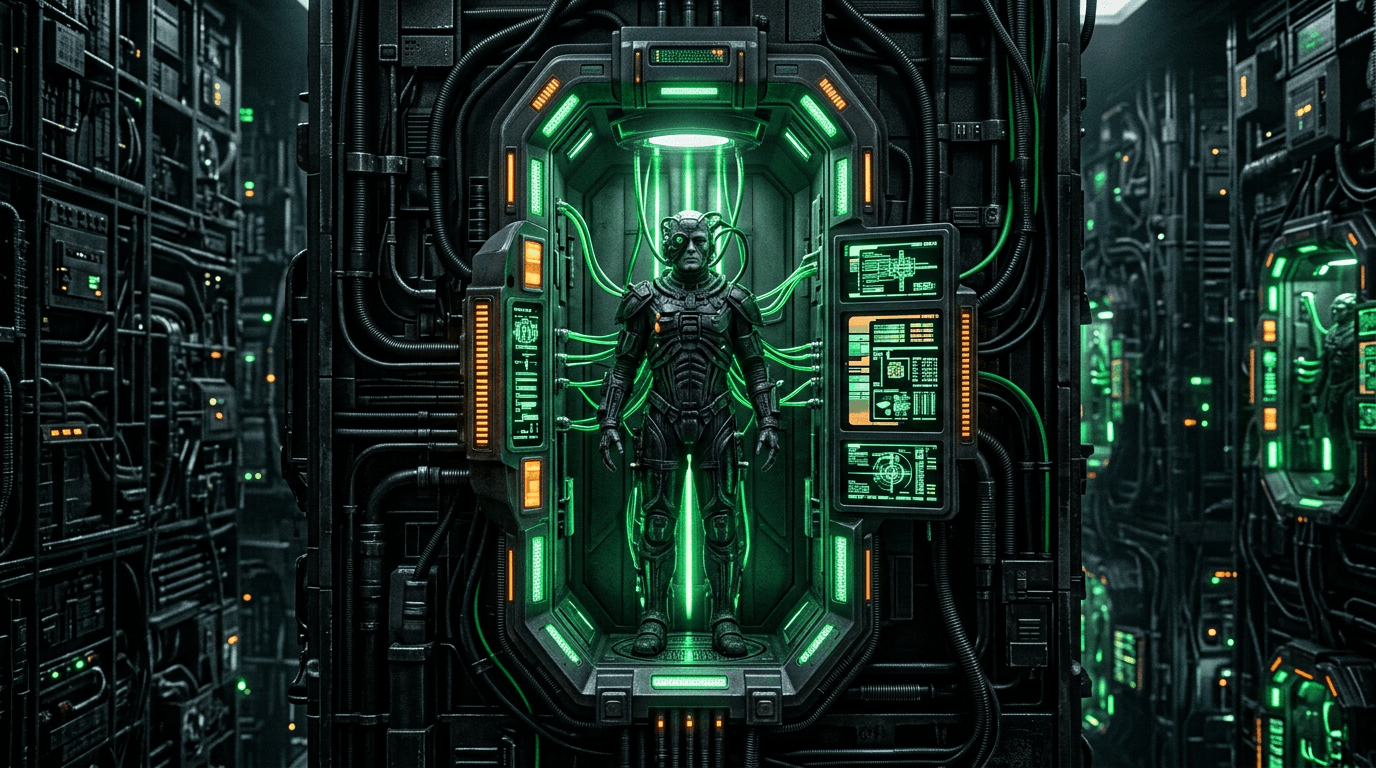
Borg Regeneration Alcove
The Borg regeneration alcove represents a fictional integration of biological maintenance, cybernetic recharging, and networked consciousness that appears throughout the Star Trek universe. In the narrative, these vertical docking stations serve as essential infrastructure for maintaining the Borg Collective's drone workforce. The alcove concept imagines a system where assimilated beings—part organic, part machine—interface with a larger network while simultaneously addressing the fundamental biological need for rest and the technological requirement for power replenishment. The device functions as both a charging station and a neural interface port, maintaining the drone's connection to the hive mind even during low-activity periods. This fictional technology explores questions about the nature of rest, consciousness, and identity when biological beings become integrated with machine systems that never truly sleep.
Within Star Trek's narrative framework, the regeneration alcove serves multiple strategic and thematic purposes. It establishes the Collective's efficiency-driven approach to resource management, where even rest periods serve productive functions through software updates and information processing. The alcove also provides dramatic tension in storylines involving severed or liberated drones, who must psychologically adjust to the absence of constant collective presence during sleep—a narrative device that explores themes of isolation, individuality, and the nature of consciousness. The concept resonates with contemporary discussions about human-computer interfaces, neural implants, and the increasing integration of technology into biological systems. Research into brain-computer interfaces, wireless power transfer, and automated medical monitoring systems explores adjacent territory, though without the fictional element of collective consciousness or the seamless organic-synthetic integration depicted in the series.
From a speculative technology perspective, the alcove concept raises questions about the physiological requirements of heavily augmented beings and the infrastructure needed to support them. Real-world challenges in developing anything approaching this fictional system would include biocompatible power transfer methods, maintaining organic tissue health during extended immobility, preventing infection at cybernetic interface points, and managing the thermal loads generated by active computing systems within biological bodies. The narrative assumes technologies for nanoscale repair, seamless neural networking, and power systems that can sustain both biological and mechanical components—capabilities that remain far beyond current scientific understanding. While research in regenerative medicine, neural interfaces, and bioelectronics continues to advance, the gap between recharging a pacemaker and maintaining a being that is simultaneously organic and synthetic remains vast. The alcove concept ultimately serves as a thought experiment about the potential costs and dependencies that might accompany radical human enhancement.
Research this in Signals
Signals turns a topic into a sourced research record you can inspect and rerun. Your first scan is free, and this one starts with Borg Regeneration Alcove already loaded, so edit it or scan as is.