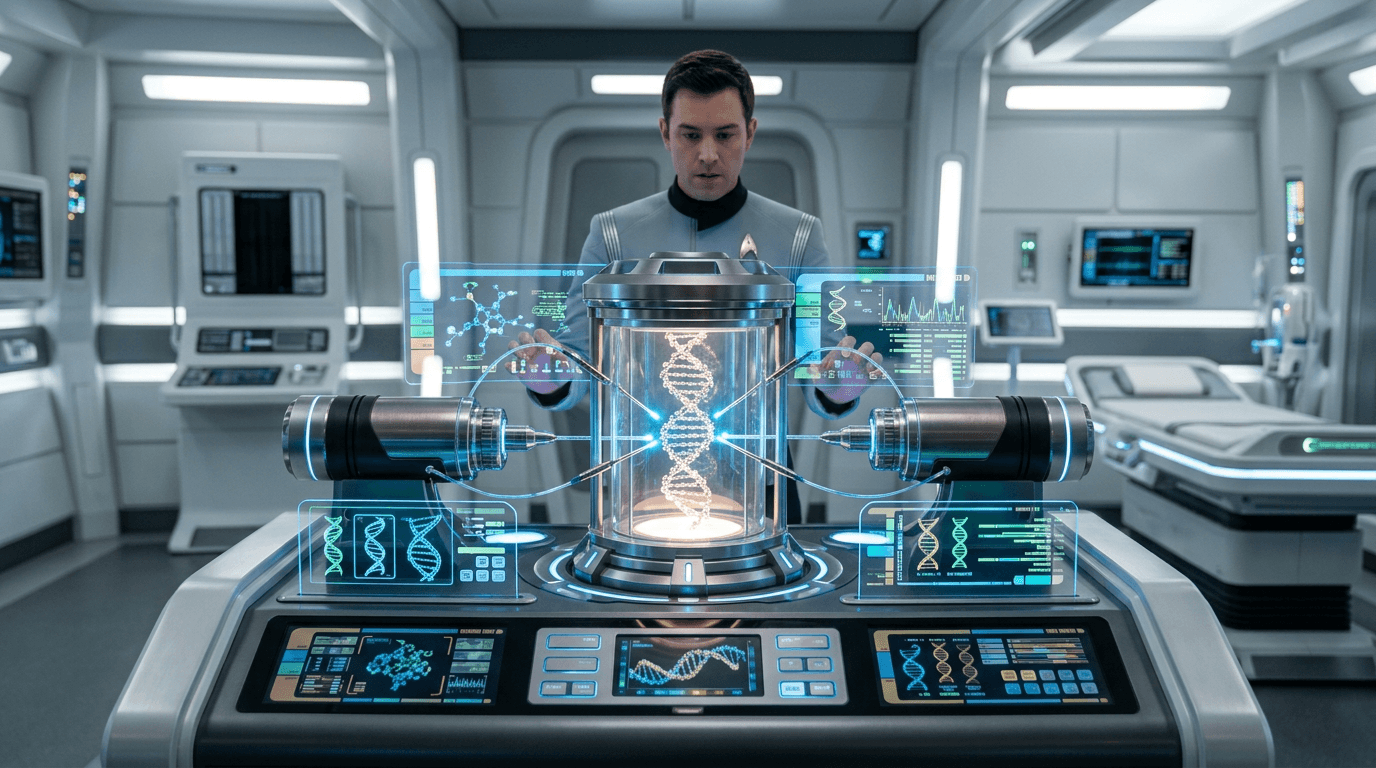
Genetic Resequencer
The genetic resequencer represents a speculative advancement in gene therapy technology that extends beyond current CRISPR-based approaches, imagining a future where DNA modification occurs with near-perfect precision at the molecular level. Unlike contemporary gene-editing tools that cut and replace genetic sequences, this concept envisions a device capable of directly rewriting nucleotide sequences in living cells without creating double-strand breaks. The theoretical mechanism would involve nanoscale molecular machinery that identifies target sequences, removes incorrect base pairs, and inserts corrected genetic code with single-nucleotide accuracy. This approach appears frequently in science fiction narratives as a medical device that can address genetic disorders in real-time, repair radiation-induced mutations, and potentially reverse certain degenerative conditions by restoring damaged cellular instructions. The concept builds upon real research in base editing and prime editing technologies, though it extrapolates these capabilities far beyond current scientific achievements.
Within speculative medical scenarios, the genetic resequencer serves as a narrative device for exploring the boundaries between therapy and enhancement. Science fiction often depicts this technology as a standard medical tool in advanced civilizations, capable of treating conditions from sickle cell disease to radiation poisoning within minutes rather than requiring lengthy therapeutic protocols. The strategic appeal of this concept extends into defense and space exploration contexts, where rapid genetic repair might prove essential for protecting personnel from cosmic radiation during long-duration space missions or treating casualties exposed to nuclear materials. Contemporary gene therapy research does demonstrate progress in treating specific genetic disorders through ex vivo modification of cells, and emerging base-editing techniques can convert individual nucleotides without cutting DNA strands. However, these real-world approaches require extensive laboratory processes, affect only certain cell types, and cannot yet achieve the comprehensive, instantaneous modifications depicted in fictional resequencer technology.
The plausibility of genetic resequencers depends on several unresolved scientific challenges that separate current capabilities from speculative visions. Real gene-editing tools face significant constraints including off-target effects, delivery limitations to specific tissues, immune responses to editing machinery, and the inability to modify non-dividing cells throughout the body simultaneously. A functional resequencer would require breakthroughs in targeted delivery systems capable of reaching every affected cell, error-correction mechanisms far exceeding current precision rates, and methods to avoid triggering immune rejection of modified cells. The ethical dimensions explored in fiction—questions of genetic enhancement, equity of access, and the definition of medical necessity versus elective modification—already emerge in contemporary debates around germline editing and therapeutic applications. As base-editing and prime-editing technologies continue advancing, the gap between fiction and reality may narrow for treating specific genetic conditions, though the comprehensive, rapid DNA rewriting depicted in speculative scenarios remains distant from current scientific trajectories and would require fundamental discoveries in molecular biology and nanotechnology.
Research this in Signals
Signals turns a topic into a sourced research record you can inspect and rerun. Your first scan is free, and this one starts with Genetic Resequencer already loaded, so edit it or scan as is.