Disease Detection AI
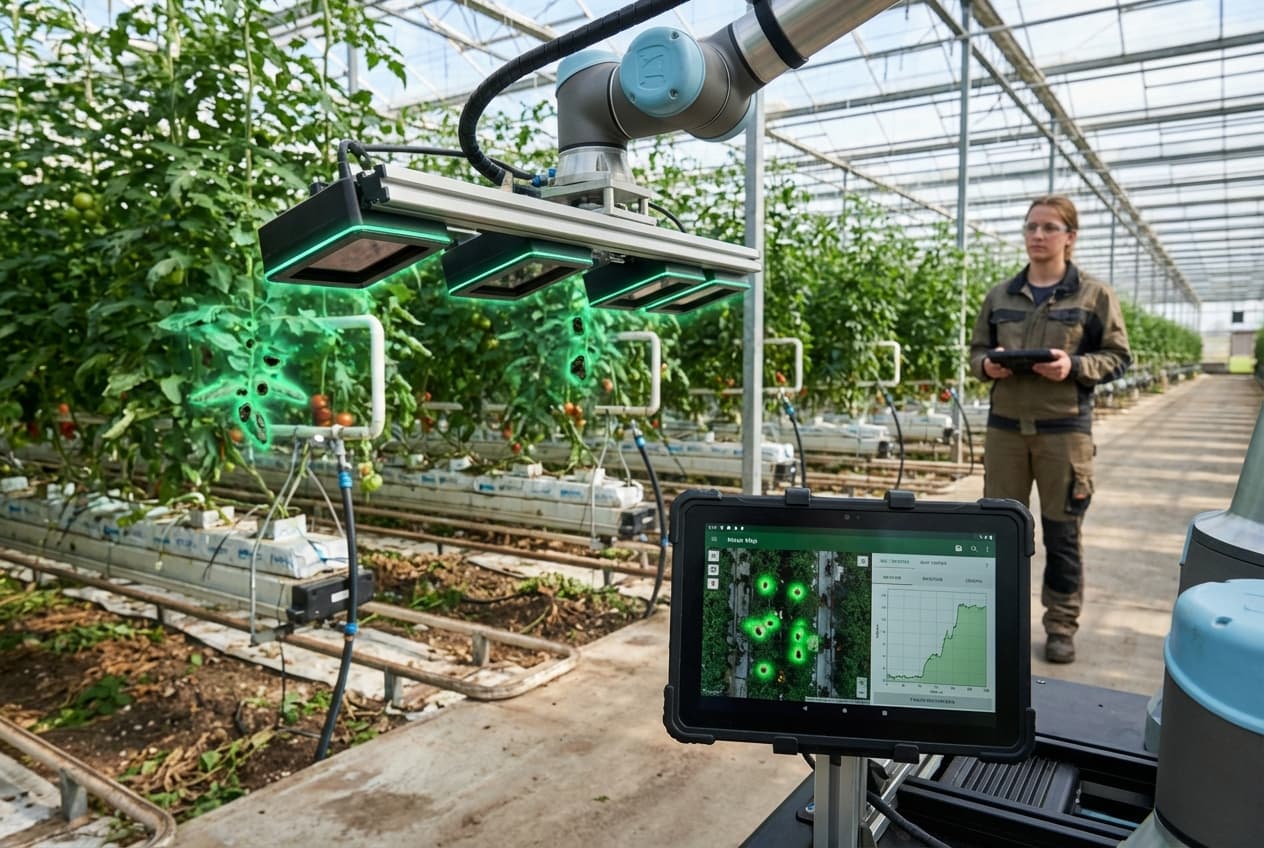
Disease detection AI represents a fundamental shift in how agricultural systems monitor and respond to crop health threats. At its technical core, this technology leverages computer vision algorithms—particularly convolutional neural networks—to analyse visual data captured from multiple sources including ground-level multispectral cameras, smartphone applications, and aerial drone imagery. These systems are trained on extensive datasets of annotated plant images that capture various disease states, nutrient deficiencies, and pest damage across different crop varieties and environmental conditions. The AI models learn to recognise subtle patterns in leaf coloration, texture irregularities, and morphological changes that often precede visible symptoms by days or even weeks. By processing imagery across multiple spectral bands beyond human vision, including near-infrared and thermal wavelengths, these systems can detect physiological stress indicators such as altered chlorophyll fluorescence or changes in leaf temperature that signal infection before traditional scouting methods would identify a problem. Edge computing capabilities enable many of these solutions to function directly on mobile devices or field hardware, delivering real-time diagnoses without requiring constant internet connectivity—a critical feature for agricultural regions with limited broadband infrastructure.
The agricultural sector has long struggled with the economic and environmental costs of preventative pesticide applications, where entire fields receive chemical treatments based on calendar schedules rather than actual disease pressure. Disease detection AI addresses this challenge by enabling precision intervention strategies that target specific plants, rows, or field zones where pathogens are actually present or emerging. This targeted approach reduces chemical inputs by significant margins while simultaneously improving crop outcomes, as treatments can be applied at the optimal intervention window when they are most effective. For smallholder farmers and cooperative networks, these systems democratise access to expert-level crop diagnostics that would otherwise require costly agronomist visits or laboratory analysis. Input retailers and agricultural service providers are increasingly bundling AI-powered disease detection with their advisory offerings, creating new business models where diagnostic insights drive tailored product recommendations and application services. The technology also provides valuable epidemiological intelligence, helping agronomists trace outbreak origins and understand how diseases move through landscapes, which informs both immediate response strategies and longer-term breeding or rotation decisions.
Early commercial deployments have demonstrated promising results across diverse cropping systems, from high-value horticultural operations to staple grain production. Several agricultural technology companies now offer smartphone-based disease identification apps that farmers can use for instant field diagnoses, while more sophisticated systems integrate with autonomous scouting robots and precision sprayers to create fully automated detection-and-response workflows. Research institutions and extension services are actively building regional disease libraries that capture the specific pathogen profiles and symptom expressions relevant to local growing conditions and crop varieties. Looking forward, the trajectory of this technology points toward increasingly predictive capabilities that combine real-time plant health monitoring with weather forecasting, soil sensor data, and regional disease surveillance networks to anticipate outbreaks before they occur. However, several barriers remain to widespread adoption. The accuracy of AI models depends heavily on training data that reflects local conditions, crop genetics, and disease strains, requiring ongoing investment in region-specific dataset curation. Farmers understandably hesitate to act on AI recommendations when false positives could lead to unnecessary treatments or false negatives might allow devastating losses. Building this trust requires transparent model performance metrics, validation through local field trials, and integration with trusted agronomic advisory relationships. As cooperative data-sharing frameworks emerge and the technology proves its value through demonstrated yield protection and input savings, disease detection AI is positioned to become a standard component of integrated pest management strategies worldwide.
Related Organizations

A mobile app that uses image recognition to diagnose crop diseases for smallholder farmers.

Uses sub-millimeter aerial imagery and AI to detect crop diseases and pests at leaf-level resolution.

An AI-based precision agriculture platform that provides automated alerts for disease and pest spread.

Subsidiary of John Deere, developing 'See & Spray' technology that identifies weeds and diseases in real-time.

Utilizes hyperspectral imaging and AI to detect crop stress and disease before it is visible to the human eye.

Remote sensing analytics platform using AI to map crop health and detect disease patterns.

Provides automated pest monitoring traps that primarily use computer vision but are integrating multi-modal sensing.

Operates 'Community Notes' (formerly Birdwatch), the most prominent collaborative verification system at scale.

Produces the Autonomous LaserWeeder, which uses AI and lasers to eliminate weeds without chemicals.

Provides aerial spectral imagery analytics to detect irrigation issues and disease pressure.
Supporting Evidence
Research this in Signals
Signals turns a topic into a sourced research record you can inspect and rerun. Your first scan is free, and this one starts with Disease Detection AI already loaded, so edit it or scan as is.