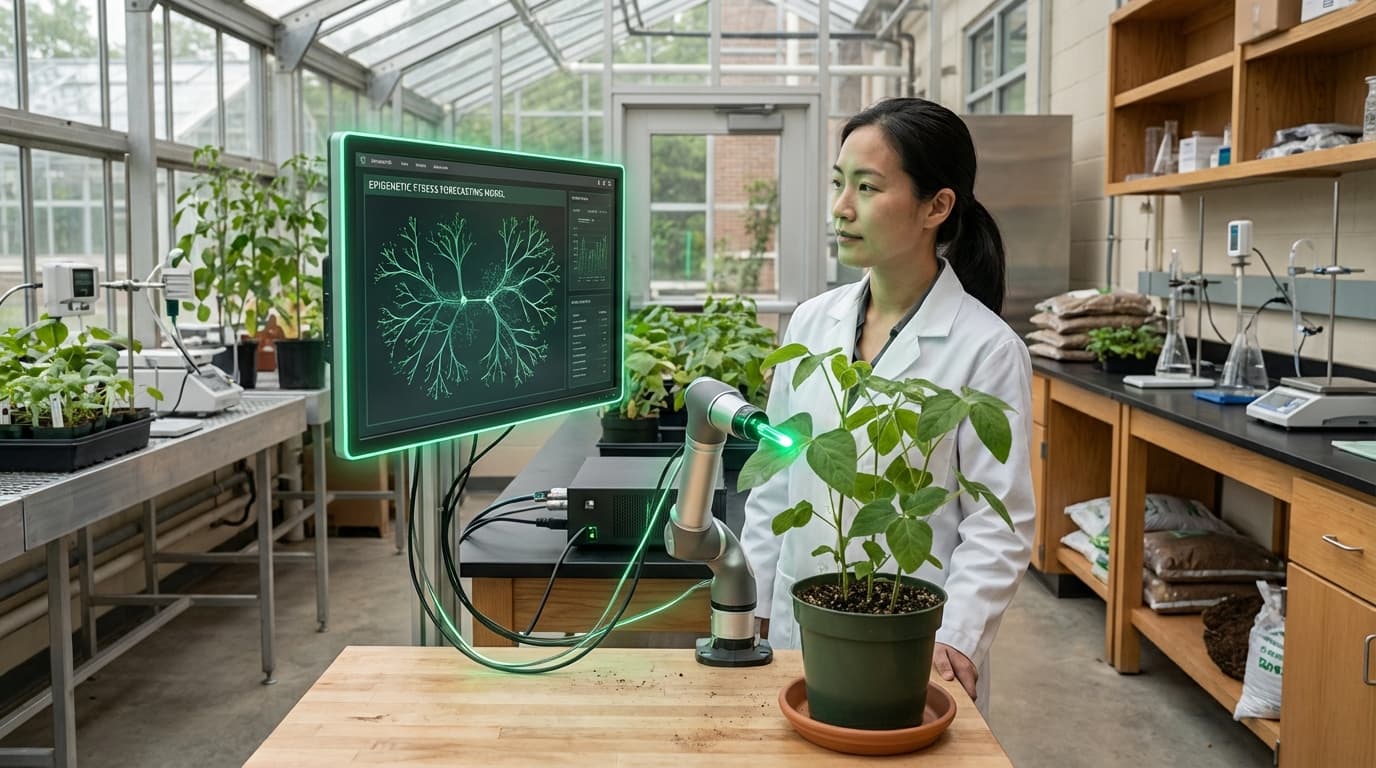
Epigenetic Stress Forecasting Models
Epigenetic stress forecasting models analyze methylation patterns, histone modifications, and small RNA profiles—chemical changes that regulate gene expression without altering DNA sequences—to predict how crops will respond to heat waves, salinity spikes, or drought-onset events. Machine learning pipelines train on multi-season field trials and controlled-stress experiments, linking epigenetic signatures to phenotypic outcomes and recommending breeding crosses or seed treatments that maximize plasticity.
Seed companies and public breeders use these insights to prioritize germplasm for emerging climate zones, while crop insurers and governments leverage forecasts to anticipate yield volatility. Integrating epigenetic data shortens selection cycles because breeders can screen seedlings for stress resilience before costly multilocation trials.
Future systems will pair epigenetic monitoring with real-time field sensors, enabling adaptive management such as priming crops with biostimulants when stress biomarkers spike. Challenges include access to high-quality reference datasets, translating lab results into field performance, and securing regulatory approval for epigenetically primed seeds. Partnerships between genomics labs and farmer cooperatives will help close the data gap.
Related Organizations

Focuses specifically on epigenetic breeding technologies to improve crop yields and stress tolerance.

Develops on-demand crop solutions using epigenetics to activate existing gene expression for stress resilience and nutrient efficiency.
A molecular genetics research company developing technology platforms for crop improvement.

Provides AI-driven bioinformatics services that integrate multi-omics data, including epigenomics, to predict plant traits.

Uses the SEEDesign platform to edit genes and modulate expression for higher yield and water use efficiency.

Home to the lab of Juan Carlos Izpisua Belmonte (prior to Altos), a pioneer in in-vivo partial reprogramming.

A top-tier university for agricultural research, specifically in greenhouse and vertical farming innovation.
Supporting Evidence
Research this in Signals
Signals turns a topic into a sourced research record you can inspect and rerun. Your first scan is free, and this one starts with Epigenetic Stress Forecasting Models already loaded, so edit it or scan as is.