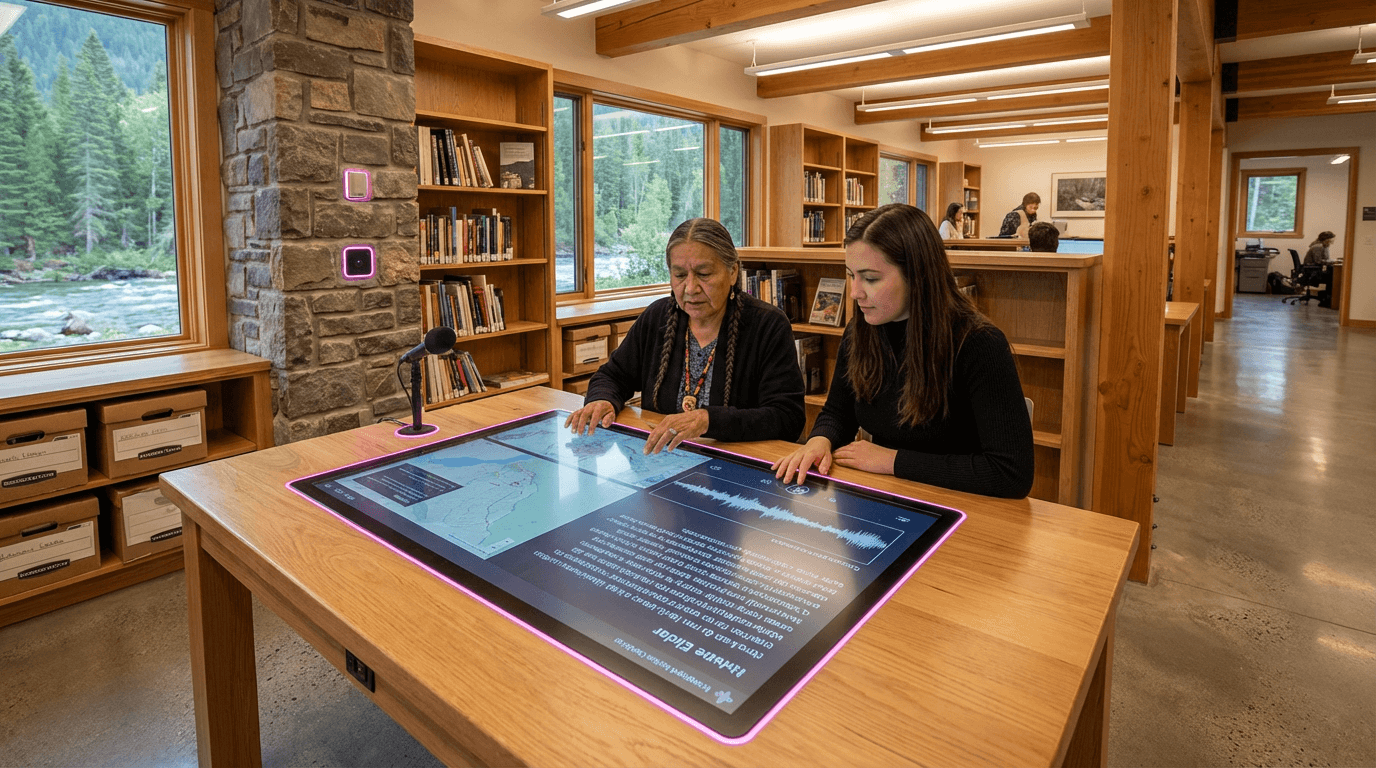
Indigenous Knowledge Preservation
Indigenous communities worldwide face an urgent crisis as oral traditions, languages, and ecological knowledge accumulated over millennia risk disappearing with each passing generation. Traditional methods of knowledge transmission—through storytelling, ceremony, and direct apprenticeship—are increasingly challenged by urbanization, language loss, and the disruption of intergenerational connections. Conventional digital archiving systems, while well-intentioned, often fail to respect Indigenous protocols around knowledge sharing, sacred information, and community ownership. These systems typically impose Western frameworks of data management that conflict with Indigenous epistemologies, where certain knowledge may be gender-specific, seasonally appropriate, or restricted to particular community members. The fundamental challenge lies in creating technological infrastructure that serves Indigenous communities on their own terms, respecting data sovereignty while providing tools for cultural continuity.
Indigenous Knowledge Preservation platforms address these challenges through community-controlled digital ecosystems that integrate multiple preservation and revitalization functions while maintaining cultural protocols. These systems typically combine high-quality audio-visual recording capabilities with metadata structures designed by communities themselves, allowing elders and knowledge holders to document oral histories, traditional ecological knowledge, and ceremonial practices according to their own frameworks. Language revitalization tools within these platforms may include interactive dictionaries, pronunciation guides, and learning modules that incorporate traditional pedagogical methods rather than imposing standardized language-learning approaches. Geographic information systems adapted for Indigenous use enable the mapping of traditional territories, sacred sites, and resource areas while incorporating access controls that prevent unauthorized viewing of sensitive locations. Advanced transcription and translation tools, increasingly powered by machine learning models trained on Indigenous languages, assist in making recorded knowledge more accessible while requiring human oversight to ensure cultural accuracy and appropriateness.
Early implementations of these platforms have emerged through partnerships between Indigenous communities and respectful technology developers, with projects ranging from language apps developed by tribal nations to comprehensive knowledge management systems serving entire Indigenous regions. These systems are proving valuable not only for cultural preservation but also for practical applications such as environmental management, where traditional ecological knowledge provides crucial insights for climate adaptation and biodiversity conservation. The platforms support intergenerational knowledge transfer by creating accessible resources for younger community members while maintaining the authority of elders over what knowledge is shared and how. As Indigenous data sovereignty movements gain momentum globally, these preservation systems represent a growing recognition that cultural heritage technologies must be designed with communities rather than for them, ensuring that Indigenous peoples maintain control over their intellectual and cultural property in digital spaces.
Related Organizations
An open-source content management system built with indigenous communities to manage and share digital cultural heritage.

Māori media organization developing natural language processing (NLP) and AI tools for indigenous languages.

An application for mapping and locating place-based storytelling, allowing communities to control access.

An indigenous-owned technology company specializing in Augmented Reality (AR) and digital skills training to preserve and project cultural stories onto country.

A provincial crown corporation that develops and deploys technology tools like FirstVoices for language archiving and revitalization.

A non-profit that provides free technology and software to help Indigenous communities teach, learn, and sustain their endangered languages.
Non-profit partnering with indigenous people to protect the Amazon using ethnographic mapping and technology.
A research institute documenting endangered languages and developing 'Living Dictionaries', a mobile-friendly digital tool for community activists.

A grassroots NLP research community for Africa, building datasets and models for African languages often ignored by big tech.

A project hosted by Cambridge and Yale to archive and make available ethnographic materials from the Himalayan region.
Supporting Evidence
Research this in Signals
Signals turns a topic into a sourced research record you can inspect and rerun. Your first scan is free, and this one starts with Indigenous Knowledge Preservation already loaded, so edit it or scan as is.