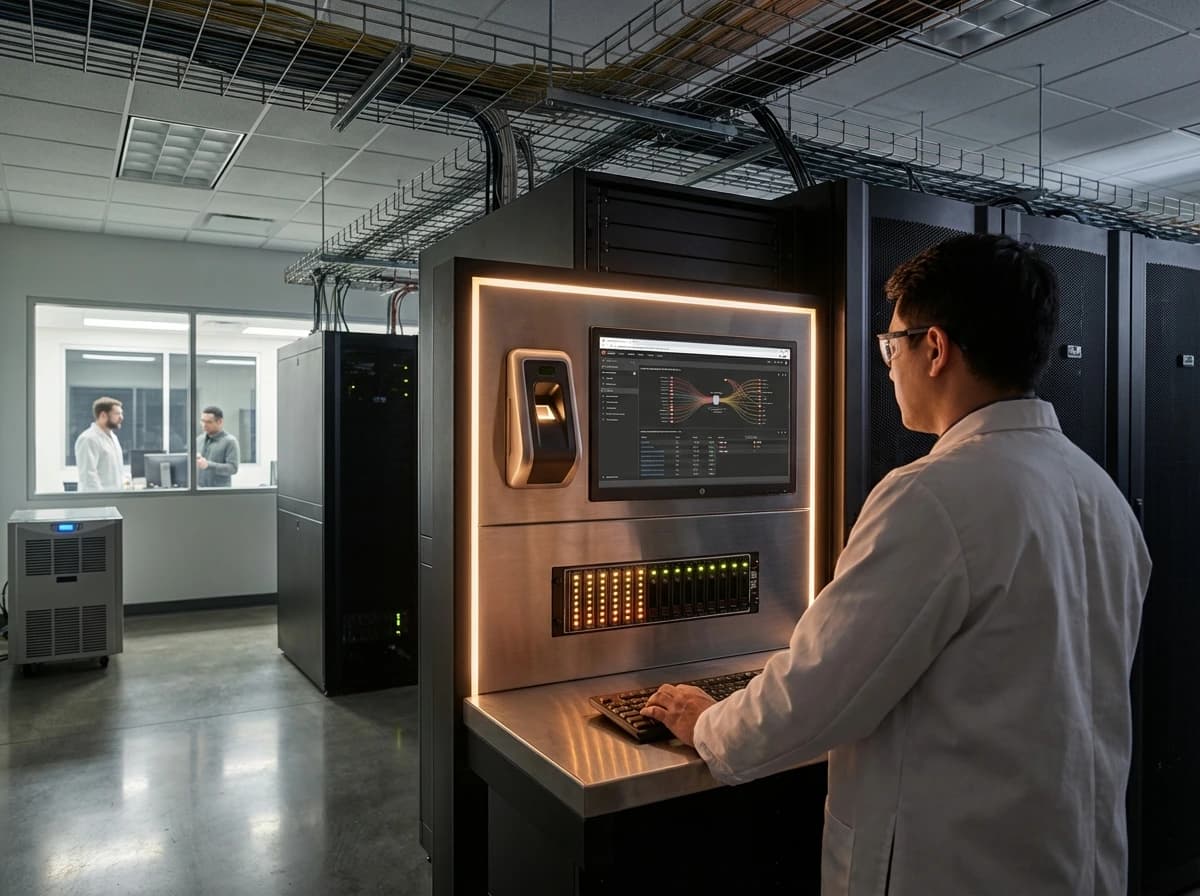
Identity Threat Detection & Response
In an era where traditional perimeter-based security models have become increasingly obsolete, organisations face a critical vulnerability: their identity infrastructure. Modern cyberattacks have evolved to exploit the weakest link in security architectures—user credentials and access privileges. Identity Threat Detection & Response (ITDR) represents a fundamental shift in cybersecurity strategy, moving beyond reactive password resets to proactive, continuous monitoring of the entire identity ecosystem. At its core, ITDR platforms integrate with an organisation's existing identity infrastructure, including directory services, identity and access management (IAM) systems, privileged access management tools, and authentication logs. These platforms employ sophisticated behavioral analytics engines that establish baseline patterns for user and service account activities, then continuously scan for anomalies that may indicate compromise. Machine learning algorithms analyse authentication patterns, access requests, permission changes, and lateral movement across systems, while threat intelligence feeds provide context about emerging attack techniques such as credential stuffing campaigns, token replay attacks, and Kerberos ticket manipulation. When suspicious activity is detected—whether a service account suddenly accessing sensitive resources outside normal hours or a user account exhibiting signs of privilege escalation—the system can automatically trigger response playbooks that range from requiring step-up authentication to immediately revoking compromised credentials.
The rise of ITDR addresses a critical gap in enterprise security architectures that traditional security information and event management (SIEM) systems and endpoint detection tools cannot adequately fill. As organisations embrace cloud infrastructure, hybrid work environments, and complex supply chains, the attack surface centered on identity has expanded exponentially. Research suggests that identity-related attacks now account for a significant majority of successful breaches, with attackers increasingly bypassing network defenses entirely by simply stealing legitimate credentials through phishing, social engineering, or exploiting weak authentication mechanisms. ITDR platforms solve the problem of visibility into identity infrastructure that has historically operated as a blind spot for security teams. By correlating events across disparate identity systems—from Active Directory to cloud IAM platforms—these solutions can detect sophisticated attack chains that might appear benign when viewed in isolation. This capability is particularly crucial for identifying insider threats, compromised service accounts, and advanced persistent threats that rely on living off the land by abusing legitimate credentials rather than deploying malware.
Early deployments of ITDR technology have emerged primarily in highly regulated industries such as financial services, healthcare, and government sectors, where the consequences of identity compromise can be particularly severe. Major cloud service providers have begun integrating ITDR capabilities into their security offerings, while specialised vendors are developing standalone platforms that can operate across hybrid environments. Practical applications extend beyond breach prevention to include compliance monitoring, ensuring that access privileges align with least-privilege principles and regulatory requirements. As zero-trust architecture becomes the dominant security framework, ITDR serves as a critical enforcement mechanism, continuously validating that authenticated users and systems should maintain their current access levels. Industry analysts note that the convergence of identity security, threat detection, and automated response represents a maturation of the security operations model, moving from siloed tools to integrated platforms that treat identity as the new security perimeter. Looking forward, the integration of artificial intelligence promises to enhance ITDR capabilities further, enabling predictive threat modeling that can anticipate attack patterns before they fully materialise, ultimately transforming identity infrastructure from a vulnerability into a robust defensive layer.
Related Organizations

Provides comprehensive identity resilience, focusing on Active Directory security, threat detection, and disaster recovery.

Delivers a Unified Identity Protection platform that enforces MFA and detects threats across on-prem and cloud environments.

The Falcon platform utilizes AI for automated threat detection and real-time response.

Cloud identity protection platform that unifies identity visibility and threat detection across cloud providers and SaaS.

Provides the Singularity Platform which uses on-device AI to autonomously detect and remediate threats.

Provides identity observability and security to detect unauthorized access and identity infrastructure gaps.

Identity security leader offering threat detection analytics within its privileged access platform.

Privileged Access Management (PAM) provider that acquired Authomize to add ITDR capabilities.


Long-standing provider of Microsoft platform management, offering solutions for AD security auditing and threat detection.
Supporting Evidence
Research this in Signals
Signals turns a topic into a sourced research record you can inspect and rerun. Your first scan is free, and this one starts with Identity Threat Detection & Response already loaded, so edit it or scan as is.