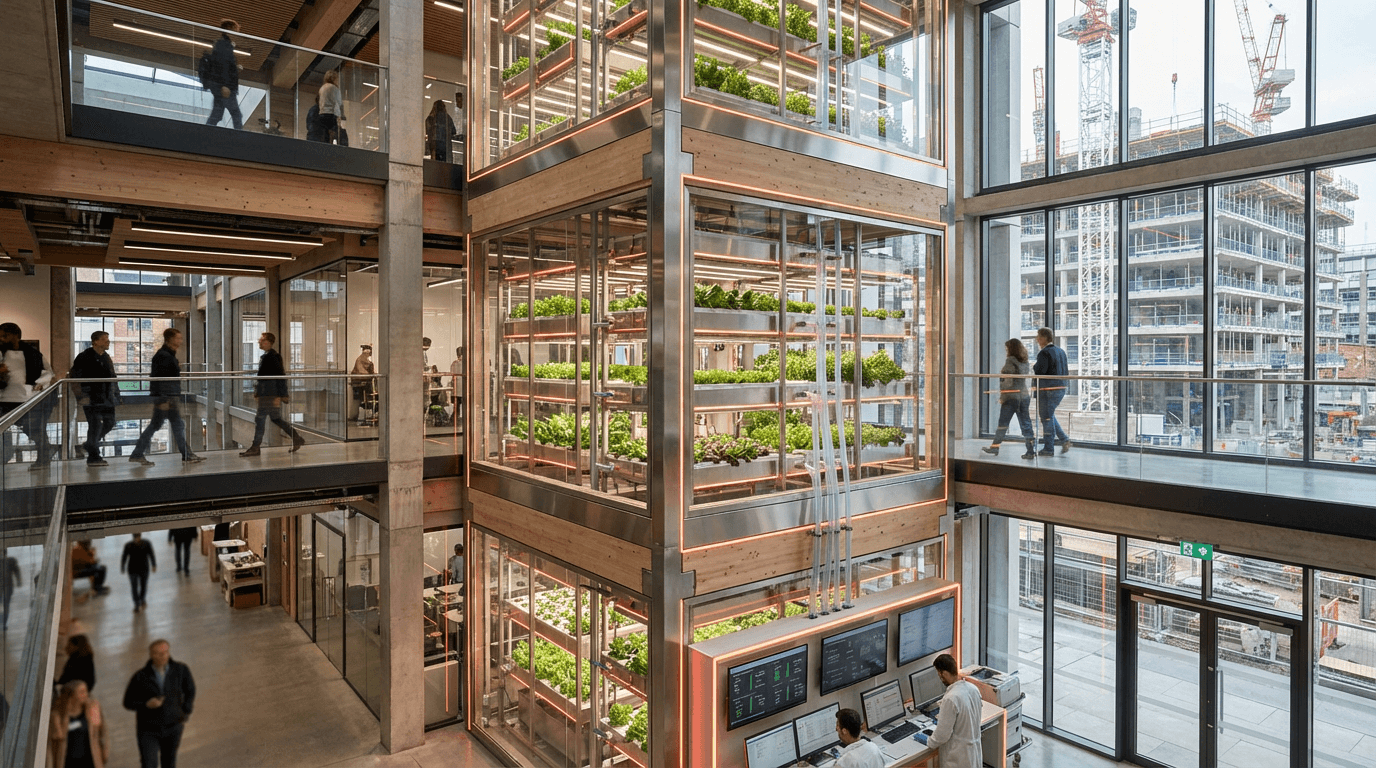
Vertical Farms Integrated into Buildings
Vertical farms integrated into buildings represent a convergence of controlled-environment agriculture and architectural design, where food production systems are embedded directly into the structural fabric of mixed-use developments, residential towers, or commercial complexes. These systems typically employ hydroponic or aeroponic cultivation methods, where plants grow in stacked layers without soil, receiving nutrients through water-based solutions or fine mist. The controlled environment allows for precise regulation of light, temperature, humidity, and nutrient delivery, creating optimal growing conditions year-round regardless of external climate. By situating these farms within the building envelope rather than as standalone facilities, developers can exploit synergies with existing building systems—capturing waste heat from HVAC systems, utilizing CO₂ from occupied spaces to enhance plant growth, and treating greywater for irrigation purposes.
The construction industry faces distinct challenges when incorporating vertical farms into building designs. Managing high humidity levels from transpiring plants requires sophisticated vapor barriers and ventilation strategies to prevent moisture damage to structural elements and adjacent occupied spaces. The substantial weight of growing media, water reservoirs, and equipment necessitates reinforced floor slabs and careful load distribution planning from the earliest design phases. Mechanical, electrical, and plumbing (MEP) integration becomes significantly more complex, as these farms demand substantial electrical capacity for LED grow lights, dedicated water treatment and recirculation systems, and climate control infrastructure that must operate independently from standard building systems. These technical requirements often increase construction costs and extend project timelines, yet they address critical urban challenges: reducing the carbon footprint associated with long-distance food transport, enhancing food security in dense urban areas, and creating productive use of otherwise underutilized building volumes.
Operational vertical farm installations have emerged in several global cities known for innovation in urban agriculture and sustainable development. Singapore has pioneered building-integrated farms as part of its national food security strategy, while Japanese developers have incorporated agricultural floors into urban towers in Tokyo and other major cities. The Netherlands, with its established expertise in greenhouse technology, has seen vertical farms integrated into mixed-use developments in Rotterdam and other urban centers. In the United States, urban markets including New York, Chicago, and several West Coast cities host pilot projects that demonstrate the technical and economic viability of this approach. As urban populations continue to expand and climate change threatens traditional agricultural supply chains, building-integrated vertical farms represent a practical pathway toward more resilient and localized food systems, transforming buildings from passive consumers of resources into active producers of fresh produce for their immediate communities.
Related Organizations

Builds and operates vertical hydroponic farms integrated into urban infrastructure, such as parking garages.

A leading advisory firm specifically focused on integrating agriculture into urban environments and buildings.

Infarm
United Kingdom · Company
Develops modular, smart vertical farming units designed to be integrated directly into grocery stores, restaurants, and building lobbies.

Develops automated indoor vertical farming appliances for senior living communities, schools, and corporate cafeterias.

Operates vertical farms inside urban commercial buildings, supplying local chefs and residents.
The world's first low-carbon, hydraulic driven vertical farm, addressing land scarcity in Singapore.

A top-tier university for agricultural research, specifically in greenhouse and vertical farming innovation.

Singapore-based architecture practice renowned for integrating extensive greenery and community spaces into high-rise residential projects.

A technology provider developing aeroponic irrigation systems for indoor farming.

Urban farming company that deploys container farms on corporate campuses and distribution centers.

Architectural firm famous for the 'Vertical Forest' (Bosco Verticale) concept, integrating living nature into high-density residential buildings.

International non-profit organization facilitating connections and standardization in the vertical farming industry.
Supporting Evidence
Research this in Signals
Signals turns a topic into a sourced research record you can inspect and rerun. Your first scan is free, and this one starts with Vertical Farms Integrated into Buildings already loaded, so edit it or scan as is.