Transparent Solar & Building-Integrated Photovoltaics (BIPV)
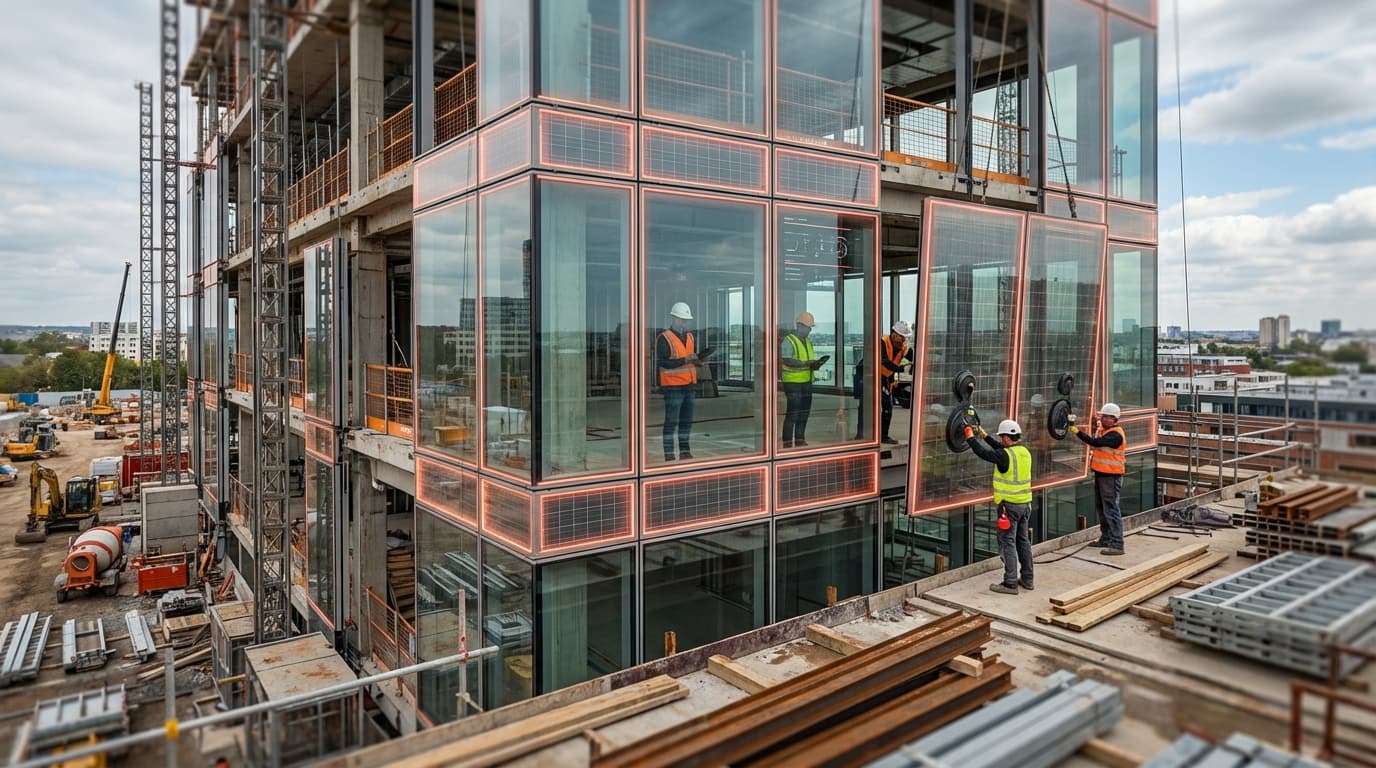
Transparent solar technologies and Building-Integrated Photovoltaics represent a fundamental shift in how buildings interact with energy systems, transforming passive architectural elements into active power generators. Unlike conventional rooftop solar panels that occupy dedicated space, these solutions embed photovoltaic capabilities directly into the building envelope—windows, facades, spandrel panels, curtain walls, and roofing materials. The technical breakthrough enabling transparent solar cells lies primarily in advanced materials like perovskites and organic photovoltaics, which can be engineered to selectively absorb specific wavelengths of light while allowing visible light to pass through. This selective absorption means that windows can simultaneously admit natural daylight, preserve views, and generate electricity. The degree of transparency can be tuned during manufacturing, allowing architects to balance aesthetic requirements, daylighting needs, and energy generation targets. These materials are typically deposited as thin films onto glass substrates using processes compatible with existing glazing manufacturing, though achieving the durability and efficiency levels of traditional silicon panels remains an ongoing technical challenge.
The construction industry faces mounting pressure to reduce the carbon footprint of buildings, which account for a substantial portion of global energy consumption and greenhouse gas emissions. Traditional approaches to building sustainability have treated energy generation and architectural design as separate concerns, often resulting in compromised aesthetics or limited implementation. Transparent solar and BIPV technologies address this disconnect by enabling buildings to generate power without sacrificing design flexibility or occupant comfort. For developers and building owners, this integration transforms what would otherwise be purely cost-center building components into revenue-generating or cost-saving assets. The technology is particularly compelling in dense urban environments where rooftop space is limited but vertical facade area is abundant. Early deployments indicate that while transparent solar cells currently achieve lower efficiency than opaque alternatives—typically converting between five and fifteen percent of incident solar energy compared to twenty percent or more for conventional panels—the vastly greater surface area of building facades can compensate for this differential. This approach also addresses grid integration challenges by distributing generation across the building envelope rather than concentrating it on rooftops, potentially smoothing power delivery throughout the day as different facades receive sunlight.
Commercial availability of BIPV solutions has expanded significantly, with manufacturers offering integrated systems for curtain walls, skylights, and cladding that meet building codes and performance standards. Pilot installations in office towers, airports, and institutional buildings have demonstrated the practical viability of these systems, though widespread adoption remains constrained by higher upfront costs compared to conventional glazing and traditional solar installations. Industry analysts note particularly strong momentum in regions with ambitious carbon reduction targets and supportive regulatory frameworks, including parts of Asia, the Middle East, and Europe, where building codes increasingly mandate on-site renewable generation. The technology aligns with broader trends toward net-zero buildings and distributed energy resources, potentially reshaping urban skylines into vertical power plants. As manufacturing scales and material durability improves, transparent solar and BIPV systems are positioned to become standard components of high-performance building design rather than premium additions, fundamentally altering the relationship between architecture and energy infrastructure in cities worldwide.
Related Organizations

Developers of UE Power™, a transparent photovoltaic coating that converts light into electricity without compromising visible transparency.

Produces clear solar glass that uses nanoparticles to deflect UV and IR light to the edges of the glass where it is harvested.

Produces Timberline Solar, a nailable solar shingle that integrates directly into residential roofing.

Manufacturer of solar cladding and solar glass railing/window products that mimic traditional building materials.

Global leader in building-integrated photovoltaic (BIPV) glass, offering transparent and colored photovoltaic glass for facades.

Advanced materials company using quantum dots to create luminescent solar concentrator windows (WENDOW).

Global glass manufacturer offering SunEwat, a range of BIPV glass solutions for facades.

Leader in organic photovoltaics (OPV), producing flexible solar films that can be retrofitted onto glass and facades.

Pioneers in inkjet-printed flexible perovskite solar cells for IoT and building-integrated photovoltaics (BIPV).

A European solar manufacturer that produces high-performance 'Balcony' solar modules.
Supporting Evidence
Research this in Signals
Signals turns a topic into a sourced research record you can inspect and rerun. Your first scan is free, and this one starts with Transparent Solar & Building-Integrated Photovoltaics (BIPV) already loaded, so edit it or scan as is.