Targeted Dream Incubation
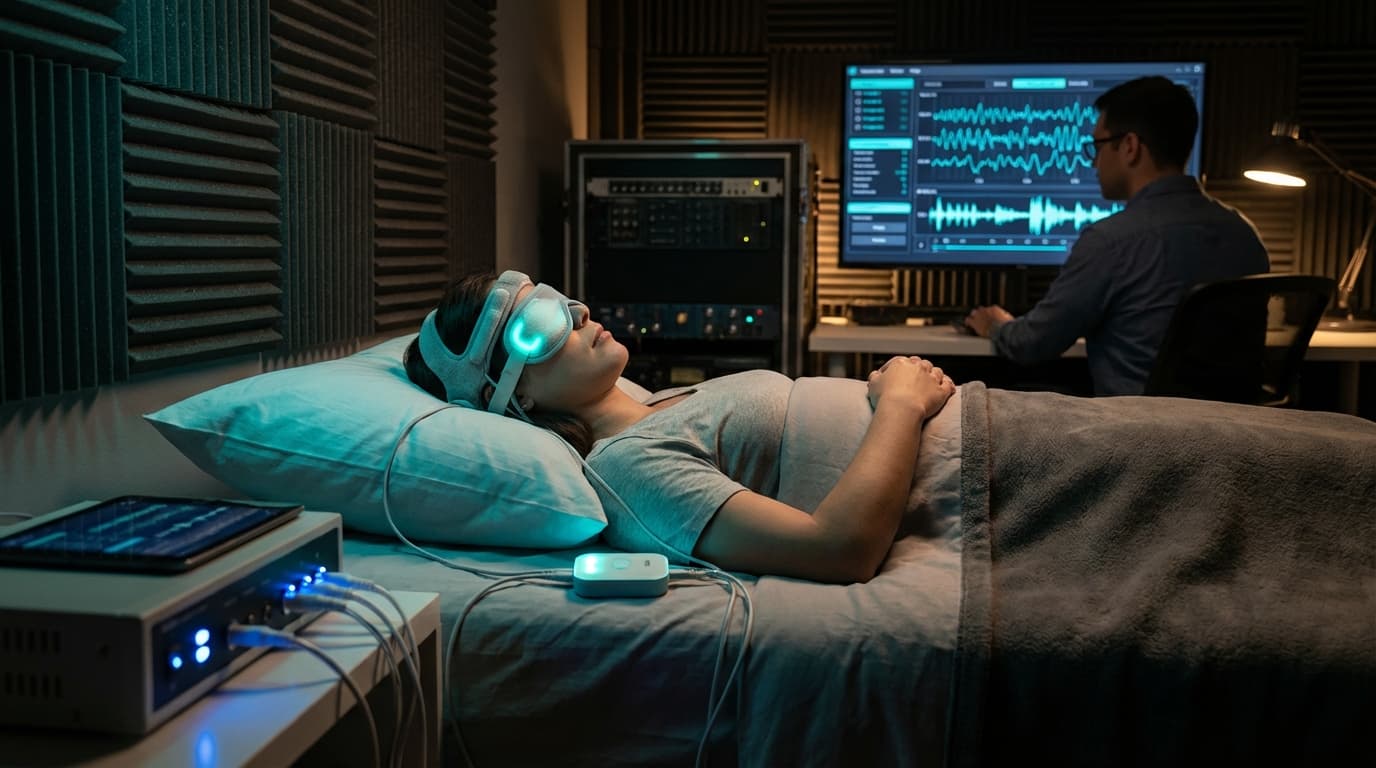
Targeted dream incubation (TDI) synchronizes subtle audio prompts, scent pulses, temperature changes, and haptic taps with hypnagogic or N2 sleep stages so narrative seeds drift into a dreaming mind. Wearables such as MIT Media Lab’s Dormio glove or startups like Prophetic’s Halo headset monitor biosignals to detect when a sleeper transitions into receptive states, then trigger story cues timed to respiration and micro-movements. Creative teams compose “dream packets” that encode scripts, emotional cues, and safety overrides, effectively letting storytellers extend their canvas into subconscious space.
Entertainment studios run small-group pilots where fans co-dream alternate endings, while wellness brands explore TDI to rehearse calming imagery for anxiety and PTSD treatment. Sports psychologists pair it with motor imagery drills, and advertising agencies flirt with branded scents or sonic motifs that surface in dreams—raising ethical alarms. Platforms pair TDI with journaling apps or generative art tools so users capture post-dream reflections, turning subconscious exploration into shareable content.
The field sits at TRL 3: lab studies show promise, but reproducibility and regulation are unresolved. The American Academy of Sleep Medicine warns against subliminal advertising, while neuro-rights advocates in Chile and the EU push for explicit consent logs, provenance labels, and kill switches. As standards emerge for safe cue intensities and data handling, TDI could graduate from speculative art installations to a tightly governed medium for therapeutic storytelling, lucid creativity, and participatory dream festivals.
Related Organizations
Home of the Affective Computing research group led by Rosalind Picard.

Prophetic
United States · Startup
Developing 'The Halo', a non-invasive neurostimulation headband designed to induce and stabilize lucid dreams.

Home to the Cognitive Neuroscience Lab (Ken Paller), which pioneered two-way communication with lucid dreamers and memory reactivation during sleep.
A research center and community focused on lucid dreaming technology, conducting experiments on communication during sleep.
United States · Startup
Produces a headband that uses transcranial electrical stimulation (tES) to improve sleep quality.

Develops the Muse EEG headband and software platform that adapts audio soundscapes in real-time based on the user's brain state (meditation/focus).

Conducts research into consciousness, including extended research into lucid dreaming and precognition.
Supporting Evidence
Research this in Signals
Signals turns a topic into a sourced research record you can inspect and rerun. Your first scan is free, and this one starts with Targeted Dream Incubation already loaded, so edit it or scan as is.