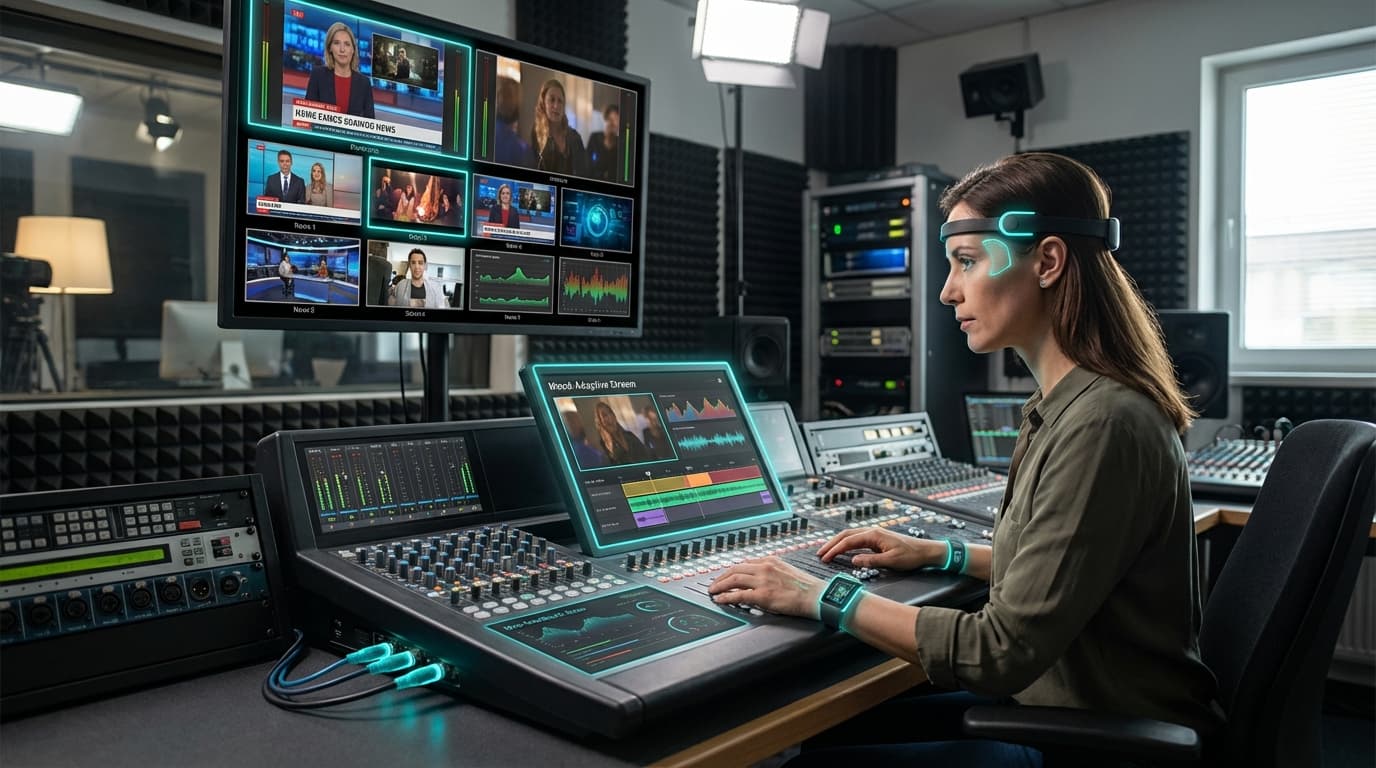
Adaptive media feeds based on psychophysiological signals
Adaptive media feeds ingest biometric inputs—heart-rate variability, EEG headband signals, gaze focus, or galvanic skin response—and translate them into engagement scores that drive content selection. Recommendation engines adjust pacing, difficulty, brightness, or narrative intensity in real time, gradually nudging stress or boredom toward desired zones. Some systems run locally on wearables, while others stream anonymized signals to cloud personalization services.
Wellness apps slow breathing animations when users show sympathetic spikes; educational platforms simplify explanations when attention wanes; music services reshuffle playlists to maintain flow state. Broadcasters pilot adaptive ad pods that shorten when viewers show fatigue, and VR meditation experiences respond to user calmness to unlock new scenes. Clinical settings explore the feeds as digital therapeutics for anxiety or ADHD.
Ethical questions loom around consent and algorithmic nudging. Responsible deployments (TRL 4) offer transparency dashboards, hard limits on parameter changes, and opt-in data sharing. IEEE and ISO draft standards for biometric personalization, while regulators consider classifying certain use cases as medical devices. As sensors become commonplace, adaptive feeds could evolve into a wellness feature baked into every media OS—if trust is maintained.
Related Organizations

Develops the Muse EEG headband and software platform that adapts audio soundscapes in real-time based on the user's brain state (meditation/focus).

Develops BCI-enabled headphones that detect focus and intent to control digital experiences.

Provides virtual reality and augmented reality stories that change visually based on the user's heart rate (via Apple Watch) or brainwaves (via Muse).

Develops VR-compatible brain sensor modules to analyze user emotion and stress levels during immersive experiences.
Home of the Affective Computing research group led by Rosalind Picard.

Produces EEG headsets and the BCI-OS platform, allowing developers to build applications that respond to cognitive stress and facial expressions.
A leader in driver monitoring systems that acquired Affectiva, the pioneer of Emotion AI.

A VR wellness platform that integrates with flow-state sensors and wearables to customize the visual journey based on user physiology.
Creates open-source brain-computer interface tools and the Galea headset (integrating with VR) for researching physiological responses.

HP
United States · Company
Partnering with Google to commercialize Project Starline hardware for enterprise meeting rooms.
Supporting Evidence
Research this in Signals
Signals turns a topic into a sourced research record you can inspect and rerun. Your first scan is free, and this one starts with Adaptive media feeds based on psychophysiological signals already loaded, so edit it or scan as is.