Immersive Memory Palaces
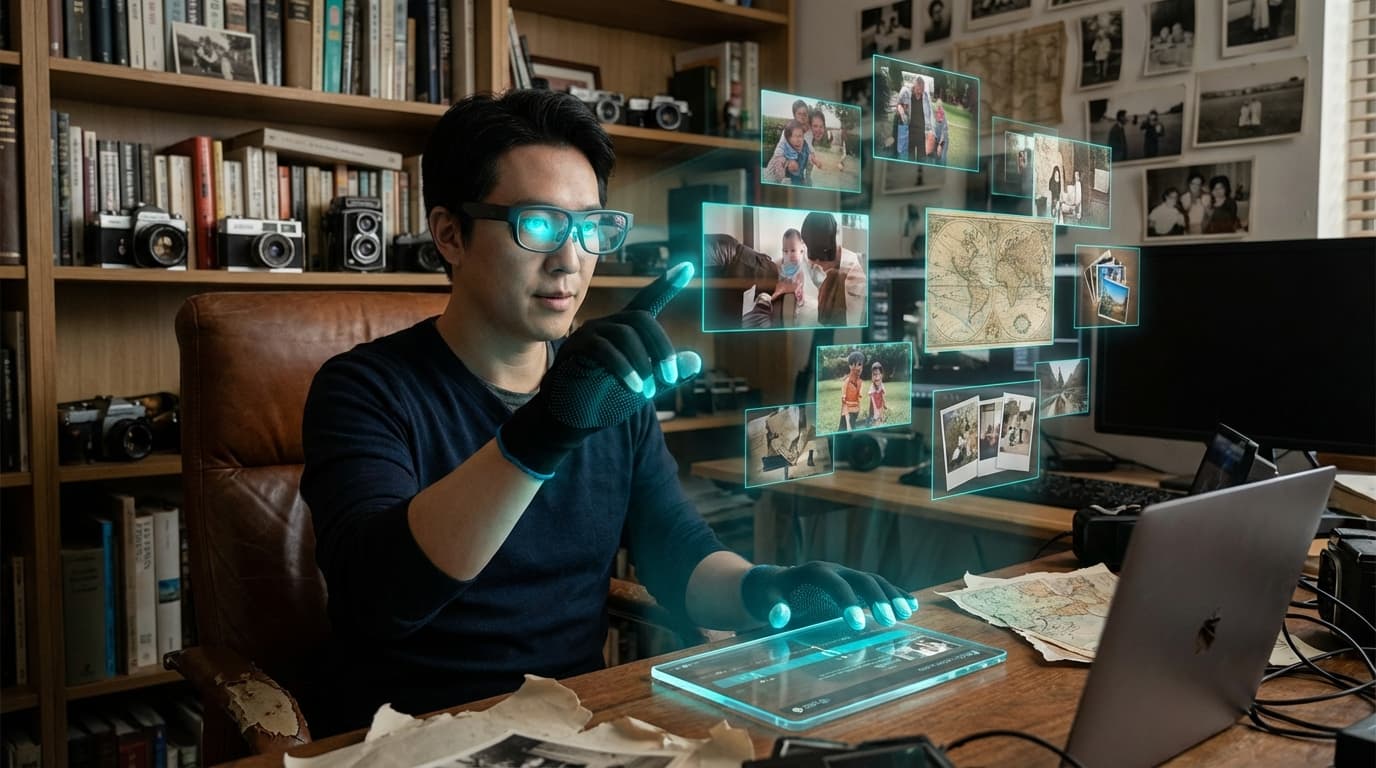
Immersive memory palaces update ancient mnemonic practice by fusing volumetric capture, mixed-reality storytelling, and adaptive cues so memories live inside navigable architecture rather than static timelines. Families scan rooms, heirlooms, and oral histories, then anchor them to spatial anchors that can be revisited through headsets or CAVE-style installations, triggering haptics, scent emitters, or binaural narration as visitors wander. Metadata embeds emotional tone, chronology, and relationship graphs so the palace becomes a living knowledge base instead of a passive gallery.
Archivists, dementia-care clinicians, and documentary studios are piloting the format to improve recall and emotional regulation: Alzheimer’s programs at Stanford and UCL report calmer patients when personal palaces combine tactile props with volumetric memories, while cultural institutions like the V&A experiment with community-built palaces that encode diaspora histories. Media brands see palaces as a premium fan engagement tier—think K‑pop agencies letting superfans explore behind-the-scenes sets annotated by idols.
The approach sits near TRL 3–4. Toolchains still require bespoke Unity/Unreal work, and designers must respect accessibility guidelines to prevent cognitive overload. Standards bodies (IEEE SA’s XR safety group, ISO/IEC JTC 1/SC 24) are drafting schemas for memory annotations, and privacy rules demand encryption plus sharing controls. As capture apps and no-code spatial editors mature, immersive memory palaces will evolve from boutique XR art pieces into mainstream frameworks for family archives, heritage storytelling, and therapeutic reminiscence.
Related Organizations

Creators of Dream Machine, a high-quality video generation model, and 3D capture technology.


Creates conversational video AI that allows people to record their life stories for future generations to interact with.

An app that records personal stories and uses AI to let loved ones ask questions about those memories later.

Develops technology for capturing, transforming, and streaming volumetric video of real people.

Creators of HoloSuite, a post-production and streaming platform for volumetric video, enabling adaptive streaming of 3D data.

AR platform company that develops the Lightship ARDK and owns Scaniverse, a 3D scanning app leveraging LiDAR.

A leading volumetric production studio that has produced high-profile volumetric experiences for fashion and music.

Spatial data company that integrated mobile LiDAR support into their capture app, democratizing real estate digital twins.
Supporting Evidence
Research this in Signals
Signals turns a topic into a sourced research record you can inspect and rerun. Your first scan is free, and this one starts with Immersive Memory Palaces already loaded, so edit it or scan as is.