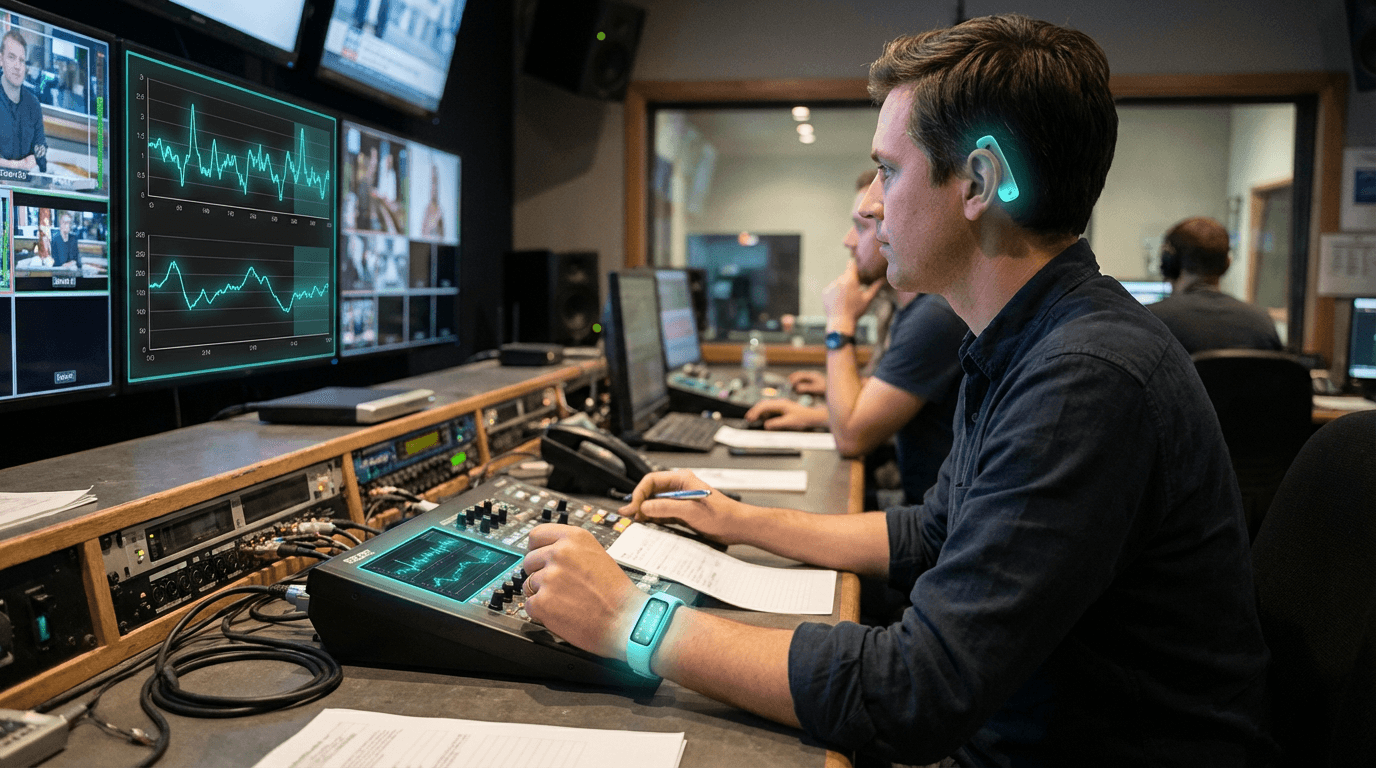
Wearable biometric emotion recorders
Wearable biometric emotion recorders fuse PPG, EDA, EMG, and occasionally EEG-lite sensors inside garments, earbuds, or jewelry to stream second-by-second affect data. Signal-processing pipelines use multimodal fusion to translate micro changes in heart-rate variability, perspiration, and facial muscle tension into arousal and valence estimates, then compress that stream into metadata that can be injected into engines like Unreal or Unity. The stack often includes on-device inference for privacy and latency with encrypted uplinks for aggregate analysis.
Studios, streamers, and brand labs experiment with these devices to understand how audiences react to story beats, music drops, or interactive choices. Live service games already tap emotion telemetry to adapt encounter difficulty, while K-drama platforms in Korea test biometric watch parties that synchronize lighting and haptics with viewers’ collective mood. Marketers eye the tech for attention insights that go beyond panel surveys, prompting new debates about consent and the commercialization of affective data.
Despite TRL 5 maturity, scaled deployment hinges on interoperable emotion ontologies and policy guardrails. The IEEE P7014 working group and Europe’s AI Act both call for explicit opt-in and explainability around biometric inference, pushing vendors to build privacy dashboards and “emotion firewalls.” As standards solidify, biometric emotion channels are poised to become an opt-in layer for immersive media analytics, powering adaptive storytelling while forcing studios to treat affect data like other sensitive personal information.
Related Organizations

Develops medical-grade wearables (Embrace) monitoring EDA and physiological signals.
United Kingdom · Startup
Develops the OCO sensing glasses which track facial muscle activity (EMG) and heart rate for emotion AI.

Developing an Empathic Voice Interface (EVI) that detects and responds to human emotion.
A leader in driver monitoring systems that acquired Affectiva, the pioneer of Emotion AI.

The global leader in eye-tracking technology, providing the sensor stack required for dynamic foveated rendering.

Developing 'Apple Intelligence', a personal intelligence system integrated into iOS/macOS that uses on-device context to mediate tasks and information.

Maker of the Oura Ring, a smart ring that tracks sleep, readiness, and stress.
Performance wearable company focusing on strain and recovery.

Multinational technology company known for GPS and wearable technology.

Supporting Evidence
Research this in Signals
Signals turns a topic into a sourced research record you can inspect and rerun. Your first scan is free, and this one starts with Wearable biometric emotion recorders already loaded, so edit it or scan as is.