Silent Speech Interfaces
Silent speech interfaces fuse surface EMG, magnetometers, ultrasound, or infrared sensors around the jawline to detect articulator movements associated with phonemes even when no sound exits the mouth. Sequence-to-sequence models trained on paired acoustic and muscle data then reconstruct speech or map the muscle patterns to command vocabularies. Some rigs embed electrodes inside face masks or AR headsets, enabling whisperless communication while keeping hands free.
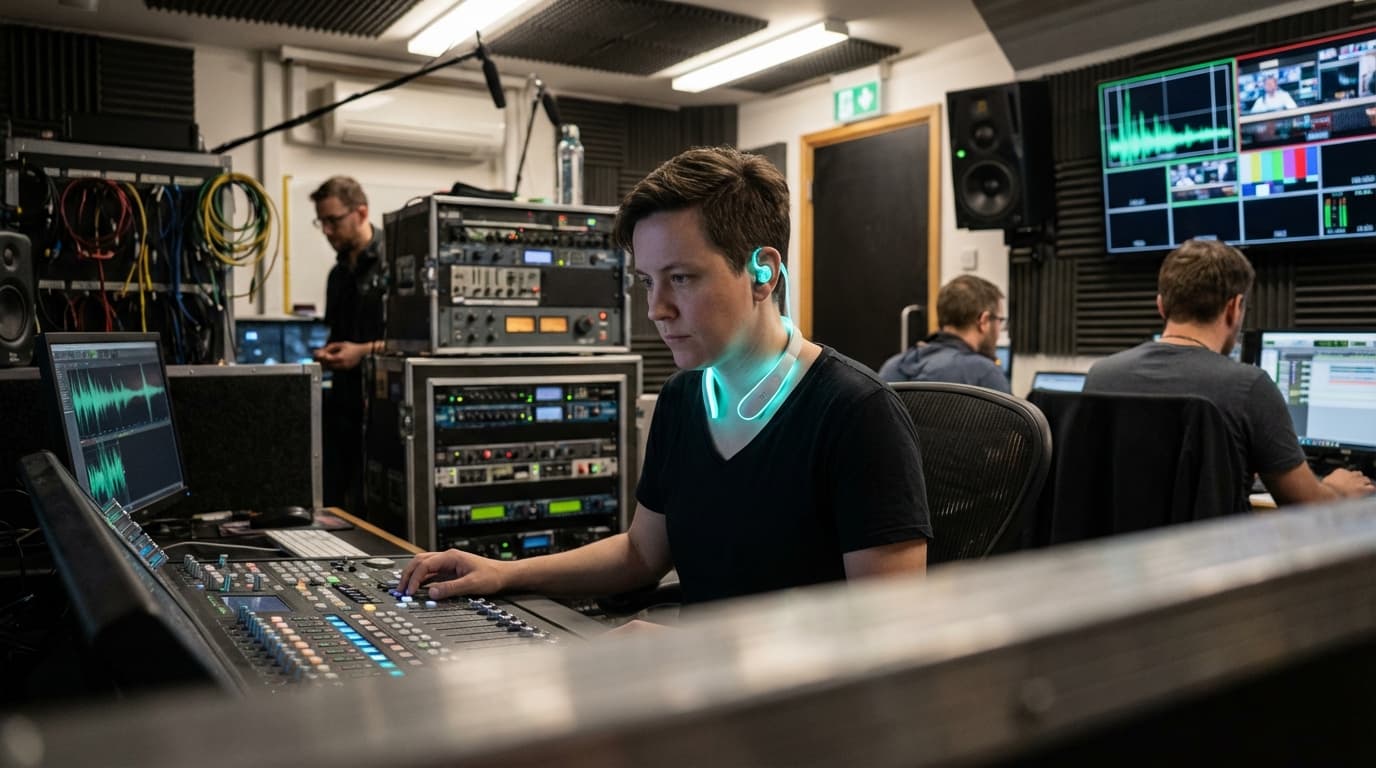
On film sets and live broadcasts, crews use silent speech belts to relay cues without contaminating audio tracks or alerting performers. Streamers and VTubers employ them to drive avatars during late-night sessions, while multiplayer games are prototyping “whisper chat” that lets teammates talk without external microphones. The technology also supports accessibility uses, letting people with vocal impairments control media interfaces or narrate immersive experiences through subvocalized thought.
Commercialization (TRL 4–5) depends on individual calibration workflows and social acceptability—mouth sensors must be comfortable for hours of wear. DARPA’s Silent Talk program, Meta’s internal prototypes, and startups like Sonde Health are refining encoder–decoder pipelines, and standards bodies ponder encryption of neuromuscular data. Expect silent speech to appear first in professional production gear and mission-critical live events, then trickle into consumer XR headsets where private, low-latency voice input is essential.
Related Organizations

Home of the Affective Computing research group led by Rosalind Picard.

Builds AI-powered BCI headsets with AR displays for accessibility and communication.

Develops the Quest Pro and research prototypes (Butterscotch, Starburst) focusing on foveated systems.


The originators of the original NeRF paper and developers of MultiNeRF and immersive view technologies for Maps.

Israel · Company
Developers of the Mudra band, a wrist-worn neural interface.

Creates open-source brain-computer interface tools and the Galea headset (integrating with VR) for researching physiological responses.
Supporting Evidence
Research this in Signals
Signals turns a topic into a sourced research record you can inspect and rerun. Your first scan is free, and this one starts with Silent Speech Interfaces already loaded, so edit it or scan as is.