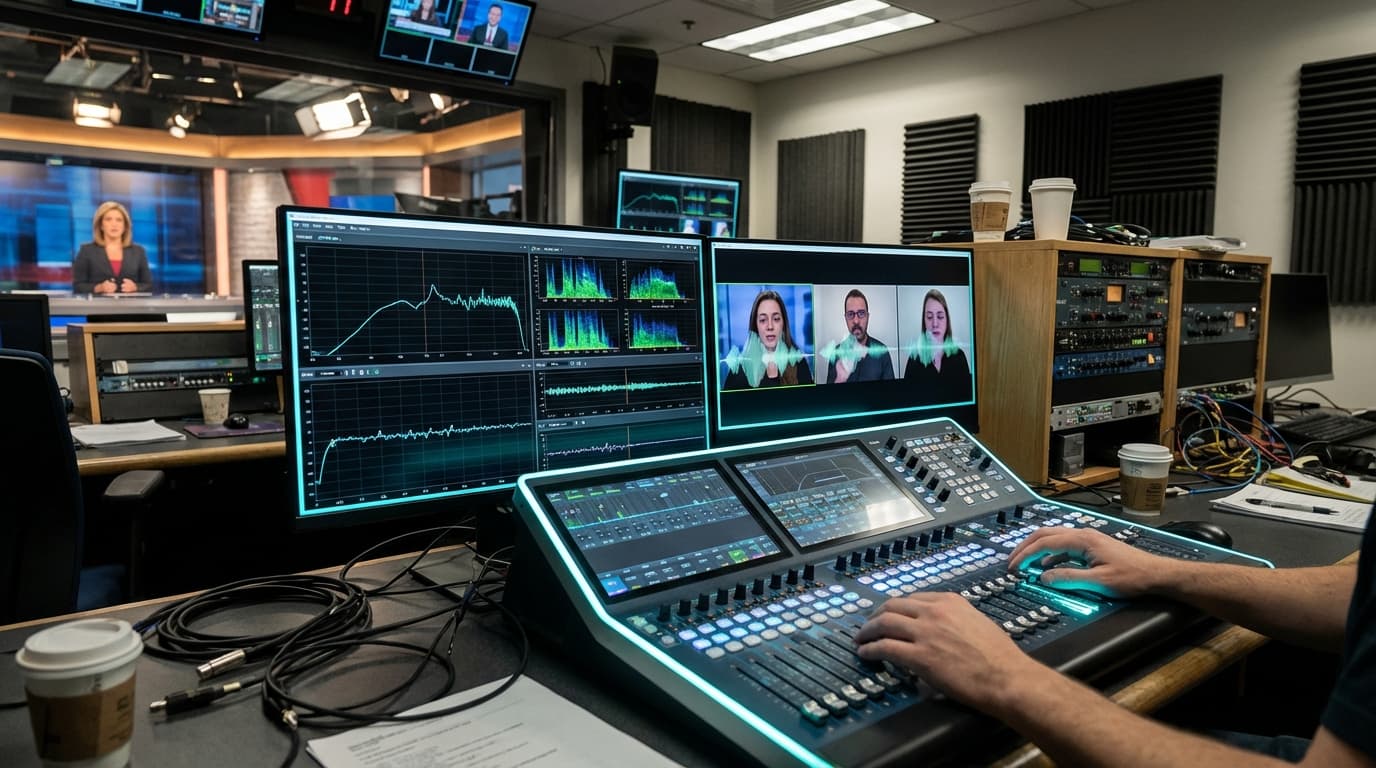
AI-Assisted Live Translation
AI-assisted live translation strings together ASR, MT, voice cloning, and real-time lip reanimation so speakers can address global audiences without human interpreters. The system monitors the source stream, generates translated speech that retains tone and pacing, and, when video is present, subtly warps mouth movements to match phonemes in the target language. Latency budgets stay under a few seconds thanks to streaming-friendly transformer architectures and GPU acceleration.
Esports broadcasts, K-pop showcases, and enterprise webinars rely on the tech to release simultaneous multilingual streams, expanding reach without extra production crews. Conferences provide attendees with localized captions plus optional dubbed audio on mobile devices, and creators on streaming platforms toggle instant translation for different fan segments. The stack doubles as an accessibility layer, producing sign-language avatars or simplified-language summaries.
Governance matters: rights holders demand consent and residuals when voices are cloned, and regulators in Korea, India, and the EU require quality audits to avoid misinformation. Vendors supply dashboards showing latency, confidence, and translation glossaries so human moderators can intervene. As tooling matures, AI live translation will become as common as closed captioning, provided platforms maintain disclosure and opt-out mechanisms.
Related Organizations

A film lab developing 'TrueSync' technology to visually translate films by altering lip movements to match dubbed audio.


Provides AI-based dubbing for entertainment content, retaining the original actor's voice characteristics.

Papercup
United Kingdom · Startup
AI dubbing service that automates video translation with expressive synthetic voices.

A tool for automated video localization, offering voice cloning and lip-sync features.




Supporting Evidence
Research this in Signals
Signals turns a topic into a sourced research record you can inspect and rerun. Your first scan is free, and this one starts with AI-Assisted Live Translation already loaded, so edit it or scan as is.