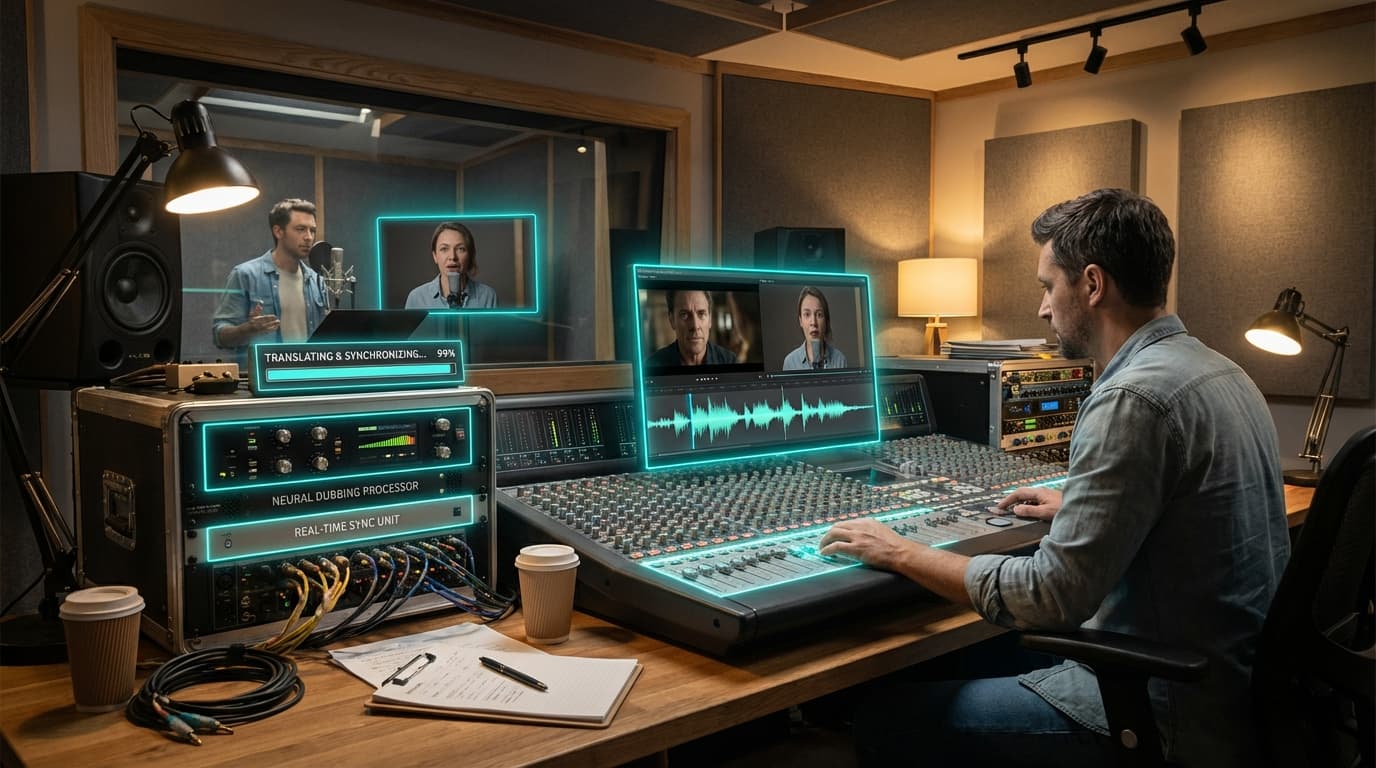
Real-time Neural Dubbing
Real-time neural dubbing chains automatic speech recognition, machine translation, voice cloning, and facial reanimation into a single pipeline that outputs localized audio/video seconds after the source speaker talks. Models learn the speaker’s timbre and prosody, generate speech in the target language with matching emotional cues, and drive GAN-based facial rigs to keep lip movements aligned. Low-latency streaming architectures buffer only a short context window, keeping conversations fluid.
Broadcasters, esports leagues, and conference platforms deploy these stacks to reach global audiences without staggered interpreters. Creators on Twitch or TikTok add instant multilingual captions plus dubbed audio, while enterprise collaboration tools let executives hop between languages without switching presenters. Localization vendors use the tech for back catalogs, pairing AI rough cuts with human QC.
Responsible deployments (TRL 7) require consent, watermarking, and cultural review. Some countries now demand audible cues indicating AI dubbing, and studios maintain pronunciation glossaries to respect local idioms. As standards like ETSI’s guidelines for synthetic media governance mature, neural dubbing will become a default accessibility feature while still leaving room for human artistic direction on premium releases.
Related Organizations



A film lab developing 'TrueSync' technology to visually translate films by altering lip movements to match dubbed audio.

A tool for automated video localization, offering voice cloning and lip-sync features.

Provides AI-based dubbing for entertainment content, retaining the original actor's voice characteristics.

Papercup
United Kingdom · Startup
AI dubbing service that automates video translation with expressive synthetic voices.
Generative voice AI platform for cloning and localization.

Supporting Evidence
Research this in Signals
Signals turns a topic into a sourced research record you can inspect and rerun. Your first scan is free, and this one starts with Real-time Neural Dubbing already loaded, so edit it or scan as is.