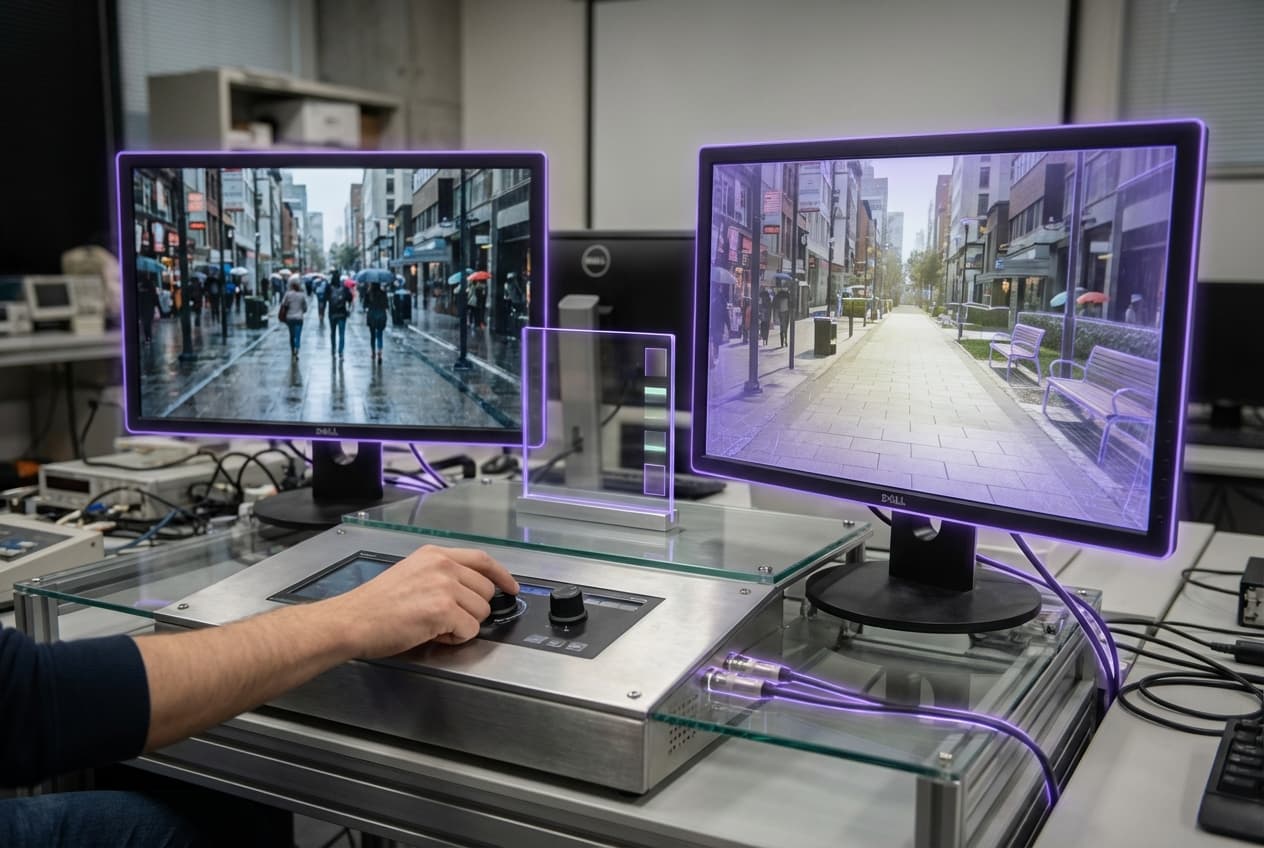
Reality Filter Auditing
As spatial computing and augmented reality systems become increasingly integrated into daily life, users face a growing challenge: understanding when and how their perceived reality is being algorithmically modified. Reality Filter Auditing addresses this fundamental transparency problem by creating comprehensive logging and disclosure mechanisms that track every digital overlay, occlusion, or enhancement applied to a user's visual field. The technology operates through a multi-layered monitoring system that captures metadata about active filters—including their source, purpose, modification type, and controlling entity—while maintaining a timestamped record of all alterations to the user's augmented view. This creates an auditable trail similar to browser cookies or privacy dashboards, but for spatial computing environments where the stakes of manipulation are considerably higher. The system typically functions through a combination of device-level logging, standardised filter metadata protocols, and user-accessible interfaces that translate complex modification data into comprehensible visualisations.
The need for such auditing tools stems from mounting concerns about the power asymmetries inherent in mixed reality platforms. Without transparency mechanisms, users may unknowingly navigate environments where commercial interests selectively hide competitor storefronts, political actors suppress certain information, or platform operators prioritise paid content over organic elements. Reality Filter Auditing helps address these challenges by giving users, regulators, and third-party auditors the ability to inspect the modification stack in real-time and retrospectively. This capability becomes particularly crucial in contexts where augmented overlays influence consequential decisions—such as navigation systems that might obscure certain neighbourhoods, shopping applications that hide price comparisons, or social platforms that filter which people or objects appear prominent in shared spaces. By making the invisible visible, these systems enable informed consent and create accountability structures that can deter manipulative practices before they become normalised.
Early implementations of reality filter auditing are emerging within enterprise AR platforms and research prototypes focused on ethical mixed reality design. Some experimental systems allow users to toggle between their customised view and an unfiltered baseline, while others provide detailed filter hierarchies showing which modifications are user-selected versus platform-imposed versus third-party injected. Industry observers note growing interest from privacy advocates and regulatory bodies in establishing standards for augmented reality transparency, particularly as spatial computing moves from specialised applications into mainstream consumer adoption. The trajectory suggests that reality filter auditing may evolve from an optional feature into a regulatory requirement, similar to how nutrition labels or privacy policies became mandatory disclosure mechanisms. As augmented reality systems gain the capacity to fundamentally reshape human perception of physical spaces, the ability to audit and understand these modifications will likely become essential infrastructure for maintaining individual autonomy and preventing the emergence of manipulated realities that serve narrow commercial or political interests rather than user wellbeing.
Related Organizations

An open technical standard body addressing the prevalence of misleading information online through content provenance.

Software giant and founder of the Content Authenticity Initiative (CAI).

Focuses on image provenance and authentication, helping verify that media has not been altered (the inverse of detection).

Provides an enterprise platform for deepfake detection across audio, video, and image formats using multi-model analysis.

Specializes in visual threat intelligence and deepfake detection, monitoring the web for malicious synthetic media.

Human rights organization focusing on video evidence, actively researching provenance tools for activists.

Provider of digital watermarking and identification technologies.

Developer of 360 Reality Audio (360RA), an object-based spatial audio format used in live music broadcasting and streaming.

The global hub for open-source AI models and datasets. Founded by French entrepreneurs with a major office in Paris.

Develops silicon spin qubits using advanced 300mm wafer manufacturing processes.
Supporting Evidence
Research this in Signals
Signals turns a topic into a sourced research record you can inspect and rerun. Your first scan is free, and this one starts with Reality Filter Auditing already loaded, so edit it or scan as is.