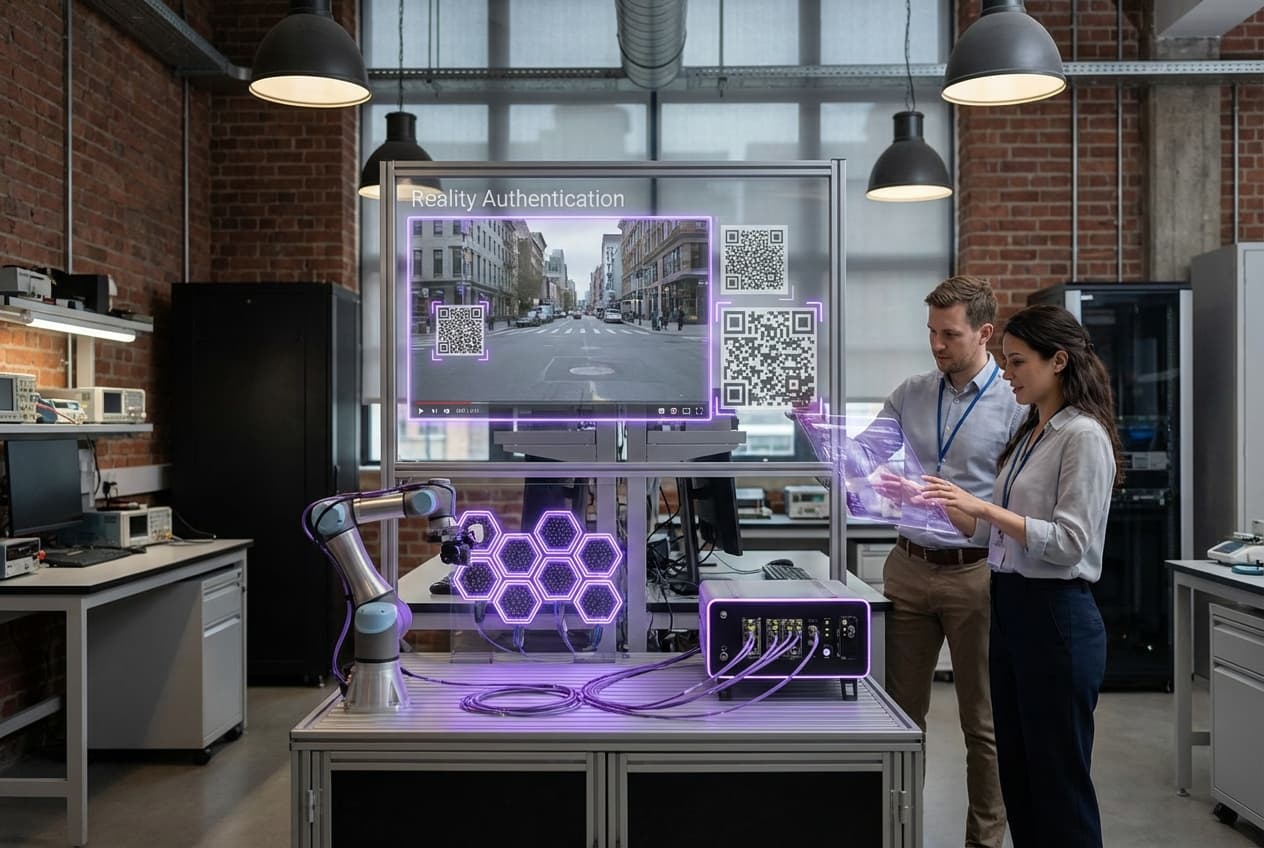
Reality Authentication
As augmented reality and spatial computing technologies become increasingly integrated into daily life, a critical vulnerability has emerged: the potential for malicious actors to inject false or misleading digital content into users' perceived reality. Reality Authentication addresses this fundamental security challenge by establishing cryptographic protocols that verify the authenticity and integrity of digital overlays before they are rendered in a user's field of view. The technology operates through a chain-of-trust model similar to the SSL/TLS certificates that secure web browsing, where digital content creators sign their AR assets with cryptographic keys that can be verified against trusted registries. When a user's device encounters an AR overlay—whether a wayfinding arrow, a product advertisement, or informational signage—the system automatically checks the digital signature against authorised sources, ensuring that the content originates from its claimed creator and has not been tampered with during transmission. This verification process happens in milliseconds, creating a seamless experience while maintaining robust security standards that prevent unauthorised modifications to the user's augmented environment.
The absence of such authentication mechanisms poses significant risks across multiple sectors. In retail environments, fraudulent AR overlays could redirect customers to counterfeit products or fake promotional offers. Navigation systems could be compromised to misdirect pedestrians or drivers, creating safety hazards or enabling criminal activity. Corporate espionage could involve injecting false data visualisations during business presentations, while public infrastructure could be targeted with misleading emergency notifications or altered wayfinding systems. Reality Authentication solves these problems by establishing a verifiable chain of custody for digital content, enabling users and systems to distinguish between legitimate AR experiences and malicious "reality hacks." This capability becomes particularly crucial as spatial computing moves beyond entertainment applications into critical domains such as healthcare, where surgeons might rely on AR guidance during procedures, or industrial settings where workers depend on accurate digital overlays for equipment maintenance and safety protocols.
Early implementations of reality authentication frameworks are emerging from standards bodies and technology consortia focused on spatial computing security. Research institutions are exploring blockchain-based approaches for decentralised verification, while industry leaders in AR platforms are developing proprietary authentication systems that could eventually converge into unified standards. Pilot programs in smart city initiatives are testing these protocols for municipal wayfinding and public information systems, where the consequences of content manipulation could affect large populations. As mixed reality headsets and AR-enabled smartphones proliferate, the demand for robust authentication mechanisms will intensify, particularly as regulatory frameworks begin addressing the legal implications of augmented reality content. The trajectory of this technology points toward a future where reality authentication becomes as fundamental to spatial computing as HTTPS is to web browsing—an invisible but essential layer of trust that enables users to confidently navigate increasingly complex blended realities without constant vigilance against deception.
Related Organizations

An open technical standard body addressing the prevalence of misleading information online through content provenance.

Software giant and founder of the Content Authenticity Initiative (CAI).

Focuses on image provenance and authentication, helping verify that media has not been altered (the inverse of detection).

A mobile app that captures photos with cryptographic proof of authenticity on the blockchain.

Provider of digital watermarking and identification technologies.


Academic research lab at Stanford and USC dedicated to using cryptography for information integrity.

Taiwan · Startup
A blockchain-based network for tracing digital media provenance and copyright.

Human rights organization focusing on video evidence, actively researching provenance tools for activists.
Supporting Evidence
Research this in Signals
Signals turns a topic into a sourced research record you can inspect and rerun. Your first scan is free, and this one starts with Reality Authentication already loaded, so edit it or scan as is.