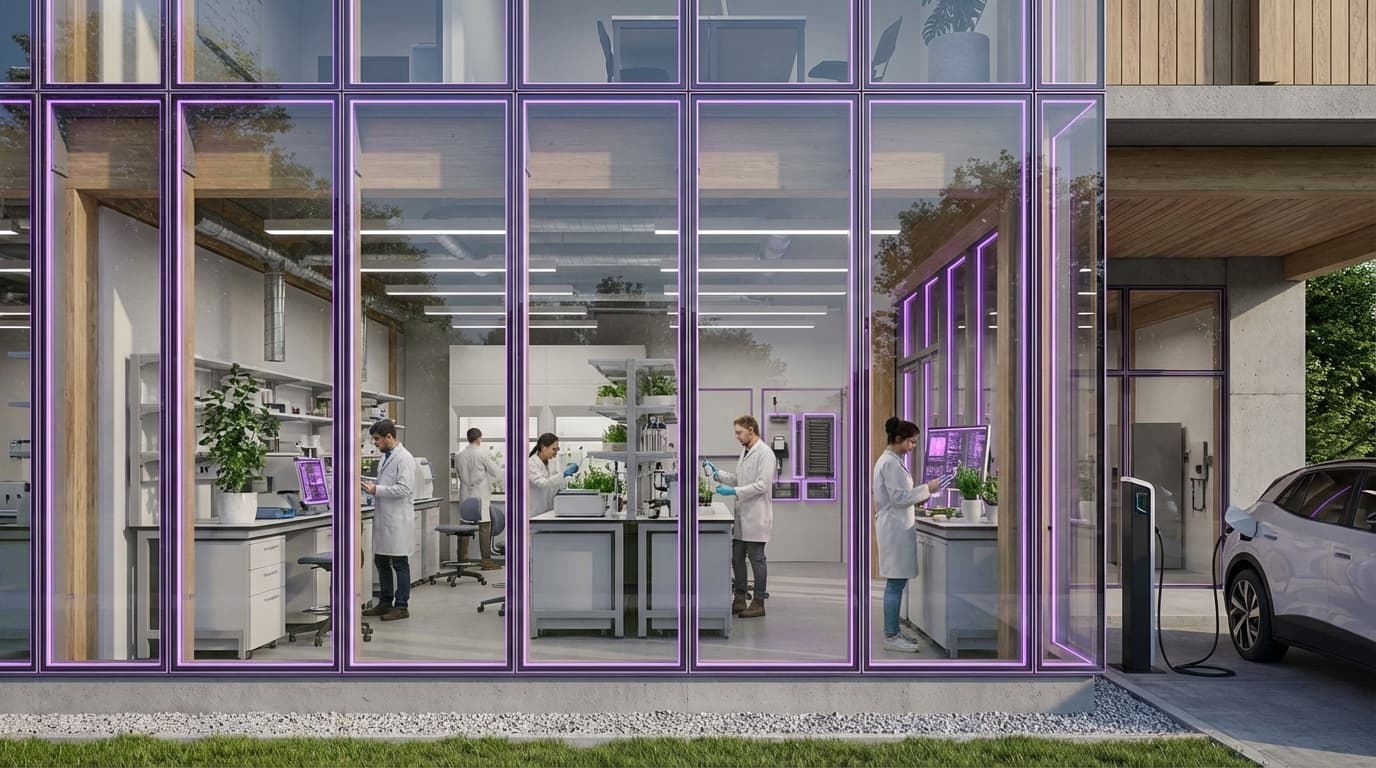
Solar Glass
Solar glass, also known as transparent photovoltaics or building-integrated photovoltaics (BIPV), incorporates solar cell technology into glass panels while maintaining transparency for visible light. The technology uses various approaches including thin-film solar cells that are partially transparent, organic photovoltaics, or quantum dot technologies that absorb specific wavelengths while allowing visible light to pass through. These systems can be integrated into windows, skylights, building facades, and other architectural glass applications, turning building surfaces into power generators without compromising aesthetics or functionality.
The technology addresses the challenge of generating renewable energy in urban environments where space for traditional solar panels is limited. By using existing building surfaces—particularly the large areas of glass in modern buildings—solar glass can generate significant electricity without requiring additional land or changing building appearance. The technology can also provide additional benefits like UV filtering, glare reduction, and thermal insulation. Applications include commercial building facades, residential windows, skylights, and architectural features. Companies like Ubiquitous Energy, Onyx Solar, and various glass manufacturers are developing and commercializing solar glass products.
At TRL 8, solar glass is commercially available, though efficiency and cost continue to improve. The technology faces challenges including lower efficiency compared to opaque solar panels (due to transparency requirements), cost competitiveness with traditional glass and separate solar panels, ensuring long-term durability and performance, and balancing transparency with energy generation. However, as the technology improves and costs decrease, solar glass becomes increasingly viable. The technology could transform building design by making every window a potential power generator, enabling net-zero or net-positive energy buildings, and expanding renewable energy generation in urban environments without requiring additional space, potentially making buildings active contributors to energy systems rather than just consumers.
Related Organizations

Developers of UE Power™, a transparent photovoltaic coating that converts light into electricity without compromising visible transparency.

Global leader in building-integrated photovoltaic (BIPV) glass, offering transparent and colored photovoltaic glass for facades.

Australian company developing solar glass that uses nano-particles to redirect UV and IR light to the edges of the glass for collection.

Developing organic photovoltaic (OPV) coatings that can be applied to commercial windows to generate power.

Advanced materials company using quantum dots to create luminescent solar concentrator windows (WENDOW).

Dutch technology company producing 'SmartSkin' and 'PowerWindow' products that generate power and sense environmental data.

Manufacturer of solar cladding and solar glass railing/window products that mimic traditional building materials.
United Kingdom · Company
UK-based developer of transparent photovoltaic glass for canopies, facades, and greenhouses.

One of the world's largest glass manufacturers, offering BIPV solutions like SunEwat.

Leader in organic photovoltaics (OPV), producing flexible solar films that can be retrofitted onto glass and facades.
Supporting Evidence
Research this in Signals
Signals turns a topic into a sourced research record you can inspect and rerun. Your first scan is free, and this one starts with Solar Glass already loaded, so edit it or scan as is.